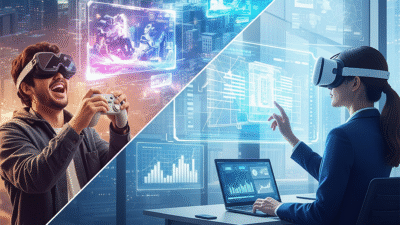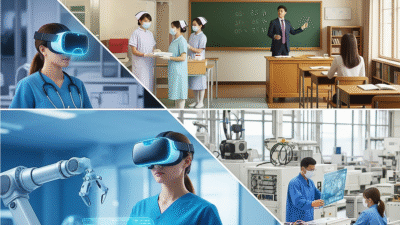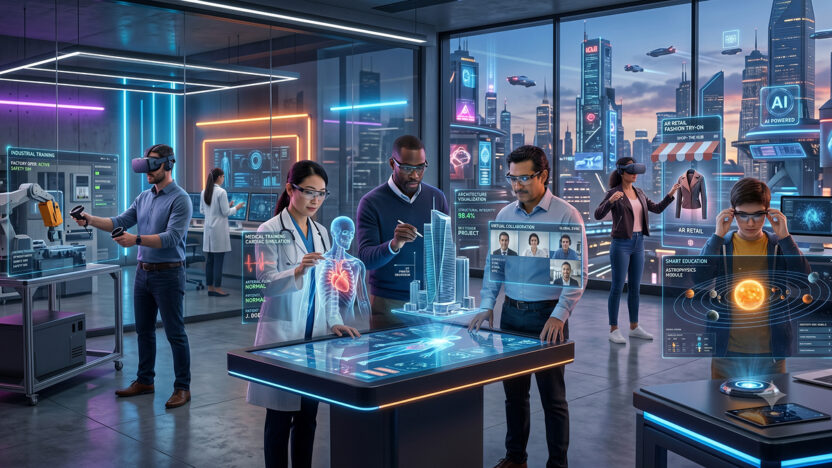
AR and VR technology are revolutionizing the way people interact with digital environments by creating immersive and interactive experiences. Augmented Reality (AR) enhances the real world with digital elements, while Virtual Reality (VR) transports users into fully simulated environments. These technologies are widely used in gaming, healthcare, education, retail, real estate, manufacturing, and business training.
Key benefits include improved engagement, enhanced learning experiences, better visualization, and increased operational efficiency. The future scope of these technologies includes advancements in spatial computing, AI integration, virtual collaboration, and immersive metaverse experiences, driving innovation across industries worldwide.
Table of Contents:
- Introduction
- Understanding How AR & VR Work
- Types of AR & VR Technologies
- Popular AR & VR Devices and Platforms
- AR & VR in the Gaming Industry
- Benefits of AR & VR Technology
- Challenges and Limitations of AR & VR
- The Rise of the Metaverse and Spatial Computing
- Career Opportunities in AR & VR
- Conclusion
1. Introduction
Technology has continuously evolved to make digital interactions more immersive, engaging, and realistic. Among the most innovative advancements in recent years are Augmented Reality (AR) and Virtual Reality (VR). These technologies are transforming how people experience digital content by blending physical and virtual environments in unique ways.
Augmented Reality enhances the real world by overlaying digital elements such as images, sounds, animations, and information onto physical surroundings. Users can still see the real environment while interacting with virtual components.
Virtual Reality creates a completely immersive digital environment that replaces the real world. By using VR headsets and motion tracking systems, users can explore and interact with computer-generated worlds as if they were physically present inside them.
The rapid advancement of hardware, artificial intelligence, cloud computing, and high-speed internet has accelerated the adoption of AR and VR technologies worldwide. Businesses are now integrating immersive experiences into marketing, training, education, remote collaboration, healthcare, and product development.
Today, immersive technologies are no longer optional innovations. They are becoming strategic tools for organizations seeking competitive advantages in the digital economy.
2. Understanding How AR & VR Work
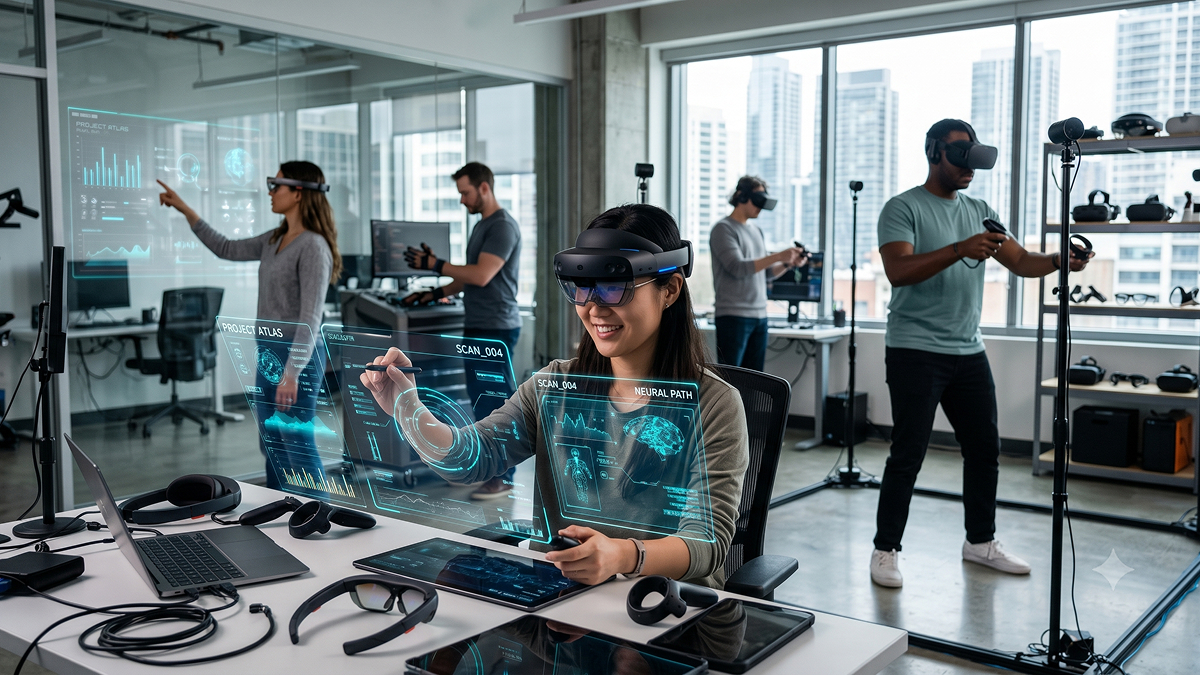
To understand the impact of AR and VR technologies, it is essential to know how they function behind the scenes. Although AR and VR provide different experiences both on the advanced hardware and software systems to create immersive digital interactions.
How Augmented Reality Works
Augmented Reality integrates digital content into the real-world environment in real time. AR systems use devices such as smartphones, tablets, smart glasses, and AR headsets to capture the physical world and overlay computer-generated elements.
Core Components of AR
1) Cameras and Sensors: AR devices use cameras and sensors to collect information about the surrounding environment. These sensors detect movement, orientation, depth, and positioning.
2) Processing Unit: The processor analyzes real-world data and determines where digital objects should appear in the environment.
3) Projection Technology: AR systems project digital images or holograms onto screens, lenses, or displays.
4) Software Algorithms: Computer vision and AI algorithms identify objects, surfaces, and spatial relationships to ensure realistic interaction between digital and physical elements.
How Virtual Reality Works
Virtual Reality immerses users in a fully digital environment using specialized headsets and motion-tracking systems.
Core Components of VR
1) VR Headsets: Headsets contain displays positioned close to the eyes, creating a stereoscopic 3D effect.
2) Motion Tracking: Sensors monitor head movements and adjust the virtual environment accordingly.
3) Controllers and Haptic Devices: Users interact with digital objects using handheld controllers or gloves equipped with sensors.
4) Audio Systems: Spatial audio enhances realism by simulating directional sound.
3. Types of AR & VR Technologies
AR and VR technologies come in several forms, each serving different applications and user experiences.
Types of Augmented Reality:
1) Marker-Based AR
Marker-based AR uses visual markers such as QR codes or images to trigger digital content.
Features
- Requires predefined markers
- Accurate object positioning
- Common in marketing and education
Examples
- Interactive textbooks
- Product packaging experiences
2) Markerless AR
It uses GPS, cameras, and sensors to place digital objects without predefined markers.
Features
- More flexible and scalable
- Widely used in mobile applications
- Supports location-based experiences
Examples
- Pokémon GO
- Navigation apps
3) Projection-Based AR
Projection-based AR projects light onto surfaces to create interactive digital interfaces.
- Applications
- Industrial manufacturing
- Interactive exhibitions
- Automotive displays
4) Superimposition AR
This type replaces parts of real-world views with virtual elements.
Examples
- Medical imaging systems
- Interior design visualization
Types of Virtual Reality:
1) Non-Immersive VR
Users interact with virtual environments through desktop screens without complete immersion.
Examples
- Computer games
- Virtual tours
2) Semi-Immersive VR
Provides partial immersion using large screens or simulators.
Examples
- Flight simulators
- Driving simulators
3) Fully Immersive VR
Uses headsets, controllers, and motion tracking for complete immersion.
Examples
- VR gaming
- Military training simulations
4. Popular AR & VR Devices and Platforms
The growth of immersive technology has led to the development of powerful devices and platforms designed for entertainment, productivity, and enterprise solutions.
Popular AR Devices
1) Microsoft HoloLens: An advanced mixed-reality headset used in healthcare, engineering, and industrial training.
2) Magic Leap: Designed for enterprise applications and immersive collaboration.
3) Mobile AR Platforms: Smartphones support AR experiences through
- ARKit (Apple)
- ARCore (Google)
Popular VR Devices
1) Meta Quest Series: Standalone VR headsets are widely used for gaming and social experiences.
2) PlayStation VR: VR gaming system integrated with PlayStation consoles.
3) HTC Vive: High-end VR system with advanced tracking capabilities.
4) Valve Index: Popular among PC gaming enthusiasts.
Popular Development Platforms
- Unity: One of the most popular engines for AR and VR development.
- Unreal Engine: Known for high-quality graphics and immersive experiences.
- WebXR: It Enables immersive experiences directly in web browsers.
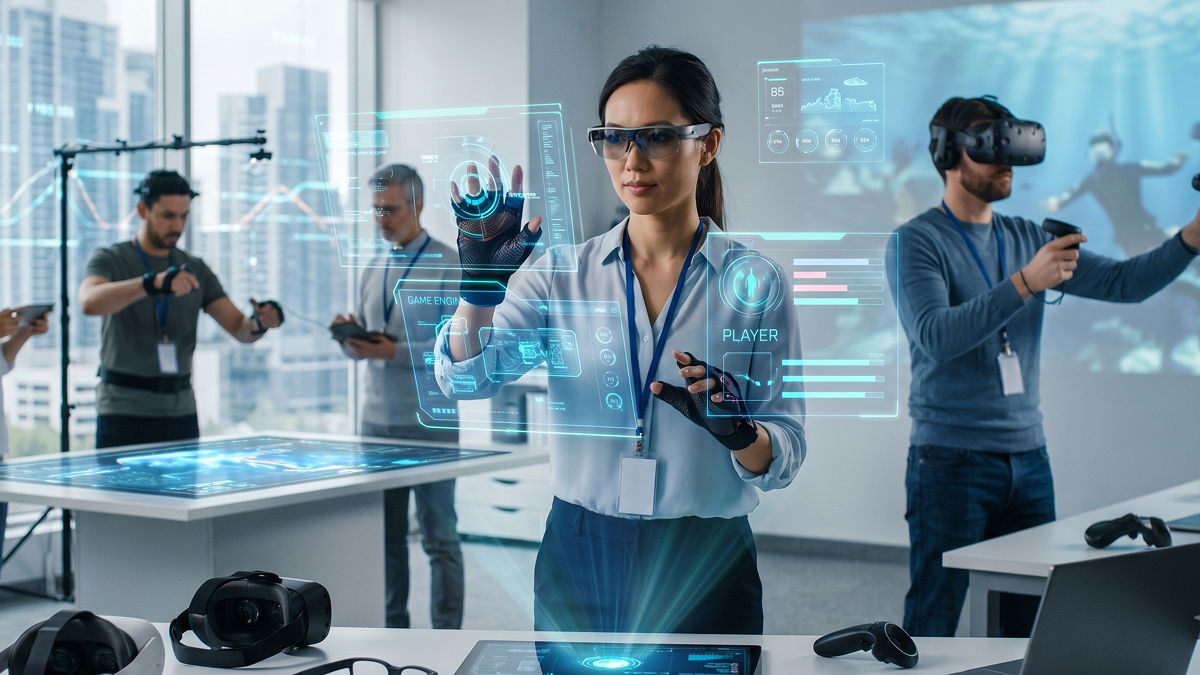
5. AR & VR in the Gaming Industry
The gaming industry has been one of the earliest and biggest adopters of AR and VR technologies.
How VR Changed Gaming
VR gaming creates highly immersive environments where players physically interact with virtual worlds.
Key Features
- 360-degree environments
- Motion-controlled gameplay
- Realistic simulations
- Social multiplayer experiences
Popular VR Games
- Beat Saber
- Half-Life: Alyx
- VRChat
How AR Changed Gaming
AR games merge real-world environments with digital gameplay.
Popular Examples
- Pokémon GO
- Harry Potter: Wizards Unite
Benefits of AR & VR in Gaming
- Enhanced Immersion: Players feel physically present inside the game world.
- Interactive Gameplay: Motion controls create realistic interactions.
- Social Experiences: Players can collaborate in virtual environments.
- Fitness and Physical Activity: VR games often involve body movement and exercise.
6. Benefits of AR & VR Technology
AR and VR technologies offer significant advantages across industries.
1) Improved Learning and Training
Immersive simulations help users learn through hands-on experiences.
Applications
- Medical training
- Industrial safety training
- Military simulations
2) Enhanced Customer Experience
Businesses use AR and VR to create engaging customer interactions.
Examples
- Virtual shopping
- Product visualization
- Interactive marketing campaigns
3) Better Collaboration
Virtual environments enable remote teams to collaborate effectively.
Benefits
- Virtual meetings
- 3D product design collaboration
- Remote technical assistance
4) Increased Productivity
AR assists workers with real-time instructions and guidance.
- Industries Benefiting
- Manufacturing Logistics
- Healthcare
5) Cost Savings
Virtual training and simulations reduce operational expenses.
Examples
- Reduced travel costs
- Lower training expenses
- Faster product prototyping
7. Challenges and Limitations of AR & VR
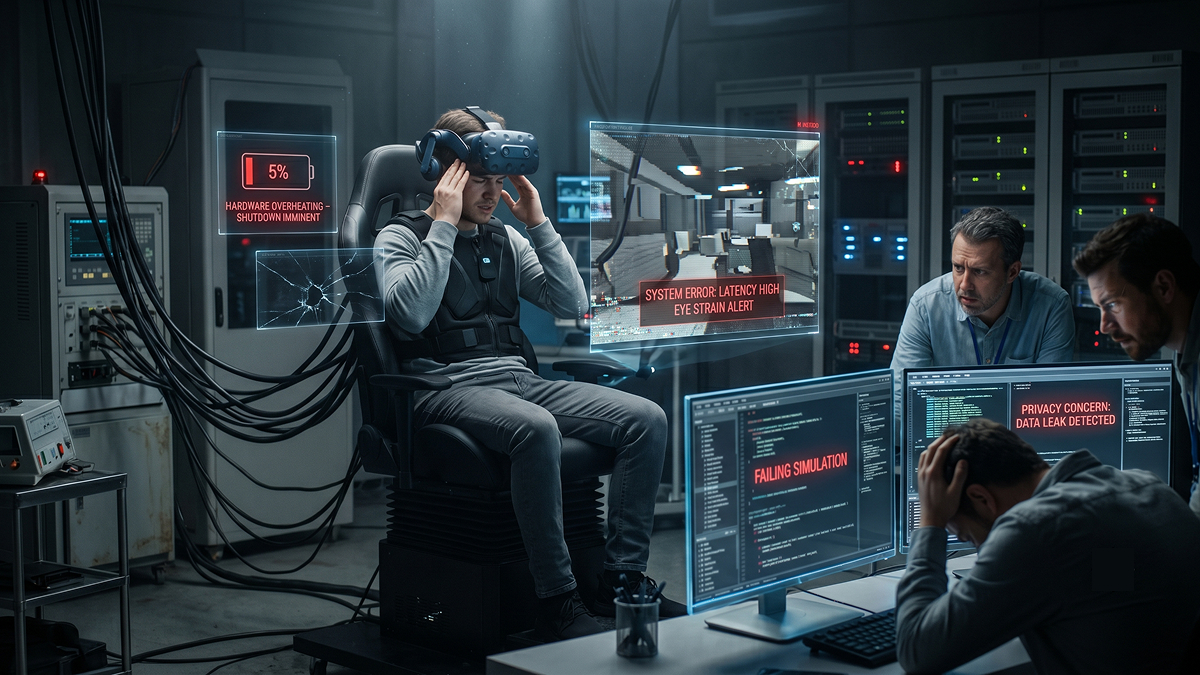
Despite their potential, AR and VR technologies still face several challenges.
1) High Development Costs: Creating immersive applications requires specialized hardware and software.
2) Hardware Limitations: Many devices remain expensive, bulky, or uncomfortable for long-term use.
3) Motion Sickness and Health Concerns: Some users experience dizziness, nausea, or eye strain during VR sessions.
4) Limited Content Availability: The ecosystem still lacks sufficient high-quality immersive content.
5) Technical Complexity: Developing AR and VR applications requires advanced technical skills.
6) Internet and Infrastructure Requirements: High-performance immersive experiences depend on fast internet and cloud infrastructure.
8. The Rise of the Metaverse and Spatial Computing
One of the most exciting developments in immersive technology is the emergence of metaverse and spatial computing.
What is the Metaverse?
The metaverse is a shared virtual universe where users interact through digital avatars in immersive environments.
Key Features
- Persistent virtual spaces
- Social interaction
- Digital economies
- Virtual workplaces
Role of AR & VR in the Metaverse
AR and VR technologies serve as gateways to the metaverse by enabling immersive interaction.
Examples
- Virtual concerts
- Digital workplaces
- Social VR platforms
- Virtual shopping experiences
What is Spatial Computing?
Spatial computing combines physical and digital spaces using:
- AR
- VR
- AI
- Sensors
- Computer vision
It enables computers to understand and interact with the physical world in real time.
Industries Adopting Spatial Computing
- Healthcare: Doctors use 3D visualization during surgeries.
- Manufacturing: Workers receive real-time instructions through AR glasses.
- Retail: Customers experience immersive shopping.
- Education: Students participate in interactive virtual classrooms.
9. Career Opportunities in AR & VR
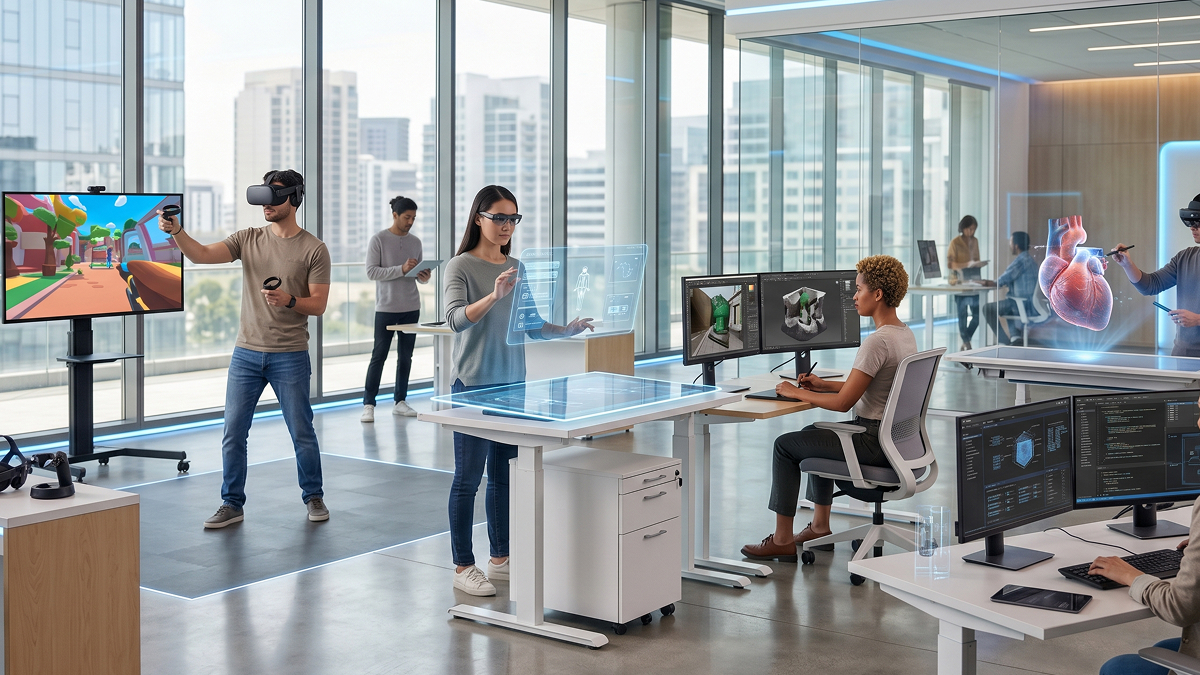
The growing adoption of immersive technologies has created strong demand for skilled professionals.
Popular Career Roles
1) AR Developer: Builds augmented reality applications.
2) VR Developer: Creates immersive virtual environments and experiences.
3) 3D Artist and Animator: Designs models, textures, and animations.
4) UX/UI Designer: Improves user interaction within immersive environments.
5) Game Developer: Develops AR and VR gaming experiences.
6) Spatial Computing Engineer: Works on advanced immersive systems and hardware integration.
7) AI and Computer Vision Specialist: Develops intelligent immersive applications.
10. Conclusion
AR and VR technologies are redefining how people interact with digital content and the physical world. From immersive gaming and virtual training to healthcare innovation and spatial computing, these technologies are transforming industries at a remarkable pace.
Augmented Reality enhances the real world with digital overlays, while Virtual Reality creates fully immersive environments. Together, they are opening new possibilities for communication, education, business operations, entertainment, and human interaction.
The rise of metaverse, artificial intelligence, and spatial computing will further accelerate the adoption of immersive technologies in the coming years. Businesses are increasingly investing in AR and VR to improve productivity, enhance customer engagement, and create innovative digital experiences.
The future of AR and VR is not limited to gaming or entertainment. These technologies are becoming foundational elements of the next generation of digital transformation. Organizations, developers, educators, healthcare providers, and governments are all exploring ways to integrate immersive technologies into everyday life.