
The future of e-commerce payments is evolving rapidly with advancements in digital technology, AI, and financial innovation. Modern consumers expect fast, secure, and seamless payment experiences across websites, mobile apps, and social commerce platforms. Emerging trends such as digital wallets, contactless payments, biometric authentication, cryptocurrency, and buy-now-pay-later solutions are reshaping online transactions. Artificial intelligence and machine learning are also improving fraud detection, personalization, and payment automation.
Businesses are focusing on enhancing customer convenience while maintaining strong security and compliance standards. As global e-commerce continues to grow, payment systems will become more intelligent, integrated, and accessible across multiple channels. Understanding these future trends helps businesses stay competitive and deliver better customer experiences in the evolving digital marketplace.
Table of Contents:
- Introduction
- The Evolution of E-Commerce Payments
- Major Technologies Shaping the Future
- Digital Wallets and Super Apps
- Cryptocurrency and Blockchain Payments
- The Rise of Real-Time Payments
- Security Challenges in Future Payments
- Challenges Facing the Future of Payments
- Predictions for the Next Decade
- Conclusion
1. Introduction
E-commerce has become one of the most influential forces in the global economy. From small online stores to multinational digital marketplaces, businesses are increasingly relying on online transactions to serve customers across the world.
The way people pay for goods and services online has changed significantly over time. In the early days of e-commerce, credit cards dominated online payments despite concerns about fraud and security. Today, consumers can choose from a wide variety of payment methods, including digital wallets, buy-now-pay-later services, cryptocurrencies, bank transfers, and contactless payment technologies.
Modern consumers expect payment experiences to be fast, frictionless, and secure. They no longer want to spend time entering card details or waiting for transactions to process. Instead, they seek instant payment confirmations, personalized checkout experiences, and flexible payment options. This shift in consumer expectations is driving innovation in the payments industry at an unprecedented rate.
Understanding these changes is essential for businesses, entrepreneurs, and consumers who want to stay ahead in the rapidly evolving digital economy.
2. The Evolution of E-Commerce Payments
The journey of e-commerce payments reflects the broader evolution of the internet and digital technology. What started as a simple online card transaction system has evolved into a sophisticated global ecosystem supporting multiple payment methods and technologies.
Early Days of Online Payments
In the 1990s, e-commerce was still in its infancy. Most online purchases were made using credit cards. Consumers had to manually enter card information for every transaction, and security concerns were widespread. Encryption technologies such as Secure Socket Layer (SSL) helped improve trust, but online fraud remained a significant challenge.
Payment gateways emerged as intermediaries between merchants and financial institutions, enabling secure transaction processing. Companies such as PayPal revolutionized online payments by offering a convenient and relatively secure alternative to direct card payments.
The Rise of Mobile Commerce
The introduction of smartphones transformed the e-commerce landscape. Mobile commerce, or m-commerce, enabled consumers to shop anytime and anywhere. This shift created demand for faster and more mobile-friendly payment solutions.
Digital wallets such as Apple Pay, Google Pay, and Samsung Pay simplified the checkout process by allowing users to store payment credentials securely on their devices. Contactless technologies and Near Field Communication (NFC) further accelerated mobile payments.
The Expansion of Alternative Payment Methods
As e-commerce became more global, businesses recognized the need to support local and alternative payment methods. Consumers in different regions preferred different payment solutions, ranging from bank transfers to mobile money services.
Buy-now-pay-later (BNPL) platforms also gained popularity by offering consumers flexible financing options. These services allowed customers to split purchases into smaller installments, increasing affordability and boosting conversion rates for merchants.
The Shift Toward Embedded Payments
Modern payment systems are becoming increasingly integrated into digital experiences. Ride-sharing apps, streaming platforms, and social media marketplaces now offer embedded payment solutions that eliminate the need for external payment processing.
This trend reflects a broader movement toward frictionless commerce, where transactions occur seamlessly within digital ecosystems.

3. Major Technologies Shaping the Future
Several transformative technologies are driving the future of e-commerce payments. These innovations are improving speed, convenience, personalization, and security while creating entirely new payment models.
Artificial Intelligence and Machine Learning
Artificial intelligence (AI) is playing a major role in payment processing and fraud detection. AI-powered systems can analyze transaction patterns in real time, identifying suspicious activity and reducing fraudulent transactions.
Machine learning algorithms also help businesses personalize payment experiences by:
- Recommending preferred payment methods
- Predicting customer behavior
- Optimizing checkout processes
- Improving risk assessment
AI chatbots and virtual assistants are also becoming part of payment ecosystems, enabling conversational commerce where users can make purchases through voice commands or messaging apps.
Biometric Authentication
Passwords and PINs are gradually being replaced by biometric authentication methods such as:
- Fingerprint scanning
- Facial recognition
- Voice authentication
- Iris scanning
Biometric technologies improve both convenience and security by verifying user identities more accurately.
Cloud Computing
Cloud-based payment infrastructures enable businesses to scale rapidly while reducing operational costs. Cloud technology provides:
- Faster payment processing
- Improved system reliability
- Real-time analytics
- Enhanced disaster recovery capabilities
Cloud-native payment platforms are particularly beneficial for global e-commerce businesses handling large transaction volumes.
Internet of Things (IoT)
The Internet of Things is expanding the possibilities for connected commerce. Smart devices such as refrigerators, wearable devices, and connected cars can now initiate payments automatically.
For example:
- Smart appliances can reorder supplies automatically
- Connected vehicles can pay for fuel or tolls
- Wearable devices can support contactless payments
IoT-driven payments will make transactions increasingly invisible and automated.
4. Digital Wallets and Super Apps
Digital wallets have become one of the fastest-growing payment methods in the world. They provide convenience, security, and speed while reducing dependency on physical cards and cash.
Growth of Digital Wallets
Consumers increasingly prefer digital wallets because they:
- Simplify checkout experiences
- Reduce the need to carry physical cards
- Offer enhanced security features
- Support loyalty programs and rewards
Popular digital wallets include:
- Apple Pay
- Google Pay
- PayPal
- Alipay
- WeChat Pay
These platforms allow users to store multiple payment methods securely and complete transactions with a single tap.
The Emergence of Super Apps
Super apps combine multiple services into a single platform, including:
- Messaging
- Shopping
- Food delivery
Transportation Financial services
In countries such as China, super apps like WeChat have become central to daily life. Users can communicate, shop, transfer money, and pay bills within the same ecosystem.
Embedded Finance and Wallet Integration
Businesses are increasingly embedding financial services directly into their platforms. This includes:
- In-app payments
- Instant financing
- Integrated insurance
- Subscription billing
Embedded finance allows companies to create seamless payment journeys while generating additional revenue streams.
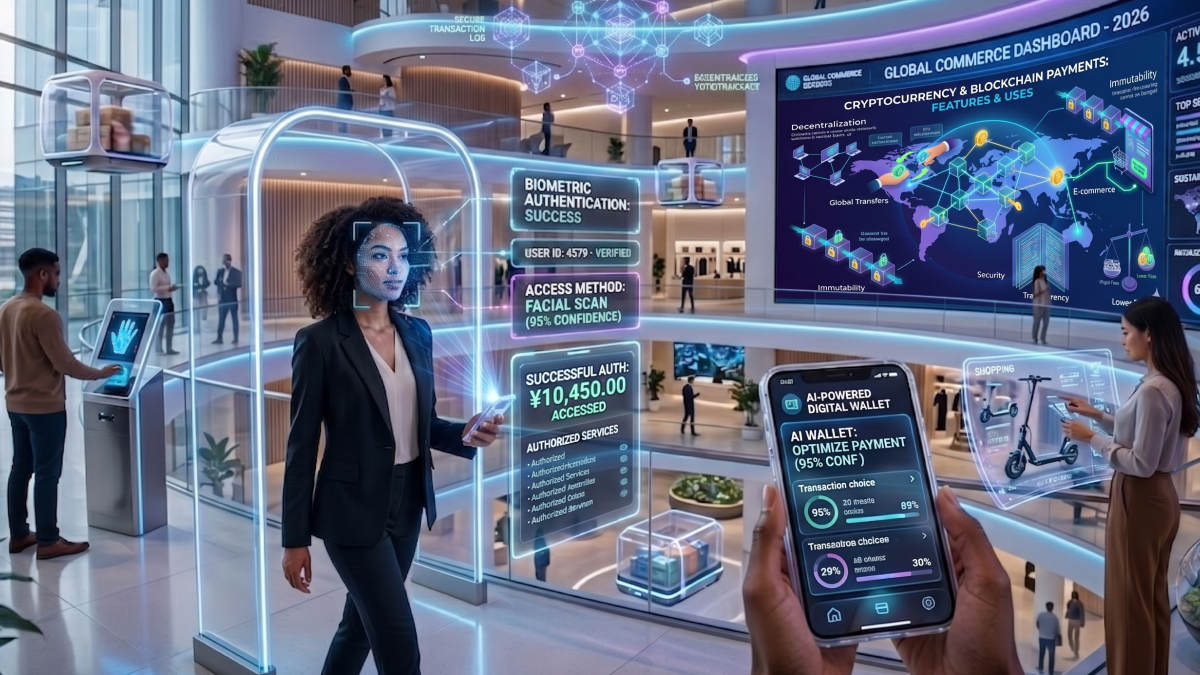
5. Cryptocurrency and Blockchain Payments
Cryptocurrency and blockchain technology have introduced a decentralized approach to digital payments.
Understanding Blockchain Payments
Blockchain is a distributed ledger technology that records transactions securely and transparently. Unlike traditional payment systems, blockchain transactions do not require centralized intermediaries.
Benefits include:
- Faster international transactions
- Lower transaction fees
- Increased transparency
- Enhanced security
Cryptocurrency Adoption in E-Commerce
Some businesses now accept cryptocurrencies such as:
- Bitcoin
- Ethereum
- Stablecoins
Cryptocurrencies offer advantages for cross-border commerce by reducing currency conversion costs and processing delays.
Challenges of Cryptocurrency Payments
Despite their potential, cryptocurrencies face several obstacles:
- Price volatility
- Regulatory uncertainty
- Limited consumer adoption
- Scalability issues
Stablecoins, which are pegged to traditional currencies, may help address volatility concerns and increase adoption.
Central Bank Digital Currencies (CBDCs)
Governments around the world are exploring Central Bank Digital Currencies. CBDCs could combine the efficiency of digital payments with the stability of government-backed currencies.
These digital currencies may reshape the global financial system and influence the future of e-commerce payments significantly.
6. The Rise of Real-Time Payments
Consumers increasingly expect payments to be processed instantly. Real-time payment systems are making this possible.
What Are Real-Time Payments?
Real-time payments allow funds to move instantly between accounts, 24/7. Unlike traditional banking systems, there are no delays caused by weekends or holidays.
Benefits for Businesses and Consumers
Real-time payments offer:
- Faster transaction completion
- Improved cash flow management
- Better customer experiences
- Reduced payment uncertainty
For e-commerce businesses, instant payment confirmation can accelerate order fulfillment and reduce operational delays.
Global Adoption of Real-Time Payment Systems
Countries worldwide are implementing real-time payment networks, including:
- UPI in India
- Faster Payments in the UK
- RTP in the United States
These systems are transforming digital commerce by enabling instant financial transactions at a scale.
The Future of Instant Payments
As infrastructure improves, real-time payments may become the global standard for online commerce. Businesses that adopt instant payment capabilities early will likely gain a competitive advantage.

7. Security Challenges in Future Payments
As payment technologies evolve, cybersecurity risks continue to increase.
1) Growing Threat of Cybercrime
Cybercriminals are becoming more sophisticated, targeting:
- Payment gateways
- Consumer accounts
- Mobile wallets
- Merchant systems
Data breaches and payment fraud can damage customer trust and result in significant financial losses.
2) AI-Powered Fraud Detection
Artificial intelligence is helping organizations combat fraud by:
- Monitoring transaction behavior
- Identifying anomalies in real time
- Blocking suspicious activities automatically
Machine learning systems continuously improve as they analyze more transaction data.
3) Tokenization and Encryption
Modern payment systems use tokenization to replace sensitive card information with unique digital tokens. This reduces the risk of data theft during transactions.
Encryption technologies also help secure payment data during transmission.
4) Biometric Security
Biometric authentication adds an additional layer of protection by verifying user identities through physical characteristics.
5) Regulatory Compliance
Businesses must comply with data protection regulations such as:
- GDPR
- PCI DSS
- Consumer privacy laws
Compliance is essential for maintaining trust and avoiding legal penalties.
8. Challenges Facing the Future of Payments
Despite technological progress, several challenges may slow the evolution of e-commerce payments.
1) Fragmentation of Payment Systems
The growing number of payment methods can create integration challenges for businesses. Supporting multiple systems requires:
- Technical infrastructure
- Ongoing maintenance
- Compliance management
2) Cross-Border Payment Complexity
International transactions often involve:
- Currency conversion fees
- Regulatory barriers
- Processing delays
Improving global interoperability remains a major challenge.
3) Consumer Trust Issues
Many consumers remain cautious about:
- Sharing financial data online
- Cryptocurrency usage
- AI-driven financial decisions
Building trust through transparency and security will be critical.
4) Digital Divide
Not all consumers have equal access to advanced payment technologies. Limited internet access and financial inclusion challenges may slow adoption in some regions.
5) Regulatory Uncertainty
Governments are still developing regulations for emerging payment technologies. Unclear policies can create uncertainty for businesses and investors.

9. Predictions for the Next Decade
The future of e-commerce payments will likely be shaped by innovation, automation, and decentralization.
Invisible Payments Will Become Common
Payments will increasingly happen automatically in the background without requiring manual user actions.
Examples include:
- Subscription services
- Autonomous retail stores
- Smart devices making purchases automatically
AI Will Personalize Every Transaction
AI-driven payment systems will:
- Predict preferred payment methods
- Offer personalized financing options
- Detect fraud instantly
- Optimize checkout experiences
Embedded Finance Will Dominate
Financial services will become deeply integrated into e-commerce platforms, enabling:
- Instant credit approval
- Seamless insurance offerings
- Automated payment management
Sustainability Will Influence Payment Systems
Consumers and businesses will prioritize environmentally sustainable technologies, influencing blockchain design and digital infrastructure.
10. Conclusion
The future of e-commerce payments is dynamic, innovative, and full of opportunities. As digital commerce continues to grow, payment technologies will become faster, smarter, more secure, and increasingly integrated into everyday life.
From digital wallets and real-time payments to blockchain technology and AI-powered fraud detection, the payment ecosystem is undergoing a massive transformation. Businesses that embrace these innovations will be better positioned to meet evolving customer expectations and compete in the digital economy.
Ultimately, the future of e-commerce payments will revolve around one central goal for creating seamless, secure, and frictionless experiences for consumers around the world. Companies that focus on innovation, trust, and adaptability will shape the next generation of digital commerce.