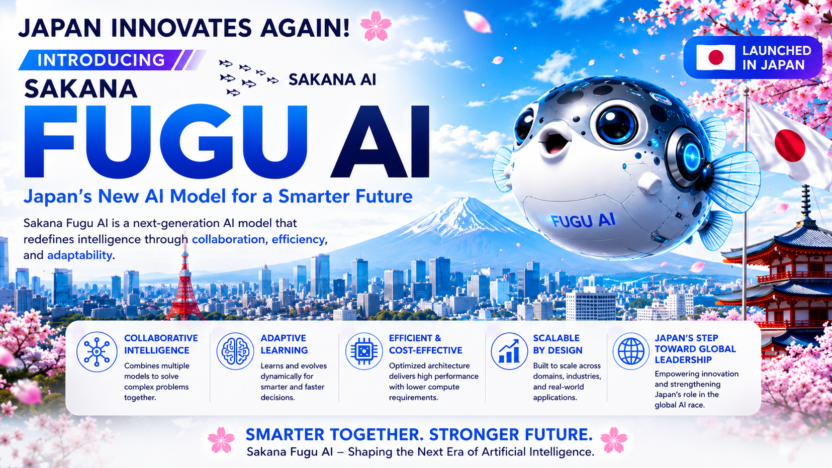
Japan is taking a bold step forward in artificial intelligence with the introduction of Sakana Fugu AI, a groundbreaking model that showcases the country’s growing influence in the global AI landscape. Inspired by nature and designed to push the boundaries of machine intelligence, Sakana Fugu AI represents a fresh approach to building smarter, more adaptive AI systems. Its launch highlights Japan’s commitment to innovation, research, and technological advancement in an increasingly competitive market. As businesses, developers, and researchers explore its capabilities, this new AI model has the potential to transform industries ranging from automation and software development to healthcare and education. In this blog, we’ll explore what makes Sakana Fugu AI unique and why its launch matters.
Table of Contents:
- Introduction
- Japan’s Growing Role in the Global AI Industry
- What is Sakana Fugu AI?
- The Vision Behind Sakana AI
- Key Features and Capabilities of Sakana Fugu AI
- Applications of Sakana Fugu AI Across Industries
- Benefits of Sakana Fugu AI
- Impact on Japan’s AI Ecosystem
- The Future Roadmap of Sakana Fugu AI
- Conclusion
1. Introduction
Artificial Intelligence is reshaping economies, industries, and societies around the globe. From automating repetitive tasks to enabling groundbreaking scientific discoveries, AI has become one of the most transformative technologies of the twenty-first century. While countries such as the United States and China have dominated headlines with major AI developments, Japan is steadily carving out its own path toward AI leadership.
Japan’s approach to AI differs from many other nations. Rather than focusing solely on scale and computational power, Japanese innovators are emphasizing efficiency, adaptability, and collaboration between humans and machines. This philosophy aligns closely with the country’s broader technological culture, which prioritizes precision, sustainability, and practical innovation.
Among the most exciting developments emerging from Japan’s AI landscape is Sakana Fugu AI. The model represents a new generation of AI systems designed to evolve, adapt, and solve complex challenges in innovative ways. Developed through advanced research and inspired by natural evolutionary processes, Sakana Fugu AI has captured the attention of the global technology community.
The launch of Sakana Fugu AI is more than just another AI product release. It marks a turning point in Japan’s efforts to establish itself as a major player in the rapidly evolving AI economy. By combining world-class research with unique design principles, Sakana Fugu AI demonstrates how Japan is contributing fresh ideas to the future of artificial intelligence.
As organizations worldwide seek smarter and more efficient AI solutions, Sakana Fugu AI could become a key driver of innovation across multiple sectors. Its emergence signals the beginning of a new chapter in Japan’s technological journey and highlights the nation’s growing influence in shaping the future of AI.
2. Japan’s Growing Role in the Global AI Industry
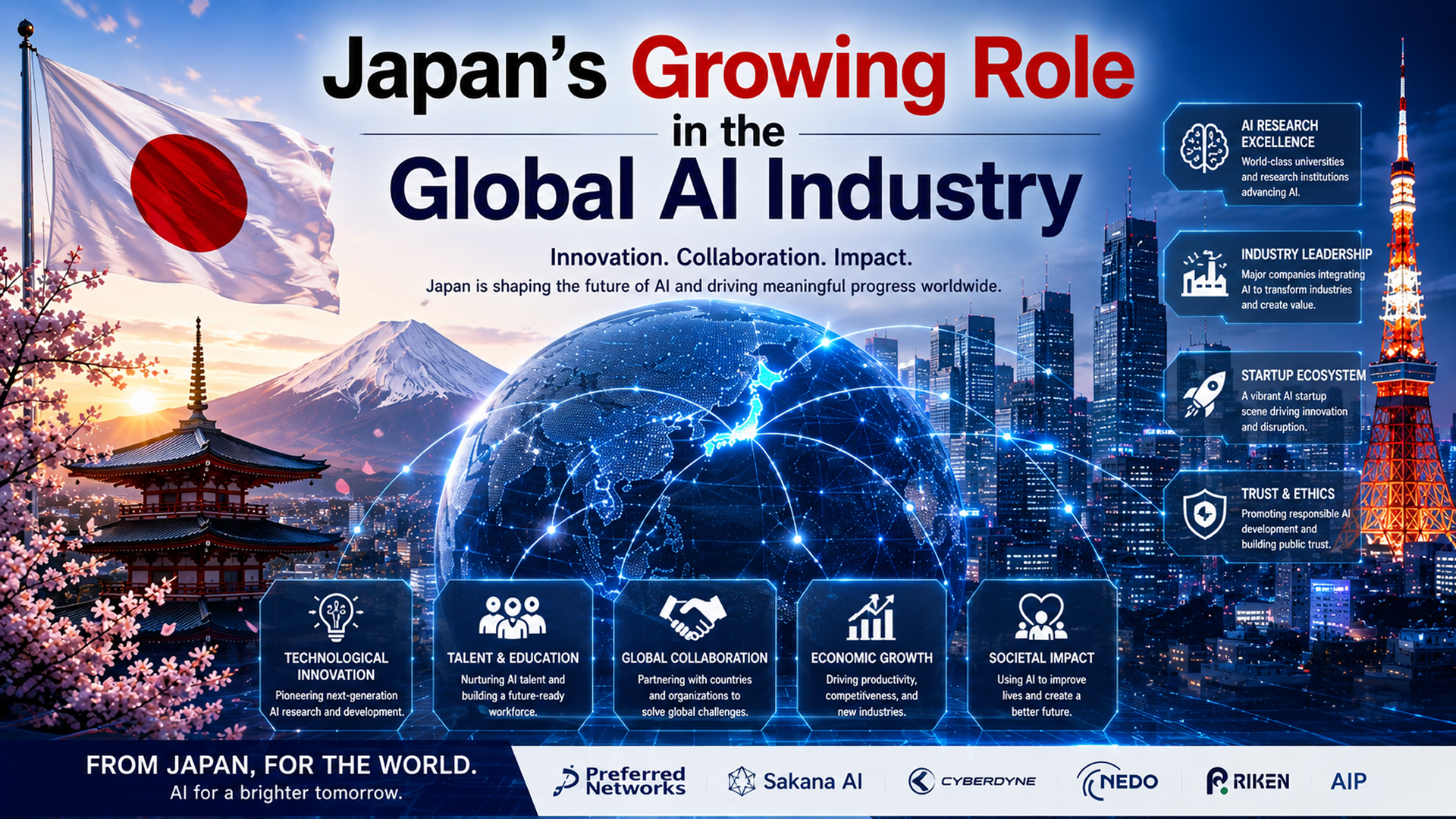
Japan has always maintained a strong reputation for technological excellence. From pioneering industrial robots to creating globally recognized consumer electronics, the country has consistently demonstrated its ability to innovate. Today, AI represents the next frontier of Japanese technological advancement.
The global AI market has experienced remarkable growth over the past decade. Governments, businesses, and research institutions are investing billions of dollars into AI development. Recognizing the strategic importance of AI, Japan has launched numerous initiatives aimed at accelerating innovation and fostering collaboration between academia and industry.
Japanese universities and research organizations are increasingly contributing to cutting-edge AI research. These institutions produce breakthroughs in machine learning, computer vision, natural language processing, and robotics. At the same time, major corporations are integrating AI into their operations to improve productivity, enhance customer experiences, and create new business opportunities.
Japan’s strengths in robotics provide a particularly strong foundation for AI development. The integration of intelligent software with advanced hardware enables the creation of sophisticated systems capable of operating in complex, real-world environments. This synergy between robotics and AI positions Japan uniquely within the global technology landscape.
Government support has also played a critical role. National AI strategies have encouraged investment in research, talent development, and infrastructure. These efforts aim to address challenges such as an aging population, labor shortages, and economic competitiveness while promoting responsible AI adoption.
Within this context, Sakana Fugu AI represents a significant milestone. It showcases Japan’s ability to move beyond traditional applications and develop AI systems that challenge conventional approaches. By embracing novel methodologies inspired by nature, Sakana AI is helping redefine what modern AI can achieve.
3. What is Sakana Fugu AI?
Sakana Fugu AI is an advanced artificial intelligence model developed as part of Japan’s growing AI innovation ecosystem. The project reflects a unique philosophy that draws inspiration from biological evolution and collective intelligence, seeking to create AI systems capable of adapting and improving over time.
The name “Sakana” means fish in Japanese, while “Fugu” refers to the famous pufferfish known for its complexity and uniqueness. Together, these concepts symbolize adaptability, intelligence, and evolution of core principles underlying the development of the model.
Unlike traditional AI systems that often rely on a single large model architecture, Sakana Fugu AI explores the concept of combining multiple specialized models that work together to solve problems. This approach mirrors natural ecosystems, where diverse organisms interact and evolve to achieve optimal outcomes.
At its core, Sakana Fugu AI is designed to:
- Learn efficiently from large datasets.
- Adapt dynamically to changing environments.
- Generate high-quality content and insights.
- Improve problem-solving capabilities through collaboration.
- Deliver scalable performance across multiple applications.
The model leverages advanced machine learning techniques to optimize performance while reducing computational inefficiencies. This focus on efficiency aligns with Japan’s broader commitment to sustainable technological development.
One of the most exciting aspects of Sakana Fugu AI is its potential to challenge conventional assumptions about how AI systems should be built. Rather than relying solely on larger and more resource-intensive models, Sakana AI explores alternative paths toward intelligence, emphasizing adaptability and collaboration.
As organizations seek cost-effective and flexible AI solutions, this innovative approach could provide a competitive advantage and inspire new directions for AI research worldwide.
4. The Vision Behind Sakana AI
The vision behind Sakana AI extends far beyond creating another powerful language model. The company aims to fundamentally rethink how artificial intelligence systems are designed, trained, and deployed.
Traditional AI development has largely focused on scaling up model size. While larger models often achieve impressive results, they also require enormous computational resources, significant energy consumption, and extensive infrastructure investments.
Sakana AI challenges this paradigm by asking a simple yet profound question: Can AI become more intelligent through evolution rather than sheer size?
Inspired by biological ecosystems, the organization explores methods that allow AI systems to evolve, adapt, and collaborate. This evolutionary approach seeks to unlock new levels of efficiency and creativity while reducing resource requirements.
Key elements of Sakana AI’s vision include:
- Evolutionary Intelligence: Rather than relying on static architectures, AI systems can continuously evolve and improve through iterative processes similar to natural selection.
- Collective Intelligence: Multiple specialized models can collaborate to achieve outcomes that surpass the capabilities of any individual model.
- Sustainable AI Development: Efficiency and resource optimization are prioritized to create environmentally responsible AI systems.
- Democratized Innovation: Advanced AI technologies should be accessible to organizations of all sizes, enabling broader participation in the AI economy.
- Human-Centered Design: AI should augment human capabilities rather than replace them, creating opportunities for collaboration and creativity.
This vision aligns closely with Japan’s cultural emphasis on harmony, continuous improvement, and long-term sustainability. By integrating these principles into AI development, Sakana AI is helping shape a future where intelligence is not measured solely by scale but also by adaptability and collaboration.
5. Key Features and Capabilities of Sakana Fugu AI
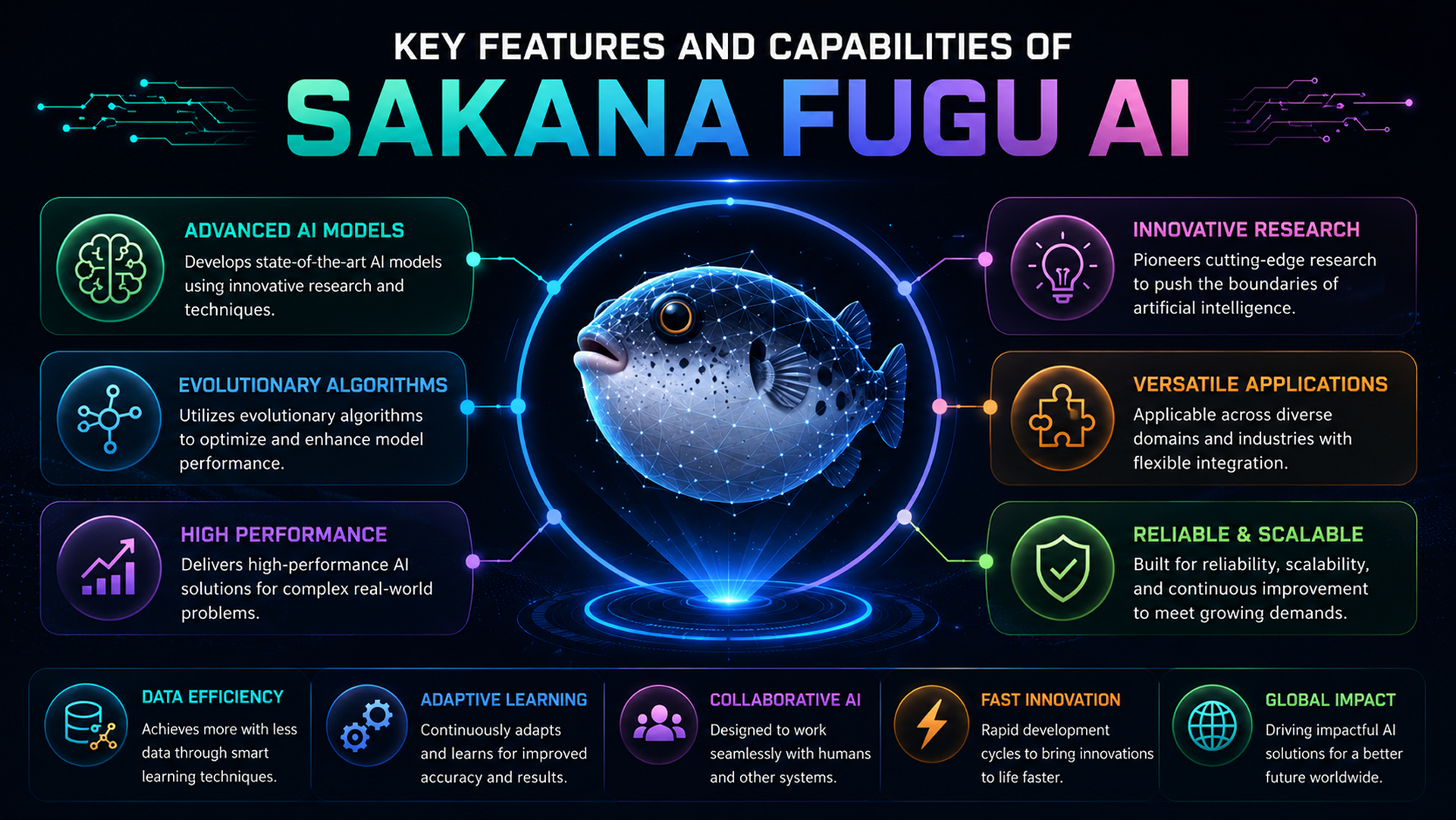
The growing interest in Sakana Fugu AI stems from its impressive range of capabilities and innovative architectural approach.
One of its defining characteristics is adaptability. The model can adjust to diverse tasks and environments, making it suitable for applications across multiple industries. This flexibility enables organizations to deploy AI solutions without extensive customization.
Another major strength is efficiency. By leveraging collaborative model architectures, Sakana Fugu AI aims to achieve high performance while minimizing computational overhead. This efficiency can reduce operational costs and make advanced AI more accessible.
The model also demonstrates strong capabilities in natural language understanding and generation. It can process complex information, generate coherent responses, summarize content, and assist with knowledge-based tasks.
Additional features include:
- Advanced reasoning and problem-solving.
- Multilingual support. Scalable deployment options.
- Enhanced contextual understanding.
- Continuous learning potential.
- Collaborative model integration.
- Improved resource utilization.
- Flexible application development.
These capabilities position Sakana Fugu AI as a versatile platform capable of supporting innovation across sectors ranging from healthcare and finance to education and manufacturing.
The combination of efficiency, adaptability, and scalability makes the model particularly attractive for organizations seeking practical AI solutions that deliver measurable value.
6. Applications of Sakana Fugu AI Across Industries
One of the most compelling aspects of Sakana Fugu AI is its versatility. The model’s adaptive architecture and advanced reasoning capabilities make it suitable for a wide range of industries. As organizations continue to embrace digital transformation, Sakana Fugu AI has the potential to become a valuable tool for solving complex challenges, improving efficiency, and driving innovation.
Healthcare and Medical Research
Healthcare is one of the sectors where AI can create the most significant impact. Medical professionals generate enormous amounts of data every day, including patient records, diagnostic reports, medical imaging, and research findings. Processing and analyzing this information manually can be time-consuming and prone to errors.
Sakana Fugu AI can assist healthcare organizations by analyzing large datasets, identifying patterns, and supporting decision-making. Potential applications include:
- Assisting doctors with diagnostics.
- Predicting disease risks based on patient data.
- Supporting medical research and drug discovery.
- Automating administrative tasks.
- Enhancing patient engagement through AI-powered assistants.
Japan’s aging population presents unique healthcare challenges, making AI-driven healthcare solutions particularly important. Sakana Fugu AI could help improve healthcare accessibility and efficiency while reducing the burden on medical professionals.
Financial Services
The financial sector relies heavily on data analysis, risk assessment, and decision-making. AI technologies have already transformed banking and finance, and Sakana Fugu AI could further enhance these capabilities.
Applications include:
- Fraud detection and prevention.
- Credit risk assessment.
- Personalized financial recommendations.
- Algorithmic trading.
- Customer support automation.
Financial institutions can leverage Sakana Fugu AI to analyze market trends, identify anomalies, and improve operational efficiency. The model’s ability to process vast amounts of information quickly can help organizations make more informed decisions.
Manufacturing and Industrial Operations
Japan has long been a global leader in manufacturing. The integration of AI into industrial processes is creating new opportunities for productivity and innovation.
Sakana Fugu AI can contribute to:
- Predictive maintenance of machinery.
- Quality control and defect detection.
- Supply chain optimization.
- Production forecasting.
- Workforce productivity enhancement.
By combining AI with robotics and industrial automation systems, manufacturers can reduce downtime, improve product quality, and increase operational efficiency.
Education and Learning
The education sector is undergoing significant transformation as digital technologies become more integrated into learning environments. AI-powered educational tools can provide personalized learning experiences tailored to individual students.
Potential applications include:
- Intelligent tutoring systems.
- Automated grading and assessment.
- Personalized learning recommendations.
- Content creation for educational materials.
- Language learning support.
Sakana Fugu AI can help educators deliver more engaging and effective learning experiences while reducing administrative workloads.
Retail and E-Commerce
Consumer expectations continue to evolve, placing greater demands on retailers to deliver personalized and seamless experiences.
Sakana Fugu AI can support retail businesses through:
- Product recommendation engines.
- Customer behavior analysis.
- Inventory management.
- Demand forecasting.
- Automated customer service.
By understanding customer preferences and purchasing patterns, businesses can create more targeted marketing strategies and improve customer satisfaction.
Media and Content Creation
Generative AI has revolutionized content creation, enabling organizations to produce text, images, videos, and other forms of media more efficiently.
Sakana Fugu AI can assist with:
- Article generation.
- Content summarization.
- Translation services.
- Script writing.
- Creative ideation.
For media companies, marketing teams, and content creators, these capabilities can significantly improve productivity while maintaining quality.
Government and Public Services
Governments worldwide are exploring AI to improve public services and enhance operational efficiency.
Applications may include:
- Citizen service automation.
- Policy analysis.
- Public safety monitoring.
- Infrastructure planning.
- Smart city initiatives.
Japan’s commitment to digital transformation makes AI a valuable tool for modernizing public services and improving citizen experiences.
7. Benefits of Sakana Fugu AI
The emergence of Sakana Fugu AI offers numerous advantages for businesses, researchers, and society as a whole. Its innovative design philosophy and practical capabilities provide several key benefits that distinguish it from traditional AI systems.
Enhanced Efficiency
One of the primary goals of Sakana AI is to create systems that achieve strong performance without requiring excessive computational resources. By focusing on collaborative intelligence and adaptive architectures, Sakana Fugu AI aims to maximize efficiency while minimizing costs.
This approach can help organizations:
- Reduce infrastructure expenses.
- Lower energy consumption.
- Accelerate AI deployment.
- Improve scalability.
Efficiency is becoming increasingly important as AI adoption expands and concerns about sustainability grow.
Greater Adaptability
Traditional AI models are often optimized for specific tasks. In contrast, Sakana Fugu AI emphasizes adaptability, enabling it to perform effectively across diverse environments and applications.
Adaptability allows organizations to:
- Respond quickly to changing market conditions.
- Customize AI solutions more easily.
- Reduce development time.
- Improve long-term flexibility.
This capability is particularly valuable in industries characterized by rapid change and uncertainty.
Improved Innovation
The evolutionary principles behind Sakana AI encourage experimentation and continuous improvement. This approach can lead to the discovery of novel solutions and creative problem-solving strategies.
Organizations leveraging Sakana Fugu AI may benefit from:
- Faster innovation cycles.
- Enhanced research capabilities.
- New product and service opportunities.
- Competitive differentiation.
Innovation remains one of the most important drivers of business success in the digital age.
Cost Optimization
AI implementation can be expensive, especially when organizations rely on large-scale infrastructure and specialized expertise. Sakana Fugu AI’s emphasis on efficiency can help reduce these costs.
Potential savings include:
- Lower computational expenses.
- Reduced maintenance requirements.
- Improved resource allocation.
- Faster deployment timelines.
For startups and small businesses, cost-effective AI solutions can significantly improve accessibility.
Sustainable AI Development
As concerns about climate change and environmental sustainability continue to grow, the AI industry faces increasing scrutiny regarding energy consumption and resource usage.
Sakana Fugu AI’s focus on efficient architectures aligns with sustainability goals by:
- Reducing energy requirements.
- Minimizing computational waste.
- Supporting environmentally responsible innovation.
This commitment to sustainability could become a major competitive advantage as organizations prioritize greener technologies.
Enhanced Human-AI Collaboration
Rather than replacing human workers, Sakana Fugu AI is designed to augment human capabilities. By automating repetitive tasks and providing intelligent insights, the model enables individuals to focus on higher-value activities.
Benefits include:
Increased productivity. Better decision-making. Reduced workload. Enhanced creativity.
This collaborative approach reflects Japan’s broader vision of technology as a tool for empowering people rather than displacing them.
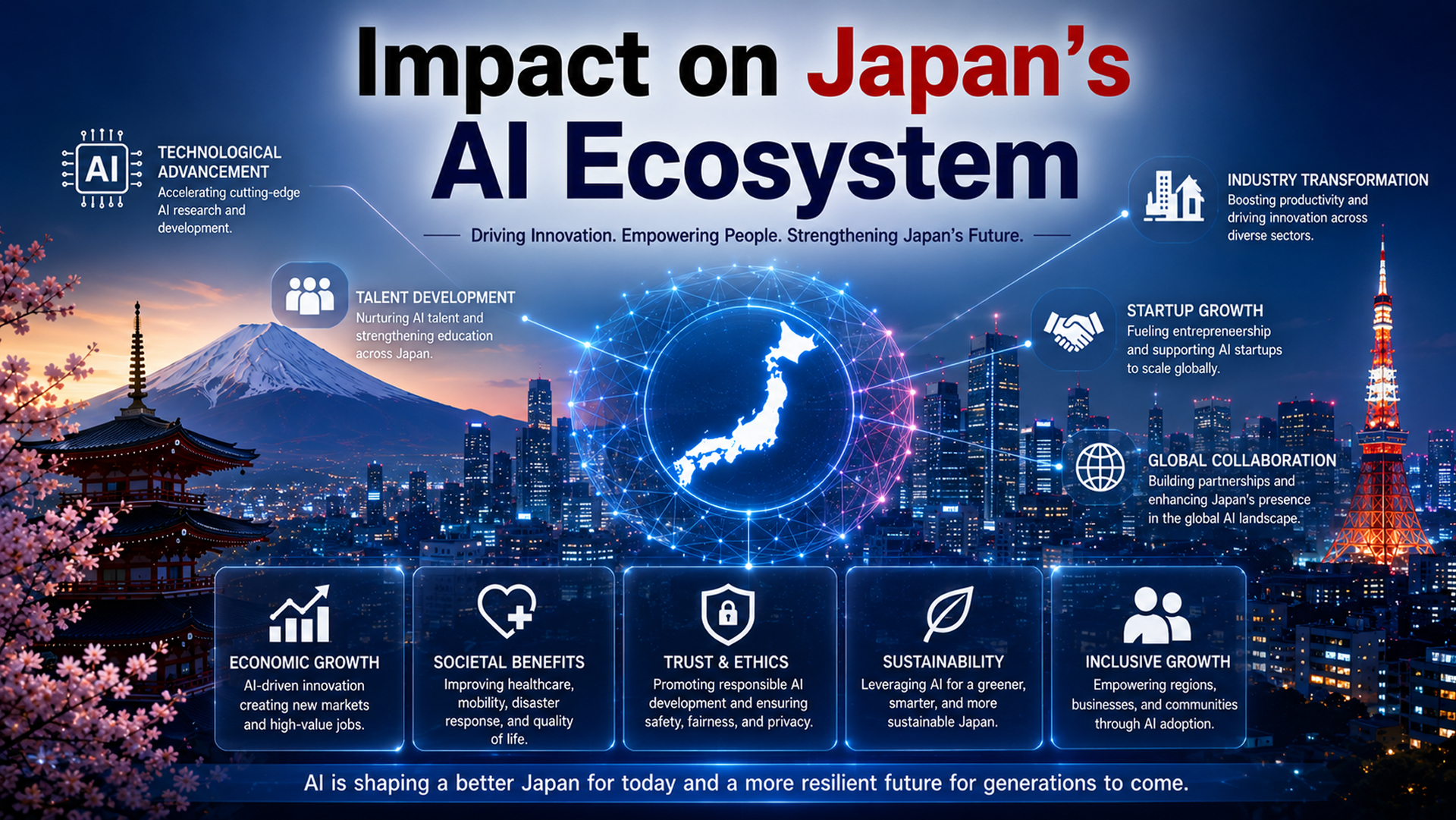
8. Impact on Japan’s AI Ecosystem
The launch of Sakana Fugu AI represents a significant milestone for Japan’s AI ecosystem. Beyond its technical capabilities, the model serves as a symbol of Japan’s growing ambitions in the global AI landscape.
Strengthening Japan’s Global Competitiveness
The global AI race is becoming increasingly competitive, with nations investing heavily in research, infrastructure, and talent development. Sakana Fugu AI demonstrates that Japan can contribute unique innovations that challenge conventional approaches.
By developing advanced AI technologies domestically, Japan can:
- Reduce dependence on foreign AI platforms.
- Strengthen technological sovereignty.
- Enhance economic competitiveness.
- Attract global investment.
These factors are critical for maintaining long-term leadership in the digital economy.
Encouraging Research and Development
Successful AI projects often inspire additional research and innovation. Sakana Fugu AI has already generated significant interest among academics, entrepreneurs, and technology professionals.
Its success could encourage:
- Increased investment in AI research.
- New startup formation.
- Greater collaboration between universities and industry.
- Expansion of AI-focused educational programs.
This ecosystem growth can create a virtuous cycle of innovation and talent development.
Supporting National Digital Transformation
Japan has identified digital transformation as a strategic priority. AI technologies play a central role in modernizing industries, improving public services, and addressing societal challenges.
Sakana Fugu AI can contribute to:
- Smart city development.
- Healthcare modernization.
- Industrial innovation.
- Workforce transformation.
These initiatives support broader national objectives related to economic growth and quality of life.
Inspiring a New Generation of Innovators
Perhaps one of the most important impacts of Sakana Fugu AI is its ability to inspire future innovators. By demonstrating that groundbreaking AI research can emerge from Japan, the project encourages students, researchers, and entrepreneurs to pursue ambitious ideas.
Innovation often begins with inspiration, and Sakana Fugu AI may serve as a catalyst for the next wave of Japanese technological breakthroughs.
9. The Future Roadmap of Sakana Fugu AI
The journey of Sakana Fugu AI is only beginning. As AI technology continues to evolve, the model is expected to undergo significant advancements and expansions.
Future development priorities may include:
- Enhanced reasoning capabilities.
- Greater multimodal functionality.
- Improved collaboration between AI models.
- Expanded language support.
- Stronger integration with robotics.
- Advanced scientific research applications.
- Increased enterprise adoption.
Researchers are likely to continue exploring evolutionary AI methodologies, seeking new ways to improve intelligence, efficiency, and adaptability.
As AI systems become more sophisticated, Sakana Fugu AI could play an increasingly important role in solving global challenges, accelerating scientific discovery, and enabling transformative innovation across industries.
The future roadmap reflects a broader vision of AI that prioritizes collaboration, sustainability, and continuous improvement—principles that are likely to shape the next generation of intelligent systems.
10. Conclusion
Japan’s AI revolution is entering an exciting new chapter, and Sakana Fugu AI stands at the forefront of this transformation. By combining cutting-edge research with innovative design principles inspired by nature, the model represents a fresh perspective on the future of artificial intelligence.
Unlike traditional approaches that focus primarily on scaling model size, Sakana Fugu AI emphasizes adaptability, efficiency, collaboration, and sustainability. These qualities position it as a promising solution for organizations seeking practical and impactful AI capabilities.
From healthcare and finance to manufacturing and education, the potential applications of Sakana Fugu AI are vast. Its ability to enhance productivity, improve decision-making, and support innovation makes it a valuable asset in an increasingly AI-driven world.
More importantly, Sakana Fugu AI symbolizes Japan’s growing influence within the global AI ecosystem. It demonstrates the country’s ability to contribute unique ideas, challenge established paradigms, and shape the future direction of artificial intelligence.
As research continues and adoption expands, Sakana Fugu AI could become a defining example of how next-generation AI systems are developed and deployed. Its success may inspire new approaches to intelligence, foster greater collaboration between humans and machines, and accelerate the advancement of technology across society.