The real estate industry is entering a new era in 2026, driven by innovation, changing buyer preferences, and evolving investment strategies. As technology continues to transform the way properties are bought, sold, and managed, investors and homebuyers are exploring smarter and more efficient opportunities. Sustainable developments, smart homes, mixed-use communities, and the growing influence of digital platforms are reshaping the market landscape.
At the same time, emerging cities and infrastructure projects are creating new growth corridors with strong investment potential. Understanding these trends is essential for anyone looking to stay ahead in a competitive market. In this blog, we examine the key emerging real estate trends of 2026 and their impact on investors, developers, businesses, and homebuyers alike.
Table of Contents
- Introduction
- The Global Real Estate Landscape in 2026
- Smart Buildings and AI-Powered Real Estate
- PropTech Revolution in Real Estate
- Rise of Smart Cities and Urban Innovation
- The Growth of Alternative Real Estate Assets
- Challenges Facing the Real Estate Industry
- Best Practices for Real Estate Businesses in 2026
- Future Predictions Beyond 2026
- Conclusion
1. Introduction
The real estate industry has always been a vital component of global economic growth. Whether residential, commercial, industrial, or mixed-use developments, real estate influences employment, infrastructure development, investment opportunities, and community growth. However, the industry is currently undergoing one of its most significant transformations in decades.
As we move into 2026, emerging technologies, changing demographics, environmental concerns, and shifting market dynamics are reshaping how properties are designed, marketed, managed, and invested in. Traditional real estate practices are being replaced by data-driven decision-making, automation, digital transactions, and sustainable development models.
Consumers today expect seamless digital experiences, energy-efficient buildings, and flexible living and working environments. Investors are seeking innovative asset classes that provide stable returns and diversification. Governments are promoting smart city initiatives and sustainable urban planning to address growing population demands and climate challenges.
The convergence of these factors is creating exciting opportunities while also introducing new challenges for industry stakeholders. Understanding these trends is essential for developers, brokers, investors, property managers, and businesses looking to thrive in the evolving real estate landscape.
This article explores the most important emerging trends in real estate for 2026 and beyond.
2. The Global Real Estate Landscape in 2026
The global real estate market in 2026 reflects a combination of economic recovery, technological advancement, and evolving consumer behaviors. Markets around the world are adapting to changing work patterns, increased urbanization, and sustainability requirements.
Residential real estate continues to experience strong demand, particularly in growing metropolitan areas and suburban regions that offer a balance between affordability and quality of life. Hybrid work arrangements have influenced buyer preferences, leading to increased demand for larger living spaces with dedicated home offices.
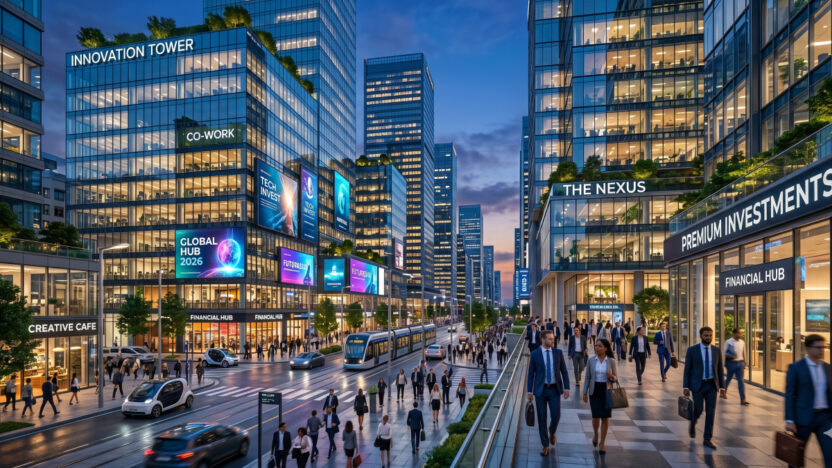
Commercial real estate is also evolving. While traditional office spaces remain important, businesses increasingly seek flexible workspaces, coworking facilities, and technology-enabled office environments that support collaboration and employee well-being.
Industrial and logistics properties continue to thrive due to the growth of e-commerce and global supply chain optimization. Warehousing facilities, distribution centers, and last-mile delivery hubs have become critical assets for businesses seeking operational efficiency.
Real estate investment patterns are shifting as investors prioritize technology-enabled properties, sustainable developments, and alternative asset classes. The use of data analytics and predictive modeling allows investors to make more informed decisions and identify emerging market opportunities.
In many regions, government policies supporting affordable housing, infrastructure expansion, and smart city development are further influencing real estate growth. These initiatives create favorable conditions for long-term investment and economic development.
As a result, the global real estate landscape in 2026 is characterized by innovation, resilience, and increasing integration between technology and property management.
3. Smart Buildings and AI-Powered Real Estate
One of the most transformative trends in 2026 is the rise of smart buildings powered by artificial intelligence.
Smart buildings use interconnected sensors, Internet of Things (IoT) devices, and AI-driven systems to optimize building operations and enhance occupant experiences. These technologies collect real-time data and automate various functions, including energy management, security monitoring, climate control, and predictive maintenance.
AI-powered building management systems can analyze occupancy patterns and automatically adjust lighting, heating, and cooling systems to maximize efficiency. This not only reduces energy consumption but also lowers operational costs and supports sustainability goals.
Predictive maintenance is another major advantage of AI-powered real estate. Traditional maintenance practices often rely on scheduled inspections or reactive repairs. AI systems continuously monitor equipment performance and identify potential issues before failures occur. This reduces downtime, extends asset lifespan, and minimizes repair expenses.
Smart security systems leverage facial recognition, behavioral analytics, and real-time monitoring to improve building safety. These technologies help property managers respond quickly to security incidents while enhancing tenant confidence.
For residential properties, AI-powered smart homes provide convenience through voice-controlled devices, intelligent appliances, and automated home management systems. Homeowners can remotely control lighting, security, and energy usage through mobile applications.
Commercial property owners are also benefiting from AI-driven workplace solutions that improve space utilization, employee productivity, and operational efficiency.
As technology becomes more accessible and cost-effective, smart buildings are expected to become the standard rather than the exception in the real estate industry.

4. PropTech Revolution in Real Estate
Property Technology, commonly known as PropTech, is revolutionizing every aspect of the real estate industry.
PropTech refers to digital technologies and platforms designed to improve property transactions, management, marketing, and investment processes. The rapid adoption of PropTech solutions is creating more efficient, transparent, and customer-centric real estate experiences.
Online property marketplaces have simplified property searches by providing detailed listings, virtual tours, market insights, and instant communication tools. Buyers and renters can explore properties from anywhere in the world, reducing the need for physical visits during the initial stages of decision-making.
Virtual reality and augmented reality technologies are transforming property viewing experiences. Prospective buyers can take immersive virtual tours, visualize interior designs, and explore development projects before construction is completed.
Blockchain technology is improving transaction security and transparency. Smart contracts automate property transactions, reduce paperwork, and minimize fraud risks. Blockchain-based property records provide secure and verifiable ownership documentation.
Artificial intelligence enhances property valuation and investment analysis. AI algorithms analyze market trends, historical data, and economic indicators to generate accurate property valuations and investment recommendations.
Cloud-based property management software enables landlords and property managers to streamline tenant communication, maintenance requests, rent collection, and financial reporting.
As innovation continues, PropTech will remain a major driver of industry transformation throughout 2026 and beyond.
5. Rise of Smart Cities and Urban Innovation
Smart cities are becoming a defining feature of urban development in 2026.
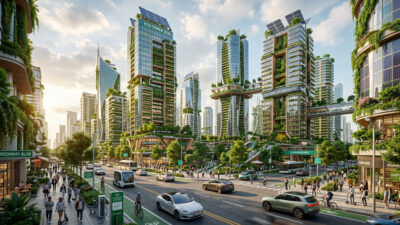
A smart city integrates advanced technologies, data analytics, and connected infrastructure to improve urban living, sustainability, and economic growth. Governments worldwide are investing heavily in smart city initiatives to address challenges related to population growth, traffic congestion, energy consumption, and environmental sustainability.
Real estate developers play a critical role in supporting smart city objectives. Modern developments increasingly incorporate smart infrastructure, renewable energy systems, intelligent transportation networks, and connected public services.
Urban innovation is reshaping residential and commercial environments. Smart transportation systems reduce travel times and improve mobility. Intelligent traffic management systems optimize road usage and minimize congestion.
Green infrastructure, including solar energy installations, rainwater harvesting systems, and sustainable building materials, contributes to environmental sustainability and resource conservation.
Data-driven urban planning allows cities to allocate resources more effectively and improve public services. Real-time monitoring systems provide valuable insights into traffic patterns, energy consumption, and environmental conditions.
Residents benefit from enhanced quality of life through improved connectivity, efficient public services, and sustainable living environments. Businesses gain access to advanced infrastructure that supports innovation and economic growth.
The rise of smart cities is creating significant opportunities for real estate developers, investors, and technology providers. Properties located within smart city ecosystems are likely to experience increased demand and long-term value appreciation.
6. The Growth of Alternative Real Estate Assets
Traditional residential and commercial properties are no longer the only attractive investment options in real estate.
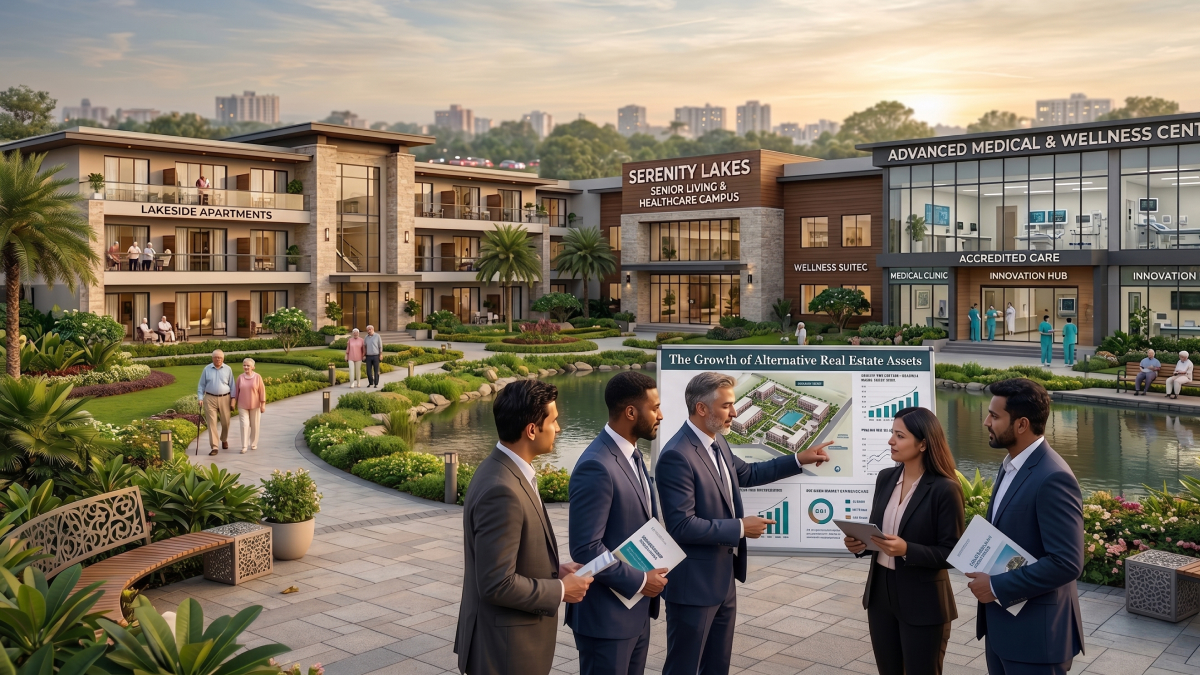
Alternative real estate assets are gaining popularity as investors seek diversification and higher returns. These emerging asset classes include data centers, life sciences facilities, senior housing, student accommodation, self-storage facilities, and logistics centers.
Data centers have become one of the fastest-growing real estate sectors due to the increasing demand for cloud computing, artificial intelligence, and digital services. Companies require secure and scalable infrastructure to support data processing and storage needs.
Life sciences real estate is expanding as pharmaceutical, biotechnology, and healthcare companies invest in research and development facilities. These specialized properties
Senior housing demand continues to grow as aging populations increase worldwide. Modern senior living communities provide healthcare services, social engagement opportunities, and comfortable living environments.
Self-storage facilities benefit from urbanization, mobility trends, and changing consumer lifestyles. These properties provide flexible storage solutions for individuals and businesses.
Logistics and warehouse properties continue to experience strong demand driven by e-commerce growth and supply chain optimization.

7. Challenges Facing the Real Estate Industry
Despite numerous opportunities, the real estate industry faces several significant challenges in 2026.
- Economic uncertainty remains a major concern. Inflation, interest rate fluctuations, and geopolitical events can influence property values, financing costs, and investment activity.
- Housing affordability continues to be a pressing issue in many markets. Rising property prices and construction costs make homeownership increasingly difficult for many individuals and families.
- Regulatory compliance is becoming more complex as governments introduce stricter environmental, data privacy, and building safety requirements. Real estate businesses must adapt to evolving regulations while maintaining profitability.
- Cybersecurity risks are increasing as digital technologies become more integrated into real estate operations. Protecting sensitive data and preventing cyberattacks require significant investment in security infrastructure.
- Labor shortages within construction and property management sectors can delay projects and increase operational costs. The industry must invest in workforce development and automation solutions to address talent gaps.
- Climate change presents long-term challenges related to environmental resilience and sustainability. Developers must consider factors such as rising sea levels, extreme weather events, and energy efficiency standards when planning new projects.
Successfully navigating these challenges requires strategic planning, technological innovation, and adaptability.
8. Best Practices for Real Estate Businesses in 2026
To remain competitive in a rapidly evolving market, real estate businesses must adopt forward-thinking strategies.
1) Organizations should embrace digital transformation by investing in PropTech solutions, AI-powered analytics, and cloud-based management platforms. These technologies improve efficiency and enhance customer experiences.
2) Sustainability should be integrated into every aspect of development and operations. Green building certifications, renewable energy systems, and environmentally responsible practices can attract tenants and investors while reducing long-term costs.
3) Data-driven decision-making should become a core business capability. Leveraging analytics enables organizations to identify market trends, optimize investments, and improve operational performance.
4) Businesses should prioritize customer-centric experiences. Personalized services, digital engagement tools, and transparent communication help build trust and long-term relationships.
5) Organizations should foster innovation by encouraging collaboration between technology teams, real estate professionals, and external partners. Continuous learning and experimentation support adaptability in changing market conditions.
6) Risk management and cybersecurity should remain top priorities. Implementing robust governance frameworks and security measures protects business operations and stakeholder interests.
By following these best practices, real estate businesses can position themselves for sustainable growth and success.
9. Future Predictions Beyond 2026
Looking beyond 2026, the real estate industry is expected to continue evolving at an accelerated pace.
- Artificial intelligence will become even more sophisticated, enabling fully autonomous property management systems and highly personalized real estate experiences. AI-driven predictive analytics will help investors identify opportunities with unprecedented accuracy.
- The metaverse and digital real estate may create entirely new markets and investment categories. Virtual properties and immersive digital environments could become valuable assets for businesses and individuals.
- Sustainability will move from a competitive advantage to a fundamental requirement. Net-zero buildings, renewable energy integration, and circular construction practices will become standard industry expectations.
- Construction technologies such as 3D printing, robotics, and modular building systems will improve efficiency and reduce project timelines. These innovations will help address housing shortages and affordability challenges.
- Smart cities will expand globally, creating interconnected ecosystems that integrate transportation, energy, communication, and public services.
- Fractional ownership and tokenized real estate investments will increase accessibility, allowing a broader range of investors to participate in property markets.
Ultimately, the future of real estate will be shaped by technology, sustainability, and innovation-driven business models.
10. Conclusion
The real estate industry in 2026 stands at the intersection of technology, sustainability, and changing consumer expectations. Emerging trends such as AI-powered smart buildings, PropTech innovation, smart city development, and alternative real estate assets are transforming the way properties are built, managed, and invested in.
While challenges related to affordability, regulation, cybersecurity, and economic uncertainty remain significant, they also create opportunities for businesses willing to innovate and adapt. Organizations that embrace digital transformation, prioritize sustainability, and leverage data-driven strategies will be best positioned to succeed in the evolving market landscape.
Looking beyond 2026, the pace of change is expected to accelerate further. Advances in artificial intelligence, smart infrastructure, and investment technologies will continue reshaping the industry, creating new opportunities for growth and value creation.
For developers, investors, property managers, and real estate professionals, understanding and responding to these emerging trends is no longer optional. It is essential for long-term success in an increasingly dynamic and competitive global market.