
Cognitive Behavioral Therapy (CBT) is one of the most effective and widely used approaches for addressing a variety of mental health challenges, including anxiety, depression, stress, and negative thought patterns. The best CBT services in India combine evidence-based therapeutic techniques with personalized care to help individuals develop healthier thinking habits and coping strategies. Experienced therapists work closely with clients to identify unhelpful behaviors, challenge limiting beliefs, and build practical skills for managing daily challenges.
With the growing availability of both in-person and online therapy options, accessing quality CBT has become more convenient than ever. Choosing the right CBT professional can play a significant role in improving emotional well-being, enhancing resilience, and supporting long-term mental health and personal development.
Table of Contents:
- Introduction
- Understanding Mental Health in India
- What Makes CBT Effective?
- Conditions Treated with CBT
- How CBT Sessions Work
- Types of CBT Available in India
- Benefits of Choosing CBT in India
- How to Choose the Best CBT Therapist in India
- Tips to Get the Best Results from CBT
- Conclusion
1. Introduction
Mental health has become one of the most important aspects of overall well-being in today’s fast-paced world. While physical health often receives immediate attention, emotional and psychological health can sometimes be overlooked until symptoms become overwhelming. Stressful work environments, academic pressure, financial concerns, relationship conflicts, social expectations, and the constant influence of digital technology have contributed to increasing mental health challenges across India.
More people are recognizing the importance of seeking professional help when facing emotional difficulties, and therapy has become increasingly accepted as a valuable tool for personal growth and recovery. Among the many therapeutic approaches available, Cognitive Behavioral Therapy (CBT) has emerged as one of the most trusted and scientifically validated treatment methods.
CBT is based on a simple yet powerful principle: our thoughts, emotions, and behaviors are interconnected. Negative thinking patterns can create emotional distress and unhealthy behaviors, while positive changes in thinking can lead to healthier emotional responses and actions. By helping individuals identify and challenge distorted thought patterns, CBT empowers them to develop practical coping skills that improve mental well-being.
In India, CBT is now offered through a wide range of mental health professionals, including clinical psychologists, counseling psychologists, psychiatrists, and psychotherapists. The growth of teletherapy and online counseling platforms has further expanded access to CBT services, allowing individuals from urban and rural areas alike to receive professional support.

2. Understanding Mental Health in India
Mental health has historically been a misunderstood and often stigmatized topic in India. For generations, psychological challenges were frequently dismissed as personal weaknesses, family issues, or temporary emotional struggles rather than recognized as legitimate health concerns requiring professional intervention.
However, the mental health landscape in India has undergone significant changes over the past decade. Growing awareness campaigns, increased media coverage, government initiatives, and the efforts of mental health professionals have contributed to a broader understanding of psychological well-being.
Students often experience intense academic pressure, competitive examinations, and expectations regarding career success. Working professionals face demanding schedules, performance pressures, job insecurity, and challenges in maintaining work-life balance. Families may struggle with relationship conflicts, caregiving responsibilities, and financial stress. Older adults can encounter loneliness, health concerns, and adjustment difficulties during retirement.
One of the most encouraging developments in India’s mental healthcare ecosystem is the increasing availability of qualified professionals and evidence-based treatment options. Large metropolitan cities such as Delhi, Mumbai, Bengaluru, Hyderabad, Chennai, Pune, and Kolkata have witnessed substantial growth in mental health clinics and counseling centers. Additionally, online therapy platforms have made professional support accessible to individuals in smaller cities and rural regions.
CBT has become particularly popular in India because of its practical, structured, and results-oriented approach. Unlike therapies that may require years of exploration, CBT often provides individuals with actionable tools that can be applied immediately in daily life. This aligns well with the preferences of many individuals seeking efficient and effective solutions to mental health challenges.
Despite these positive developments, challenges remain. Mental health resources are still unevenly distributed across the country, and there is a continuing need for greater awareness, affordability, and accessibility. Nevertheless, the growing recognition of mental health as a critical component of overall wellness represents a promising shift for India’s future.
3. What Makes CBT Effective?
Cognitive Behavioral Therapy has earned its reputation as one of the most effective psychological treatments available today because it combines scientific principles, practical techniques, and measurable outcomes.
At its core, CBT is based on the understanding that thoughts influence emotions, and emotions influence behaviors. When individuals develop negative or distorted thinking patterns, they may experience emotional distress and engage in behaviors that reinforce their difficulties.
One of the primary reasons CBT is so effective is its structured approach. Therapy sessions typically focus on specific goals and measurable progress. Clients and therapists work collaboratively to identify challenges, develop strategies, and evaluate outcomes.
Another important factor is the emphasis on skill development. Rather than creating long-term dependency on therapy, CBT teaches individuals practical tools that they can continue using independently after treatment concludes.
Common CBT techniques include:
- Cognitive restructuring
- Behavioral activation
- Exposure therapy
- Thought monitoring
- Problem-solving training
- Relaxation exercises
- Mindfulness techniques
- Stress management strategies
These techniques empower individuals to become active participants in their own recovery.
The combination of scientific validation, practical techniques, measurable outcomes, and long-term skill development makes CBT one of the most successful therapeutic approaches available in India and around the world.
4. Conditions Treated with CBT
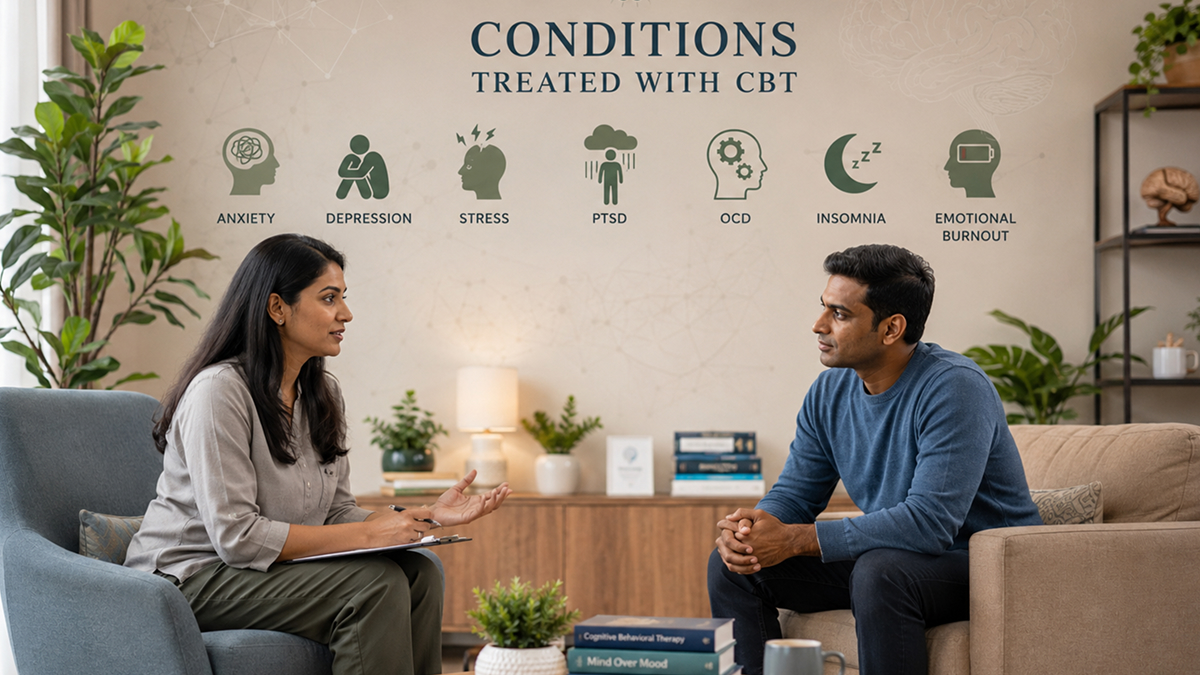
One of the primary reasons Cognitive Behavioral Therapy (CBT) has become one of the most widely recommended psychological treatments is its effectiveness across a broad range of mental health conditions. CBT is not limited to a single disorder; rather, it provides practical techniques that can be adapted to address various emotional, behavioral, and psychological challenges.
The versatility of CBT makes it suitable for individuals of different ages, backgrounds, and life circumstances. Whether a person is dealing with mild stress or a complex mental health condition, CBT can often play a valuable role in treatment and recovery.
1) Anxiety Disorders
Anxiety disorders are among the most common mental health conditions treated with CBT. Individuals experiencing excessive worry, fear, or nervousness often develop patterns of thinking that reinforce their anxiety.
CBT helps individuals:
- Identify anxiety triggers
- Challenge irrational fears
- Reduce avoidance behaviors
- Develop healthier coping mechanisms
- Build confidence in managing uncertainty
Common anxiety-related conditions treated with CBT include:
- Generalized Anxiety Disorder (GAD)
- Social Anxiety Disorder
- Panic Disorder
- Specific Phobias
- Health Anxiety
Through gradual exposure techniques and cognitive restructuring, CBT helps individuals regain control over their thoughts and reactions.
2) Depression
Depression affects millions of people worldwide and can significantly impact quality of life. Negative thought patterns such as hopelessness, self-criticism, and pessimism often contribute to depressive symptoms.
CBT assists individuals in:
- Recognizing negative thinking patterns
- Developing realistic perspectives
- Increasing engagement in meaningful activities
- Improving self-esteem
- Enhancing problem-solving abilities
Many studies have demonstrated that CBT can be as effective as medication for mild to moderate depression and can complement medication for more severe cases.
3) Obsessive-Compulsive Disorder (OCD)
OCD involves intrusive thoughts (obsessions) and repetitive behaviors (compulsions) that interfere with daily life.
CBT, particularly Exposure and Response Prevention (ERP), is considered one of the most effective treatments for OCD.
Treatment helps individuals:
- Face feared situations gradually
- Reduce compulsive behaviors
- Learn to tolerate uncertainty
- Challenge obsessive thinking patterns
4) Post-Traumatic Stress Disorder (PTSD)
Individuals who have experienced traumatic events may struggle with intrusive memories, emotional distress, and avoidance behaviors.
CBT helps trauma survivors:
- Process traumatic experiences
- Reduce emotional distress
- Reframe unhelpful beliefs
- Improve coping skills
- Regain a sense of safety and control
Trauma-focused CBT approaches have shown strong effectiveness in helping individuals recover from traumatic experiences.
5) Stress and Burnout
Modern lifestyles often expose individuals to chronic stress, workplace pressure, and emotional exhaustion.
CBT can help by:
- Identifying stress triggers
- Improving time management
- Building resilience
- Developing healthy coping strategies
- Preventing burnout
Professionals, entrepreneurs, students, and caregivers frequently benefit from CBT-based stress management programs.
6) Sleep Disorders
Sleep problems such as insomnia often involve unhelpful thoughts and behaviors that disrupt healthy sleep patterns.
CBT for Insomnia (CBT-I) focuses on:
- Improving sleep habits
- Addressing sleep-related anxiety
- Establishing healthy bedtime routines
- Modifying behaviors that interfere with sleep
CBT-I is widely regarded as one of the most effective non-medication treatments for insomnia.
5. How CBT Sessions Work
Many individuals considering therapy wonder what actually happens during a CBT session. Understanding the therapeutic process can reduce uncertainty and help clients feel more comfortable before beginning treatment.
CBT is typically structured, goal-oriented, and collaborative.
1) Initial Assessment
The first session usually involves a comprehensive assessment.
The therapist may explore:
- Current concerns
- Emotional symptoms
- Behavioral patterns
- Personal history
- Treatment goals
This information helps create a customized treatment plan tailored to the client’s specific needs.
2) Goal Setting
Unlike some therapeutic approaches that remain open-ended, CBT places strong emphasis on defining clear goals.
Examples might include:
- Reducing panic attacks
- Managing workplace stress
- Improving self-confidence
- Overcoming social anxiety
- Reducing depressive symptoms
Specific goals provide direction and make progress easier to measure.
3) Challenging Cognitive Distortions
Many emotional difficulties are linked to cognitive distortions such as:
- Catastrophizing
- Overgeneralization
- Black-and-white thinking
- Mind reading
- Personalization
CBT teaches individuals how to challenge these distortions and develop more balanced perspectives.
4) Behavioral Interventions
Thoughts are only one part of the equation. CBT also focuses on behavior.
Examples include:
- Gradual exposure to feared situations
- Increasing enjoyable activities
- Practicing new social skills
- Improving problem-solving abilities
Behavioral changes often reinforce cognitive improvements.
5) Homework Assignments
Homework is an important part of CBT.
Assignments may include:
- Thought journals
- Mood tracking
- Behavioral experiments
- Relaxation exercises
- Exposure activities
These exercises help individuals apply therapeutic concepts in real-life situations.
6) Monitoring Progress
Throughout treatment, therapists regularly review progress and adjust strategies as needed.
This ongoing evaluation ensures that therapy remains focused and effective.
7) Duration of Treatment
CBT is often considered a short- to medium-term therapy.
Many individuals experience meaningful improvements within:
- 8–12 sessions for specific issues
- 12–20 sessions for moderate conditions
- Longer durations for complex cases
The exact timeline varies depending on individual circumstances and treatment goals.
6. Types of CBT Available in India
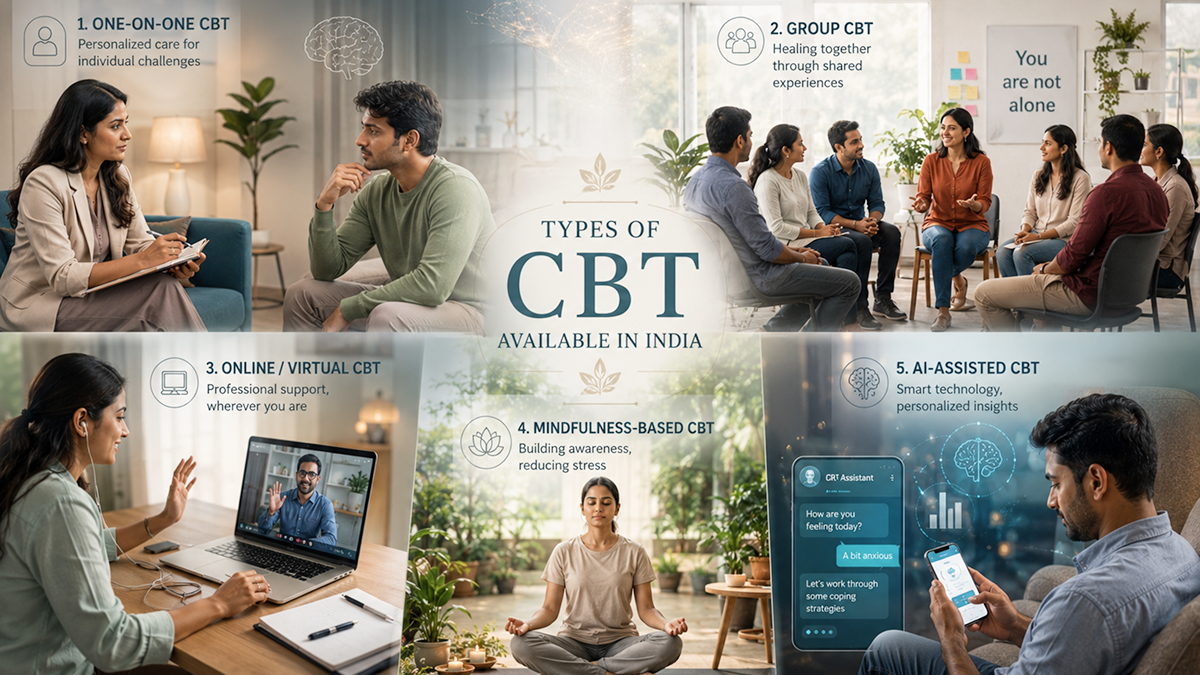
As mental health services continue to expand across India, several specialized forms of CBT are becoming increasingly available.
1) Traditional Individual CBT
- This is the most common form of CBT.
- Sessions involve one-on-one meetings between a therapist and client, allowing for highly personalized treatment.
2) Online CBT
Teletherapy has transformed mental healthcare accessibility in India.
Benefits include:
- Greater convenience
- Reduced travel time
- Access to specialists nationwide
- Enhanced privacy
Online CBT has become particularly popular among working professionals and individuals in smaller cities.
3) Group CBT
Group therapy allows multiple participants facing similar challenges to work together under professional guidance.
Advantages include:
- Peer support
- Shared experiences
- Reduced feelings of isolation
- Lower treatment costs
4) CBT for Children and Adolescents
Younger individuals often experience anxiety, academic stress, social difficulties, and emotional challenges.
Child-focused CBT incorporates:
- Age-appropriate techniques
- Interactive activities
- Family involvement
5) Trauma-Focused CBT
Designed specifically for individuals who have experienced trauma.
Treatment addresses:
- Traumatic memories
- Emotional regulation
- Recovery and resilience
6) CBT for Couples
Couples therapy using CBT principles can help improve:
- Communication
- Conflict resolution
- Emotional understanding
- Relationship satisfaction
7) Mindfulness-Based CBT
This approach combines traditional CBT techniques with mindfulness practices.
Benefits may include:
- Improved emotional awareness
- Reduced stress
- Enhanced self-regulation
- Better coping skills
The growing diversity of CBT options in India allows individuals to choose formats that best suit their preferences and needs.
7. Benefits of Choosing CBT in India
India’s mental healthcare ecosystem has evolved significantly, making CBT more accessible and effective than ever before.
1) Growing Availability of Qualified Professionals
Major cities now offer access to highly trained psychologists and psychotherapists specializing in CBT.
Additionally, online platforms have expanded access across the country.
2) Cost-Effective Treatment
Compared to many international markets, CBT services in India are often more affordable while maintaining high professional standards.
3) Evidence-Based Approach
CBT is backed by decades of scientific research, providing confidence in its effectiveness.
4) Practical and Goal-Oriented
Many individuals appreciate CBT’s focus on actionable solutions rather than abstract discussions.
5) Flexible Delivery Options
CBT can be delivered through:
- In-person sessions
- Video consultations
- Telephone therapy
- Hybrid models
This flexibility increases accessibility for diverse populations.
6) Long-Term Skill Development
CBT teaches lifelong skills that remain useful long after therapy concludes.
Clients learn:
- Emotional regulation
- Stress management
- Problem-solving
- Resilience-building
These skills contribute to sustained mental well-being.
8. How to Choose the Best CBT Therapist in India
Selecting the right CBT therapist is one of the most important decisions in your mental health journey. Even though cognitive behavioral therapy is a structured and evidence-based approach, the quality of the therapeutic relationship significantly influences treatment outcomes.
A skilled therapist not only applies CBT techniques effectively but also creates a safe, supportive environment where clients feel comfortable exploring their thoughts, emotions, and challenges.
With the growing number of mental health professionals and online therapy platforms available in India, finding the right therapist may seem overwhelming. However, understanding what to look for can simplify the process.
1) Verify Qualifications and Credentials
The first step is ensuring that the therapist has appropriate education, training, and credentials.
Look for professionals such as:
- Clinical Psychologists
- Counseling Psychologists
- Psychotherapists trained in CBT
- Psychiatrists who provide psychotherapy
A qualified CBT therapist should have formal education in psychology, counseling, psychotherapy, or psychiatry, along with specialized training in cognitive behavioral therapy.
When researching therapists, consider:
- Academic qualifications
- Professional certifications
- Years of experience
- Specialized CBT training
- Areas of expertise
Proper credentials provide confidence that the therapist follows ethical and professional standards.
2) Consider Their Area of Specialization
Not all therapists specialize in the same mental health concerns.
Some focus on:
- Anxiety disorders
- Depression
- Trauma and PTSD
- Obsessive-Compulsive Disorder (OCD)
- Relationship issues
- Workplace stress
- Adolescent mental health
Choosing a therapist with experience treating your specific concern often improves treatment effectiveness.
For example, someone struggling with OCD may benefit from a therapist experienced in Exposure and Response Prevention (ERP), while a trauma survivor may need a professional trained in trauma-focused CBT.
3) Evaluate Experience Levels
Experience often contributes to a therapist’s ability to adapt treatment strategies to different situations.
Questions worth considering include:
- How long have they practiced CBT?
- What conditions do they commonly treat?
- Have they worked with individuals facing challenges similar to yours?
While newer therapists can also be highly competent, experience may provide additional confidence and expertise.
4) Assess Communication Style
Every therapist has a unique communication style. Some are highly structured and direct, while others adopt a more collaborative and conversational approach.
During an initial consultation, ask yourself:
- Do I feel comfortable speaking openly?
- Does the therapist listen attentively?
- Do they explain concepts clearly?
- Do I feel respected and understood?
A strong therapeutic relationship is often one of the strongest predictors of successful outcomes.
5) Check Availability and Accessibility
Consistency is important in CBT.
Before committing to a therapist, consider:
- Session availability
- Appointment flexibility
- Online therapy options
- Location convenience
- Emergency support policies
Regular attendance helps maintain momentum and supports progress throughout treatment.
6) Read Reviews and Testimonials Carefully
While reviews should not be the sole deciding factor, they can provide valuable insights into a therapist’s professionalism and approach.
Look for patterns regarding:
- Communication quality
- Professionalism
- Effectiveness
- Client satisfaction
However, remember that therapy experiences are highly personal, and what works well for one individual may differ for another.
7) Understand Costs and Financial Considerations
Therapy is an investment in mental health.
Before beginning treatment, clarify:
- Session fees
- Cancellation policies
- Package options
Affordable therapy options are increasingly available in India through both private practitioners and online mental health platforms.

9. Tips to Get the Best Results from CBT
Cognitive Behavioral Therapy is highly effective, but like any form of treatment, outcomes often depend on active participation and commitment.
Clients who engage fully in the process typically experience greater benefits and more sustainable improvements.
1) Be Honest and Open
- Therapy works best when individuals communicate openly about their thoughts, feelings, and experiences.
- Some topics may feel uncomfortable to discuss, but honesty allows therapists to provide the most appropriate guidance and support.
- Remember that therapists are trained professionals who provide a confidential and non-judgmental environment.
2) Attend Sessions Consistently
- Consistency is crucial for progress.
- Missing sessions frequently can disrupt momentum and delay improvement.
- Establish a regular schedule and prioritize therapy appointments as you would make any important commitment.
3) Complete Homework Assignments
One of the defining features of CBT is the use of between session exercises.
Homework assignments often include:
- Thought records
- Behavioral experiments
- Journaling
- Exposure exercises
- Relaxation practices
These activities help reinforce learning and translate therapeutic concepts into real-world situations.
4) Practice New Skills Regularly
CBT teaches practical coping skills that require regular practice.
Examples include:
- Challenging negative thoughts
- Deep breathing techniques
- Mindfulness exercises
- Problem-solving methods
- Emotional regulation strategies
Like any skill, these techniques become more effective with repetition and consistent use.
5) Be Patient with the Process
- Meaningful change takes time.
- Some individuals notice improvements within a few sessions, while others require longer periods to achieve their goals.
- Progress may not always be linear. Temporary setbacks are normal and should not be viewed as failures.
- Patience and persistence are essential components of successful therapy.
6) Set Realistic Expectations
- CBT is highly effective, but it is not a magic solution.
- The goal is not to eliminate all negative emotions but to develop healthier ways of understanding and managing them.
- Realistic expectations help maintain motivation and prevent disappointment.
7) Track Your Progress
Monitoring improvements can boost motivation and provide valuable insights.
Consider tracking:
- Mood changes
- Anxiety levels
- Sleep quality
- Stress management
- Behavioral changes
Many individuals find it encouraging to review how far they have progressed over time.
8) Apply Skills Outside Therapy
- The greatest benefits of CBT often occur outside the therapy room.
- Whenever challenges arise, actively apply the strategies learned during sessions.
- This real-world application strengthens new habits and increases confidence in managing future difficulties.
9) Maintain a Growth Mindset
- Approach therapy with curiosity and openness to change.
- Rather than focusing on perfection, view challenges as opportunities for learning and growth.
- A growth-oriented mindset often enhances resilience and supports long-term success.
10. Conclusion
Mental health is an essential component of overall well-being, influencing how individuals think, feel, behave, and navigate life’s challenges. As awareness of mental health continues to grow across India, more people are recognizing the value of seeking professional support when emotional or psychological difficulties arise.
Among the many therapeutic approaches available today, Cognitive Behavioral Therapy (CBT) stands out as one of the most effective, practical, and scientifically validated treatments. Its structured, goal-oriented nature empowers individuals to identify unhelpful thought patterns, modify destructive behaviors, and develop healthier ways of coping with life challenges.
From anxiety and depression to stress, trauma, OCD, and relationship difficulties, CBT has demonstrated remarkable effectiveness across a wide range of mental health conditions. Its emphasis on skill development and self-awareness enables individuals not only to overcome current challenges but also to build resilience for the future.
India’s expanding mental healthcare landscape has made CBT more accessible than ever before. Qualified therapists, specialized clinics, hospitals, and online counseling platforms now offer high-quality CBT services to individuals across urban and rural regions. This increased accessibility is helping bridge treatment gaps and encouraging more people to prioritize their mental well-being.
As India continues to embrace mental health awareness and accessible psychological care, CBT remains one of the most trusted and effective pathways toward emotional well-being, resilience, and lasting positive change. By investing in your mental health today, you take an important step toward building a healthier, happier, and more empowered future.