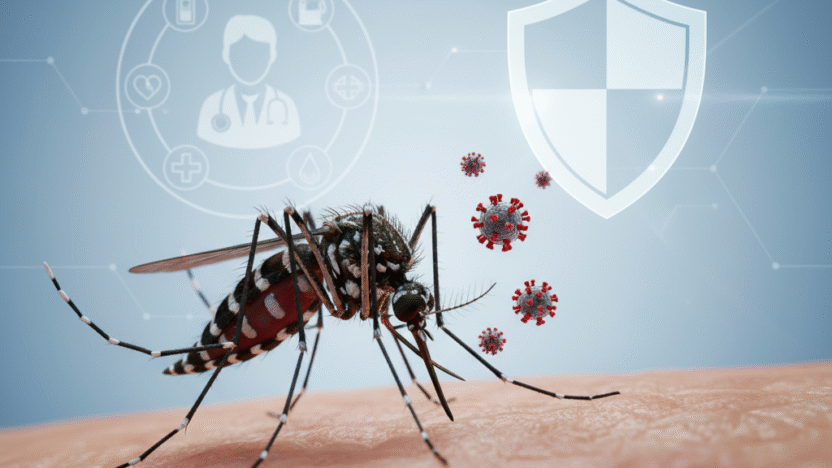
It explores everything you should understand about this fast-spreading mosquito-borne disease. This blog covers the causes, symptoms, and stages of dengue infection while offering practical prevention tips to protect yourself and your loved ones. Learn how the Aedes mosquito transmits the virus, the importance of early diagnosis, and effective community measures to control outbreaks.
With rising global temperatures and urbanization increasing mosquito habitats, awareness and prevention are more critical than ever. To Stay informed, stay prepared, and discover how simple steps can make a big difference in avoiding dengue fever.
Table of Contents
- Introduction
- The Causes and Transmission
- Symptoms and Stages of Dengue
- Diagnosis and Treatment
- Prevention and Protection
- Dengue Vaccines and Research Advances
- Global and Local Impact of Dengue
- Safety Tips and Best Practices
- Conclusion
1. Introduction
Dengue fever is one of the world’s most significant mosquito-borne viral diseases, pose a major public health concern in the tropical and subtropical regions. The disease is caused by the dengue virus (DENV), which belongs to the Flavivirus genus and that has four distinct but closely related serotypes like DENV-1, DENV-2, DENV-3, and DENV-4. Infection with one serotype that can provides lifelong immunity against that specific type, but not against the others for leaving individuals vulnerable to subsequent infections.
The World Health Organization (WHO) estimates that approximately 390 millions dengue infections occur globally each year, with about 96 million cases manifesting clinically. Once considered a disease confined to the tropical climates, dengue has expanded to new territories due to factors such as climate change, urbanization, and has increased global travel. The spread of Aedes aegypti and Aedes albopictus mosquitoes for the primary vectors have made dengue a global threat that the transcends borders.
This Dengue fever, also known as “breakbone fever” because of the severe muscle and joint pain it cause the range from mild illness to severe, life-threatening conditions such as Dengue Hemorrhagic Fever (DHF) and Dengue Shock Syndrome (DSS). Understanding how dengue can spreads, identifying its symptoms early, and apply the effective prevention strategies are key to reducing its impact on public health.
This blog can explores the causes, symptoms, diagnosis, treatment, prevention measures, vaccine developments, and the global efforts has undertaken to curb the spread of this dangerous disease.
2. Causes and Transmission
Dengue fever is the primarily caused by the dengue virus has transmitted through the bites of infected Aedes mosquitoes have mainly Aedes aegypti and, to a lesser extent, Aedes albopictus. These mosquitoes can thrive in the urban environments and breed in stagnant water found in the containers, flowerpots, discarded tires, and other domestic habitats.
When a mosquito bites a person has infected with the dengue virus, it ingests the virus along with the blood. After an incubation period of 8–12 days. When the virus multiplies inside the mosquito and spreads to its salivary glands. The mosquito can transmit the virus to healthy individuals through its bite. The virus is not transmit can directly from person to person, but humans serve as the main reservoir for mosquitoes to pick up and spread the infection.
Environmental and social factors play a crucial role in dengue transmission. Poor waste management, unplanned urbanization, inadequate water supply systems, and climate variations, especially increased rainfall and higher temperatures to create ideal breeding conditions for Aedes mosquitoes.
Furthermore, these mosquitoes are daytime biters, with peak activity in the early morning and late afternoon. Because they often live close to humans and feed multiple times during a single reproductive cycle, even a small number of mosquitoes can sustain transmission within communities.
3. Symptoms and Stages of Dengue
The incubation period of dengue fever typically lasts 4–10 days after the bite of an infected mosquito. The illness usually progresses through three main stages: febrile phase, critical phase, and recovery phase.
3.1) Febrile Phase
The onset of dengue fever is usually sudden, characterized by:
- High fever (up to 104°F or 40°C)
- Severe headache
- Pain behind the eyes
- Muscle and joint pains (“breakbone pain”)
- Fatigue and weakness
- Mild bleeding manifestations such as gum bleeding or nosebleeds
- Skin rashes appearing 2–5 days after fever onset
This phase lasts around 2–7 days, during which patients are infectious to mosquitoes.
3.2) Critical Phase
In some cases, the disease progresses to the critical phase, typically occurring around the time the fever subsides. During this period, plasma leakage from blood vessels may occur, leading to Dengue Hemorrhagic Fever (DHF) or Dengue Shock Syndrome (DSS). Symptoms may include:
- Severe abdominal pain
- Persistent vomiting
- Fluid accumulation (ascites or pleural effusion)
- Rapid breathing
- Bleeding under the skin or from mucosal sites
- Restlessness and irritability
Without proper medical management, this phase can lead to shock, organ failure, or death.
3.3) Recovery Phase
If the patient survives the critical phase, gradual reabsorption of leaked fluids occurs, and the recovery phase begins. The patient may experience fatigue, a slow heart rate, and a rash known as “white islands in a sea of red.” With supportive care, most patients recover completely.
4. Diagnosis and Treatment
Diagnosis
Accurate and early diagnosis of dengue is essential to manage the disease effectively. The diagnosis is based on clinical symptoms, patient history, and laboratory tests. Key diagnostic tools include:
- Serological Tests: Detect antibodies (IgM and IgG) against dengue viruses using ELISA (Enzyme-Linked Immunosorbent Assay).
- NS1 Antigen Test: Detects the presence of the dengue virus protein during the early stages (first 5 days).
- RT-PCR (Reverse Transcription Polymerase Chain Reaction): Confirms the presence and type of dengue virus by detecting viral RNA.
- Complete Blood Count (CBC): Reveals a decrease in platelet count (thrombocytopenia) and white blood cells (leukopenia), both common indicators of dengue.
Treatment
Currently, there is no specific antiviral treatment for dengue fever. Management focuses on supportive care and symptom relief. Key components include:
- Hydration: Oral rehydration or intravenous fluids to prevent dehydration caused by high fever and plasma leakage.
- Fever Management: Paracetamol (acetaminophen) is used to reduce fever and pain. Aspirin and nonsteroidal anti-inflammatory drugs (NSAIDs) should be avoided as they increase bleeding risk.
- Monitoring: Close observation of vital signs, platelet counts, and hematocrit levels, especially during the critical phase.
- Hospitalization: Severe cases of dengue, particularly those with warning signs of DHF or DSS, require hospital care for fluid management, blood transfusions, and intensive monitoring.
With timely intervention and adequate care, the fatality rate of severe dengue can be reduced to less than 1%.

5. Prevention and Protection
Preventing dengue primarily involves controlling mosquito populations and reducing human–mosquito contact. Key preventive strategies include:
Environmental Control
- Eliminate breeding sites: Remove stagnant water from containers, tires, and gutters weekly.
- Cover water storage: Keep tanks and buckets tightly sealed.
- Waste management: Dispose of garbage properly to prevent water accumulation.
Personal Protection
- Wear protective clothing: Long-sleeved shirts and pants reduce exposed skin.
- Use mosquito repellents: Apply repellents containing DEET, picaridin, or lemon eucalyptus oil.
- Use mosquito nets: Particularly important during daytime naps or in high-risk areas.
- Install screens: On windows and doors to block mosquitoes indoors.
Community-Level Measures
- Fogging and larvicides: Periodic fogging with insecticides and application of larvicides in breeding areas can reduce mosquito density.
- Public awareness campaigns: Education about dengue prevention and early symptom recognition is crucial in controlling outbreaks.
- Vector surveillance: Monitoring mosquito populations helps authorities predict and respond to outbreaks effectively.
By adopting a combination of environmental, personal, and community-based approaches, dengue transmission can be significantly reduced.
6. Dengue Vaccines and Research Advances
The quest for an effective dengue vaccine has been ongoing for decades due to the complexity of the virus’s four serotypes. Vaccination efforts must provide protection against all serotypes to prevent severe secondary infections caused by antibody-dependent enhancement (ADE).
Approved Vaccines
1) Dengvaxia (CYD-TDV):
- Developed by Sanofi Pasteur, it’s the first dengue vaccine approved by WHO in 2015.
- It is recommended only for individuals previously infected with dengue and living in endemic regions, as it can increase the risk of severe disease in those who have never been infected.
- The vaccine is administered in three doses over 12 months.
2) TAK-003 (Qdenga):
- Developed by Takeda Pharmaceuticals and approved in several countries, including the European Union and the UK.
- It has shown broad protection against all four serotypes, even in dengue-naive individuals.
3) Ongoing Research
- Researchers continue to explore new vaccine candidates and antiviral drugs targeting viral replication and host immune responses. Advances in genetic engineering, mRNA vaccine technology, and vector control innovations (like genetically modified mosquitoes that reduce vector populations) offer new hope for effective long-term dengue control.
7. Global and Local Impact of Dengue
Dengue fever is now endemic in over 125 countries, with the highest burden in Asia, Latin America, and Africa. Southeast Asia and the Western Pacific regions together account for more than 70% of the global disease burden.
Economic and Social Impact
- The annual global economic cost of dengue is estimated at $8–9 billion.
- Outbreaks strain healthcare systems, reduce productivity, and cause absenteeism in school and work.
- Low-income communities are disproportionately affected due to limited access to healthcare and poor living conditions.
Climate Change and Urbanization
Rising temperatures and erratic rainfall patterns have expanded the geographical range of Aedes mosquitoes. Urban growth without proper sanitation infrastructure contributes to breeding hotspots. Consequently, countries previously unaffected by dengue are now reporting local transmission.
- Local Impact and Public Health Initiatives
- Countries have adopted various strategies to combat dengue, such as:
- Integrated Vector Management (IVM) programs combine environmental, biological, and chemical control.
- Public health campaigns encourage community involvement in mosquito control.
Use of Wolbachia-infected mosquitoes reduces the ability of mosquitoes to transmit dengue viruses.
8. Safety Tips and Best Practices
To stay safe from dengue, it’s essential to combine personal vigilance with community cooperation. Below are practical measures to minimize your risk:
At Home
- Inspect your surroundings weekly for stagnant water.
- Clean flowerpots, roof gutters, and birdbaths regularly.
- Keep windows and doors closed during peak mosquito activity hours.
- Use air conditioning or fans to deter mosquitoes indoors.
For Individuals
- Apply mosquito repellent regularly, especially outdoors.
- Wear light-colored, long-sleeved clothing.
- Stay hydrated and seek medical attention promptly if dengue symptoms appear.
- Avoid self-medication to consult a healthcare provider for proper diagnosis.
Community Involvement
- Participate in neighborhood cleanup drives.
- Educate family members and neighbors about dengue prevention.
- Support local health authorities in vector control initiatives.
Travel Precautions
- Check dengue advisories before traveling to endemic areas.
- Stay in accommodations with proper mosquito protection.
- Continue preventive practices even after returning home, as symptoms can appear several days after infection.
By practicing these habits consistently, individuals and communities can collectively curb the spread of dengue fever and save lives.
9. Conclusion
Dengue fever remains a global health challenge that demands continuous vigilance, research, and public cooperation. With no specific cure available, prevention remains the most powerful tool against this disease. Public education, vector control, vaccination, and international collaboration are vital to reducing dengue’s burden worldwide.
Understanding the causes, recognizing the symptoms early, and adopting practical preventive measures can help protect individuals, families, and entire communities from this mosquito-borne threat. Through collective awareness and action, we can make significant strides toward a dengue-free world.