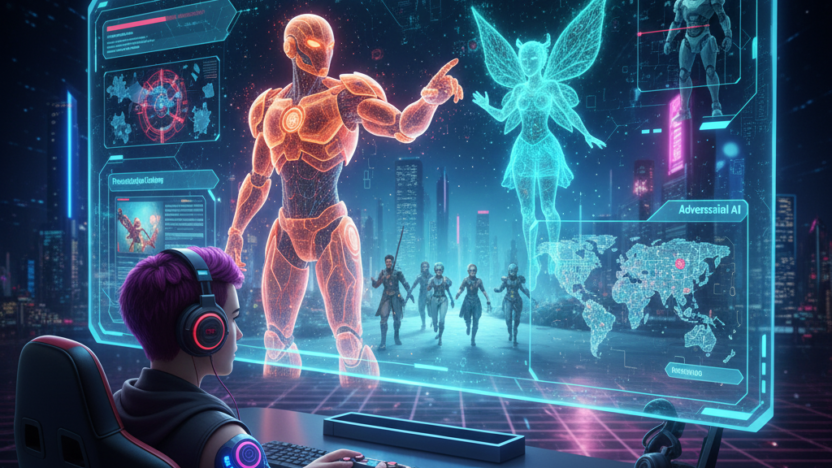
AI agents are changing the face of the gaming industry by bringing advanced intelligence into the gameplay environment. The agents drive NPCs with adaptive behaviors, facilitating much more realistic and dynamic interactions that can enhance player engagement. Beyond just game entertainment, AI agents aid in game design, game testing, and game personalization, enabling developers to create more immersive worlds that cater to individual tastes and preferences.
By monitoring player behavior, anticipating strategies, and acting on them in real time, AI-driven systems raise gameplay complexity and enjoyment. As technology continues to progress, AI agents are poised to rethink how games will be played, designed, and enjoyed, moving innovation along the entire continuum of gaming.
Table of Contents
- Introduction
- Understanding AI Agents
- AI Agents in Game Design
- Impact on Player Experience
- Technologies Behind AI Agents
- AI Agents in Multiplayer and Online Gaming
- Challenges and Ethical Considerations
- Case Studies
- The Future of AI Agents in Gaming
- Conclusion
1. Introduction
The landscape of the game industry has dramatically changed over the last decade, from simple, pixelated games to rich, very interactive digital worlds. One of the most critical drivers for this development is the integration of AI agents. These intelligent systems reshape game mechanics, enhance players’ experiences, and revolutionize development and design processes. By emulating life-like behavior, decision-making, and adaptability, AI agents have become a vital tool for developers desiring to craft dynamic and engaging gaming environments.
AI agents in gaming are no longer confined to rudimentary NPC behaviors. Today, they involve a wide range of functionalities, including adaptive gameplay, procedural content generation, personalized interactions, and even facilitating social experiences in multiplayer environments. Much more than mere entertainment, AI agents are crucial for storytelling, keeping players engaged, and streamlining game design efficiency. Moving into 2025, understanding the function, technology, and implications of AI agents is critical for developers, designers, and stakeholders who want to remain competitive within an evolving market.
2. Understanding AI Agents
AI agents are pieces of software that autonomously perceive an environment, process information, make decisions, and execute actions to achieve defined objectives. In gaming contexts, these may mean agents executing their function to simulate intelligent behaviors, creating natural, responsive, and challenging interactions with players.
Types of AI Agents in Gaming
AI agents can be broadly classified into several categories based on their complexity and purpose:
- Reactive Agents: Such agents react to stimuli in their environment; they maintain neither internal states nor memory. For example, an enemy NPC in a classic platformer may chase the player whenever they enter its detection radius.
- Deliberative Agents: These agents reach decisions through direct planning depending on predictions and objectives. Many strategy games will use them, enabling them to make decisions in complicated situations similar to human beings.
- Hybrid Agents: These agents combine reactive and deliberative approaches to allow immediate responses and long-term planning. Most modern action-adventure games use hybrid agents to provide a balance between realism and challenge.
- Learning Agents: These agents use machine learning to adapt and improve over time. They might analyze player behavior and adjust difficulty levels, strategies, or interactions in order to create personalized gameplay experiences.
Roles of AI Agents in Games
Some of the roles AI agents play in games are:
- Enemy Behavior: NPC enemies will be able to use AI agents in order to track, attack, or evade players more intelligently, adding challenges and immersion.
- Allied NPCs: AI-controlled allies that help the players by providing tactical support, resource management, or strategic coordination.
- Environmental Management: The AI agents dynamically change the game environment through various means like spawning resources, adjusting difficulty, or triggering events.
- Player Interaction: AI agents simulate social interaction, dialogue, and decision-making within the context of narrative engagement.
Understanding the different types and roles of AI agents creates a basis to analyze their impact on both game design and player experience.
3. AI Agents in Game Design
AI agents have transformed game design by making possible richer, more dynamic environments for game developers. They provide capabilities that were previously either impossible to achieve or were too resource intensive.
Dynamic Gameplay and Procedural Generation
One of the biggest contributions by AI agents involves procedural content generation. Automatic generation of levels, maps, quests, and challenges by AI algorithms alleviates much of the burden on designers while creating unique experiences for players. Games such as No Man’s Sky take advantage of this AI-based procedural generation to allow players to explore huge universes.
Adaptive Difficulty and Personalized Experiences
AI agents analyze player behavior and adjust gameplay difficulty accordingly in real time. This adaptive difficulty makes sure that novice players are not frustrated while experts are still challenged. This balance increases the player’s satisfaction and retention, thus showing how AI contributes directly to player-centric design.
Realistic NPC Behaviour
AI agents can enable more realistic and contextual forms of behaviors for NPCs. NPCs, in RPGs or simulation games for instance, can make complex decisions, react to the players’ actions, or remember past events to enrich game immersion and narrative depth.
Supporting Game Testing and Development
AI agents are being used more in game development pipelines for game mechanics testing, bug finding, and simulation of various player behaviors. Automated AI Testing quickens production cycles, cuts costs, and ensures higher quality releases.
4. Impact on Player Experience
The integration of AI agents into games is primarily made to improve the experience of the players. With intelligent, adaptive, and immersive interactions, AI agents raise gameplay to the next level.
- Immersion and Realism: AI agents help create more believable worlds where NPCs can perform behaviors that are consistent with the game universe. Realism furthers an emotional bond between a player and the game world.
- Engagement and Replayability: Adaptive AI keeps games challenging and unpredictable. Through analyzing player decisions, AI agents can introduce new challenges to present fresh experiences with each playthrough and extend the life of a game.
- Personalized Interaction: AI agents can craft interactions with individual players’ likings, strengthening agencies. Customized dialogues, quests, and situations finally give a player the feeling that something depends on their choices.
- Social Experiences in Multiplayer Environments: In online games, AI agents can simulate social interactions, act as moderators, or manage non-human participants. Such agents maintain the balance of games, facilitate matchmaking, and enhance multiplayer experiences.
- Emotional and Narrative Engagement: Advanced AI-driven NPCs convey emotions, remember interactions with players, and respond contextually to deepen storytelling and narrative engagement. Games like The Last of Us Part II show how AI-driven behaviors enhance the emotional immersion of games.
5. Technologies Behind AI Agents
Advanced technologies, such as those mentioned below, support the functionality of an AI agent in gaming. Analyzing these underpinnings can show why AI is becoming central to game development.
1) Machine Learning and Reinforcement Learning
With machine learning, AI agents are enabled to learn from player behaviors and adapt over time. Reinforcement learning enables the agent to optimize strategies through trial and error while making decisions based on maximizing objectives, like winning a match or protecting allies.
2) Pathfinding Algorithms
Pathfinding algorithms, such as A* and Dijkstra, are utilized by AI agents to efficiently navigate through complex game environments. These algorithms avail the NPCs with the capability of moving intelligently, avoiding obstacles, and responding dynamically to changes in conditions.
3) Decision Trees and Behavior Trees
Decision trees and behavior trees guide NPC decision-making, which enables agents to make choices depending on game states and player activity. This architecture produces complex behaviors and context-sensitive reactions.
4) Natural Language Processing (NLP)
In narrative-driven games, NLP can enable AI agents to understand and respond to the player’s dialogue inputs, promoting both more interactive storytelling and realistic conversation.
5) Procedural Content Generation Algorithms
AI-powered procedural generation algorithms dynamically create levels, quests, and scenarios. Such tools offer unlimited creative freedom to the designers, while the manual workload is minimized.
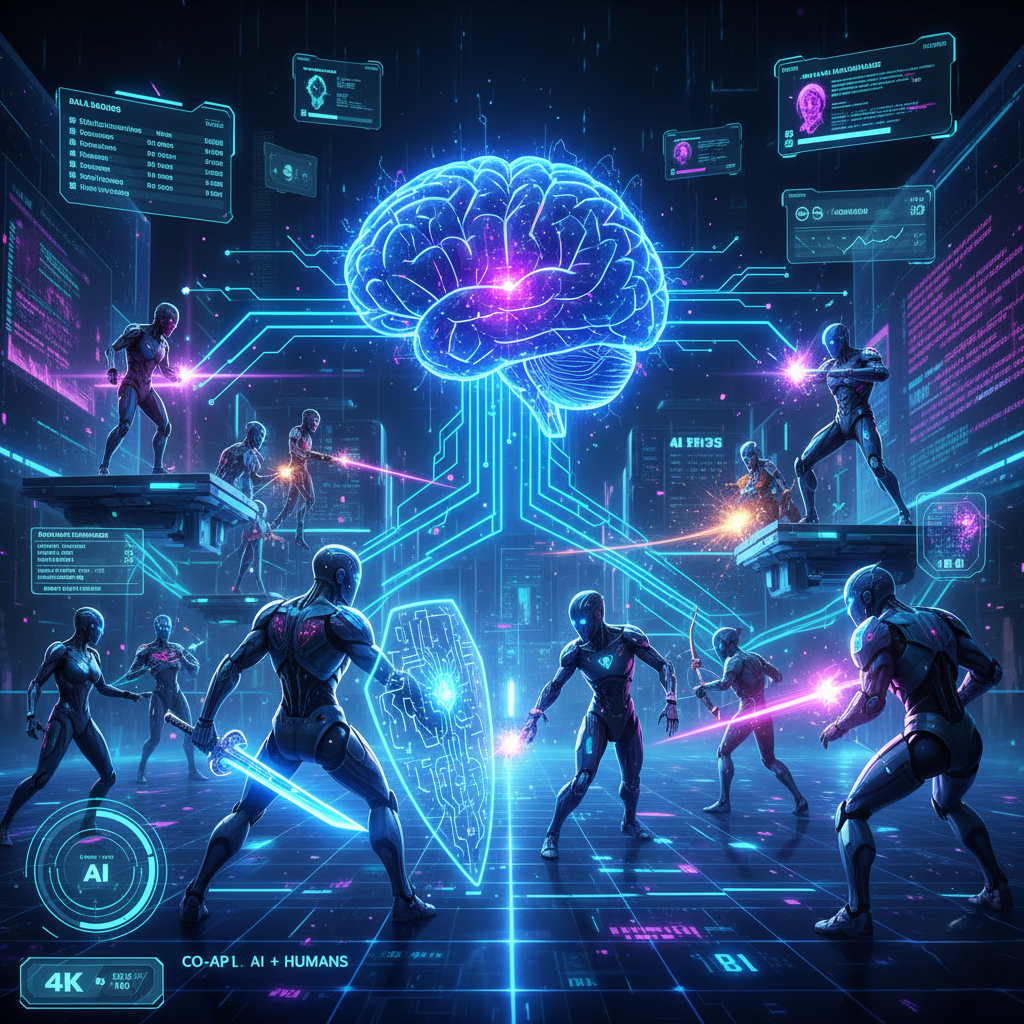
6. AI Agents in Multiplayer and Online Gaming
Multiplayer and online gaming environments present unique challenges and opportunities regarding AI integration. AI agents play several critical roles in these contexts.
- NPCs in Persistent Worlds: These AI agents populate virtual worlds with NPCs that interact with players reliably over time. These agents maintain the continuity of the game world, provide quests, and simulate a vibrant ecosystem.
- Matchmaking and Skill Balancing: AI-driven systems match player skills, behavior, and performance metrics to ensure fair and balanced matches, leading to better player satisfaction and long-term engagement.
- Moderation and Toxicity Management: AI agents monitor the activity in multiplayer for cheating, harassment, and other forms of disruption. This automated moderation improves community health while reducing administrative overhead.
- Cooperative AI Partners: AI agents are allies in multiplayer games, supplementing players that may not be able to coordinate well with human teammates. These agents improve the accessibility and inclusivity of games.
- Data-Driven Insights: Online gaming produces voluminous data. AI agents analyze this data for improving gameplay, optimizing server performance, and predicting trends that help in continuous improvement and personalization.
7. Challenges and Ethical Considerations
While AI agents bring many benefits, they also pose challenges and ethical queries that developers must account for.
1) Complexity and Development Costs
Advanced AI integration requires specialized skills, computational resources, and extensive testing. Smaller studios might not easily adopt it due to high costs and technical complexity.
2) Unpredictable Behaviors
AI agents may learn unpredictable behavior in novel situations, frustrating players or unbalancing games. In practice, this requires constant observation and fine-tuning.
3) Data Privacy and Security
AI agents often base these customizations on player data. In doing so, privacy, consent, and protection become key concerns in trusting the technology and abiding by regulations.
4) Ethical NPC Behaviour
Offensive, biased, or harmful behaviors could be elaborated by AI-driven characters that can learn if they are not guided by appropriate ethical constraints and oversight.
5) Accessibility and Inclusivity
AI agents have to improve experiences for all players, including those with disabilities. Ethical design makes sure that AI doesn’t inadvertently create barriers.
8. Case Studies
1) The Last of Us Part II
The game features sophisticated AI agents that can engage in dynamic combat, with adaptive enemy strategies and realistic companion behaviors. The reaction of NPCs to the player’s movements and actions is intelligent, thus allowing for an immersive and emotionally appealing experience.
2) No Man’s Sky
Procedural generation powered by AI means the game can conjure a virtually limitless universe of planets, creatures, and ecosystems. AI agents will govern the interactions between the environment, resources, and NPC behavior for an ever-changing gameplay experience.
3) Halo: Infinite
Hybrids of adaptive enemy tactics, cooperative allies, and strategic environmental interactions are combined in Halo: Infinite AI agents. This hybrid approach enhances challenge, immersion, and replicability.
4) Left 4 Dead 2
Director AI dynamically adjusts the intensity of gameplay, its pacing, and enemy placements based on player performance-an excellent example of adaptive AI to increase player engagement.
9. The Future of AI Agents in Gaming
This means that the role of AI agents in gaming will continue to see increased growth and innovation through 2025 and beyond.
1) Hyper-Personalized Gaming
AI agents will provide players with unique gameplay experiences in terms of narrative paths, challenges, and interactions that evolve in real time.
2) Autonomous Storytelling
In the future, AI agents could co-create storylines with players; thus, dynamic plots responding to choices and actions will make games even more interactive and replayable.
3) Integration of AR and VR
AI agents will manage realistic interactions, environmental responses, and adaptive gameplay for all features important to immersive AR and VR experiences.
4) Cloud-Based AI Gaming
Cloud computing lets AI agents operate with massive computational power: large-scale simulations, persistent worlds, and advanced machine learning are doable without the constraints of local hardware.
5) Ethical AI Frameworks
As the sophistication of AI agents grows, so does the need for ethical guidelines, transparency, and accountability to ensure player safety, inclusiveness, and responsible gameplay.
10. Conclusion
AI agents have become integral in the evolution of the game industry, driving innovation in game design, improving player experiences, and allowing for dynamic, adaptive, and immersive worlds. The impact of AI agents on modern gaming ranges from behaviors of NPCs that are realistic to procedural content generation, personalized gameplay, and online community management. With each passing day, AI agents are going to co-create more experiences with the players, push boundaries in interactive storytelling, and redefine what is possible within digital entertainment.
However, to fully realize how valuable AI can be, developers will have to make their way through issues like unpredictability, ethics, and accessibility. Understanding their capabilities, challenges, and future trajectory is of high relevance for developers, gamers, and industry leaders to make their mark in today’s fast-moving games market.