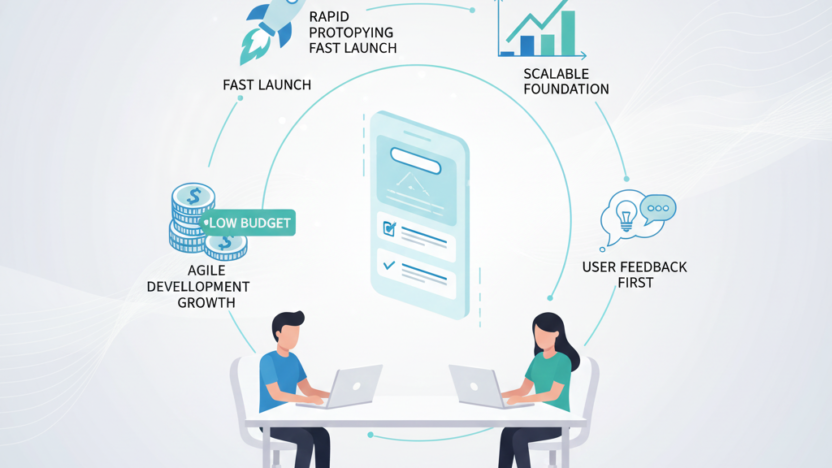
Creating a successful MVP doesn’t need a big budget; it needs careful planning, smart prioritization, and a focus on value. By identifying essential features, using no-code or low-code tools, and outsourcing when necessary, startups can quickly and affordably bring their product to life. A high-impact MVP focuses on solving the user’s main problem while cutting unnecessary development costs.
Through fast testing, customer feedback, and ongoing improvements, businesses can validate ideas early and avoid costly mistakes. With the right approach, even limited resources can lead to a solid, scalable MVP that attracts users, investors, and future growth opportunities.
Table of Contents
- Introduction
- What Makes an MVP High-Impact?
- Why Budget Efficiency Matters for Startups
- Understanding the Core Problem and Target Users
- Defining Essential Features vs. Nice-to-Have Features
- Choosing the Right MVP Development Approach
- Building the MVP: Step-by-Step Process
- Cost-Saving Tips for MVP Development
- Designing a User-Friendly, Lean UI/UX
- Conclusion
1. Introduction
Launching a new product idea is both exciting and challenging for any startup founder or entrepreneur. While every business wants to create a polished, feature-rich product right away, most successful companies start with a focused version called a Minimum Viable Product (MVP). The MVP helps startups test their assumptions, gauge user interest, and refine their product using real feedback, all without spending a lot of money or time on development.
In 2025, this approach is even more important. Competition is tough, user expectations are higher, and markets change quickly. Startups must move swiftly, stay flexible, and use lean development strategies to avoid unnecessary costs. The good news is that you can build a high-impact MVP on a small budget. This often turns out to be the smartest way to achieve product-market fit.
This blog discusses what makes an MVP impactful, how startups can cut costs without sacrificing quality, and the steps to build and launch an MVP even with limited resources. From defining key features to choosing budget-friendly development methods, this guide offers a roadmap for founders who need to be cost-conscious.
2. What Makes an MVP High-Impact?
Not every MVP works well. Some fail because they are too simple, too complicated, or don’t effectively address the user’s main problem. A high-impact MVP delivers value with minimal complexity.
Key Characteristics of a High-Impact MVP
1) It Solves a Real, Clear Problem: The most effective MVPs focus on a pressing user need or a critical market gap. If the main problem is minor or unclear, no number of features will make the product meaningful.
2) It Offers a Single, Strong Value Proposition: High-impact MVPs excel at one thing. They don’t try to do everything at once. Instead, they concentrate on one key feature that users clearly find valuable.
3) It Is Simple but Functional: An MVP should be usable, even if it lacks advanced features. It should provide a smooth, intuitive experience and fulfill its promise without unnecessary complexity.
4) It Allows Real User Feedback: A high-impact MVP is designed to learn gather feedback, analytics, and behavior insights that shape future updates.
5) It Can Scale: Even if it starts small, the MVP should have a structure that allows for growth as demand increases.
A high-impact MVP balances speed, cost-effectiveness, and user value. This balance helps successful startups avoid wasting time and money.
3. Why Budget Efficiency Matters for Startups
Startups often operate with limited budgets, so every dollar is important. Overspending early on can lead to unfinished products or even business failure. Smart and efficient spending becomes a key survival strategy.
Key Reasons Budget Efficiency Is Essential
1) Reduces Financial Risk: Spending too much from the start raises risk, especially when the product’s success is uncertain. A cost-effective MVP minimizes losses if initial assumptions are incorrect.
2) Encourages Faster Iteration: When costs are low, it’s easier to pivot, iterate, and test new ideas. Lean development promotes agility.
3) Enables Data-Driven Decision-Making: Instead of guessing what users want, startups can rely on real behavior insights from an affordable MVP, saving future development costs.
4) Helps Attract Investors: Investors prefer startups that use resources wisely. Showing traction with a limited budget demonstrates strong leadership and strategic thinking.
5) Builds a Sustainable Growth Path: Being efficient from the start helps startups create a long-term, cost-effective strategy for development, hiring, and scaling.
Budget efficiency isn’t about cutting corners. It’s about being smart and focused on what truly matters.
4. Understanding the Core Problem and Target Users
Before starting any development, startups need to fully understand their target audience and the problem they want to solve. Many MVP failures happen because this basic step is skipped.
Steps to Identify Core Problems and User Personas
1) Conduct User Interviews: Talk to potential users. Find out their pain points, frustrations, goals, and behaviors.
2) Study Market Trends: Research competitor products, industry gaps, and emerging needs. Tools like Google Trends, Statista, and industry reports can help validate the problem.
3) Build User Personas
Create profiles that represent your ideal customers, including:
- Demographics
- Motivations
- Challenges
- Preferred solutions
- Buying behavior
4) Map the User Journey: Identify where users struggle and how your product can add real value.
5) Validate the Problem Before Building: Use surveys, online forums, landing pages, or prototype tests to confirm real demand.
Only when you clearly understand the target audience and the problem should you move on to the next stages of developing the MVP.
5. Defining Essential Features vs. Nice-to-Have Features
Startups often make the mistake of trying to build too much too quickly. The main goal of an MVP is to deliver only the essential features needed to test the core idea.
How to Prioritize Features:
1) Identify the Core Functionality
Ask: What is the single most important job this product must perform?
2) Use the MoSCoW Method
Categorize features into:
- Must-Have
- Should-Have
- Could-Have
- Won’t-Have
3) Focus on One Main User Flow: Your MVP should allow users to complete one meaningful task from start to finish.
4) Avoid Feature Creep: If a feature doesn’t help validating the main hypothesis, save it for later versions.
5) Validate with Potential Users: Get early feedback to ensure selected features align with user priorities.
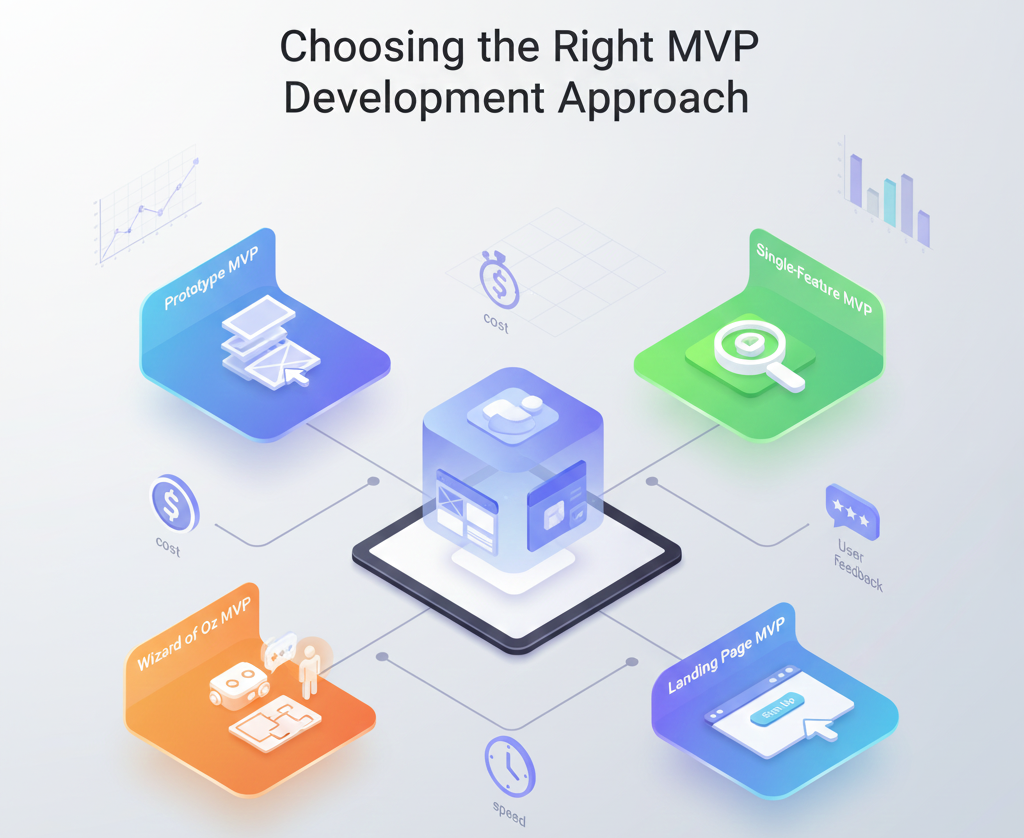
6. Choosing the Right MVP Development Approach
There are many ways to build an MVP, each with its own advantages and costs. Picking the right method can significantly cut expenses.
1) No-Code/Low-Code Development
Best for: simple apps, prototypes, quick launches
Tools: Bubble, Webflow, Glide, Adalo, Airtable
Benefits:
- Rapid development
- Affordable
- Requires little technical experience
2) Custom Development
Best for: scalable products, complex features
Tech stack options:
- React, Vue, Angular
- Node.js, Python, PHP
- AWS, Firebase
Benefits:
- Full control
- Scalability
3) Outsourced Development
Best for: limited in-house skills
Options:
- Freelancers
- Agencies
- Remote development teams
4) Hybrid Approach
Combining no-code tools with custom development to reduce costs and speed up time to market.
5) Using Pre-Built Templates
Themes, UI kits, or starter code can greatly reduce development time.
The right approach depends on budget, complexity, timeline, and scalability needs.
7. Building the MVP: Step-by-Step Process
1) Define the Problem and Users: Outline the main challenge and the target audience.
2) Conduct Market Research: Study of competitors, alternatives, and industry needs.
3) Map Out the User Journey: Define how users will interact with the MVP.
4) List and Prioritize Features: Only select the essential features.
5) Create Wireframes or Low-Fidelity Prototypes: Visual outlines of the product layout.
6) Develop the MVP: Use your chosen tools, frameworks, or teams.
7) Test Internally: Quality assurance testing ensures all bugs are fixed before user testing.
8) Soft Launch to a Small User Group: Use feedback to make improvements.
9) Iterate Based on Data: Refine features, UI/UX, and flow based on user behavior.
8. Cost-Saving Tips for MVP Development
1) Start With No-Code Tools Whenever Possible: Good for validating your idea before investing in custom development.
2) Outsource Selectively: Bringing in an affordable team or freelancer can lower costs.
3) Avoid Over-Engineering: Focus on function rather than perfection.
4) Use Open-Source Tools and APIs: Free libraries, templates, and integrations can help cut down development time.
5) Conduct User Testing Early: It’s better to fix issues now than to rebuild later.
6) Prioritize Mobile-First: Start with web or mobile, but don’t build both unless necessary.
7) Limit Custom Design: Use ready-made UI kits or templates to save on design costs.
8) Build in Phases: Release updates gradually instead of doing everything at once.
Low budget doesn’t mean low quality. It means using resources wisely.
9. Designing a User-Friendly, Lean UI/UX
A simple, intuitive design is key to MVP success. Good UI/UX makes your product easy to understand and increases user satisfaction without high development costs.
UI/UX Best Practices for MVPs
1) Keep It Clean and Minimal: Remove unnecessary visual elements and focus on what is essential.
2) Ensure Easy Navigation: Users should quickly find what they need.
3) Use Consistent Visual Elements: Consistency helps build user trust.
4) Use Standard UI Components: Pre-built UI kits save time and money.
5) Prioritize Mobile Responsiveness: Most users will interact with the product on mobile devices first.
6) Validate Designs with Users: Conduct simple usability tests before development.
A user-friendly interface can enhance even a basic MVP and boost engagement.
10. Conclusion
Creating a high-impact MVP on a limited budget is not only achievable but also often the smartest approach for startups today. A successful MVP requires clear goals, a solid understanding of user needs, and a focused strategy that emphasizes what really matters. By prioritizing essential features, choosing affordable development methods, and refining based on real user feedback, startups can launch effective products without overspending.
The journey doesn’t end at the MVP launch; it starts there. The insights and feedback gathered from users lay out the groundwork for future improvements, new features, and long-term growth. With the right planning and a lean, strategic mindset, a limited budget can become an opportunity for innovation, resourcefulness, and sound decision-making.