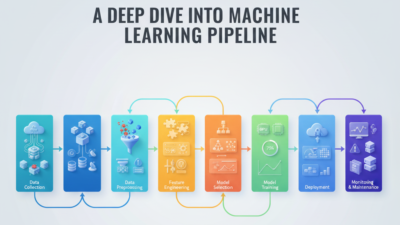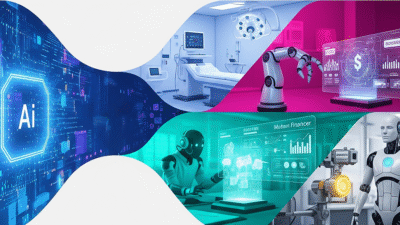
AI and machine learning in product engineering help businesses innovate quickly, streamline operations, and provide smart solutions that meet today’s market needs. By incorporating machine learning, automation, and predictive analytics into product development, companies can make better decisions, improve customer experiences, and discover new revenue sources.
This approach combines new technologies with business insights to create scalable products that are ready for the future and support long-term growth. From data management and model creation to deployment and ongoing improvement, AI and machine learning in product engineering help organizations stay competitive in a fast-changing digital world. It is crucial for businesses to aim for lasting success and a unique position in the market.
Table of Contents
- Introduction
- The Strategic Importance of AI/ML in Modern Business
- Core Components of AI/ML Product Engineering
- Data Engineering: The Foundation of Intelligent Products
- Machine Learning Model Development and Optimization
- AI-Driven Product Design and User Experience
- Integrating AI/ML into Existing Business Systems
- Real-World Applications Across Industries
- Challenges and Risks in AI/ML Product Development
- Future Trends in AI/ML Engineering and Business Strategy
- Conclusion
1. Introduction
Artificial Intelligence (AI) and Machine Learning (ML) have transitioned from new technologies to essential drivers of business growth and competitive edge. In today’s fast-paced digital environment, companies face increasing pressure to speed up decision-making, enhance customer experiences, innovate quickly, and improve efficiency. AI/ML product engineering, which involves designing, building, deploying, and scaling intelligent solutions, is vital for helping businesses meet these challenges.
Modern companies are not just using AI as a tool; they are integrating AI-driven intelligence into their product plans, customer engagement methods, and operational frameworks. From automated workflows and predictive insights to personalized user experiences and self-operating systems, AI/ML capabilities are defining the future of business development.
2. The Strategic Importance of AI/ML in Modern Business
AI/ML has shifted from a technology experiment to a necessary strategy. Businesses across sectors like healthcare, finance, retail, and manufacturing can know that AI insights and automation directly affect revenue growth, efficiency, and competitive standing.
1) AI Improves Decision-Making: AI and ML analyze large datasets to find patterns, predict trends, and offer actionable insights. This helps leaders make quicker and more accurate decisions.
2) Operational Efficiency and Cost Reduction: AI automates repetitive tasks, simplifies workflows, and minimizes human error. Examples include predictive maintenance, dynamic staffing, automated financial operations, and smart supply chains.
3) Personalization and Customer Engagement: Today’s customers expect customized experiences. AI/ML enables predictive personalization, tailored recommendations, intelligent chatbots, and dynamic user journeys that significantly enhance satisfaction and loyalty.
4) Product Innovation and Market Differentiation: AI helps businesses develop smarter, faster, and more adaptable products. Companies that innovate with AI/ML stand out in competitive markets.
5) Revenue Growth and New Business Models: AI opens new revenue opportunities, like subscription models, intelligent analytics platforms, and new digital services
3. Core Components of AI/ML Product Engineering
AI/ML product engineering is a multidisciplinary approach that brings together software development, data science, cloud infrastructure, user experience design, and business strategy.
1) Product Vision and Strategy
Every successful AI product starts with a clear vision:
- What business problems does it solve?
- Who is the intended user?
- How will AI create measurable value?
2) Data Infrastructure: Data is essential for AI. Effective data pipelines, storage solutions, and governance frameworks are crucial for success.
3) Model Development: Machine learning models need to be carefully designed, trained, validated, and improved.
4) Scalable Architecture: AI products should be built on scalable microservices, APIs, and cloud-native platforms to support growth.
5) Deployment and MLOps: Putting AI models into operation ensures they stay accurate, efficient, and in tune with real-world conditions.
6) User Experience: AI-driven interactions must be simple, clear, and trustworthy.
By combining these elements, companies can create intelligent products that are reliable, scalable, and impactful.
4. Data Engineering: The Foundation of Intelligent Products
No AI/ML product can succeed without strong data engineering. This field ensures that organizations collect quality information, process it efficiently, and make it accessible for model training and analysis.
1) Data Collection and Ingestion
Businesses must collect data from various sources, including:
- Customer behavior data
- IoT sensors
- Application logs
- CRM and ERP systems
- Third-party APIs
Reliable ingestion pipelines ensure these datasets move smoothly into storage systems.
2) Data Cleaning and Pre-processing
Raw data often has inconsistencies such as:
- Missing values
- Duplicates
- Incorrect entries
- Noise
Data cleaning increases the accuracy and reliability of ML results.
3) Data Transformation and Feature Engineering: Feature engineering changes raw data into meaningful input variables for training ML models. This step is critical for achieving accurate and dependable AI predictions.
4) Data Storage and Governance: Data warehouses, data lakes, and lakehouses provide structured, unstructured, and semi-structured storage. Governance, including compliance and security, makes sure data use aligns with industry regulations.
5) Scalable Cloud Infrastructure: Modern AI needs flexible computing power. Cloud services like AWS, Azure, and Google Cloud allow for easy scaling to handle large data workloads.
Data engineering builds a solid foundation for AI solutions, improving model accuracy and dependable product performance.
5. Machine Learning Model Development and Optimization
Model development is at the center of AI/ML engineering. A well-functioning model can be a significant competitive advantage, while a poorly designed model can lead to costly mistakes.
1) Problem Definition
ML projects start with identifying the right problem type:
- Classification
- Regression
- Clustering
- Recommendation
- Forecasting
- Reinforcement learning
Clearly defining the problem ensures the right algorithms are selected.
2) Model Selection
Engineers choose from traditional ML algorithms or modern neural networks, depending on the complexity and type of data used.
Examples include:
- Random Forest
- XGBoost
- CNNs
- RNNs
- Transformers
- Graph neural networks
3) Model Training and Validation
Training a model requires:
- High-quality datasets
- Balanced sampling
- Cross-validation techniques
- Adjusting hyperparameters
Validation confirms that the model works well with new data.
4) Optimization and Tuning
Optimization methods include:
- Grid search
- Bayesian optimization
- Pruning
- Regularization
- Model distillation
These methods enhance performance while reducing computing costs.
5) Deployment and Monitoring
After launching, models must be continuously monitored to avoid:
- Data drift
- Concept drift
- Performance decline
MLOps frameworks help maintain reliability in operation.
6. AI-Driven Product Design and User Experience
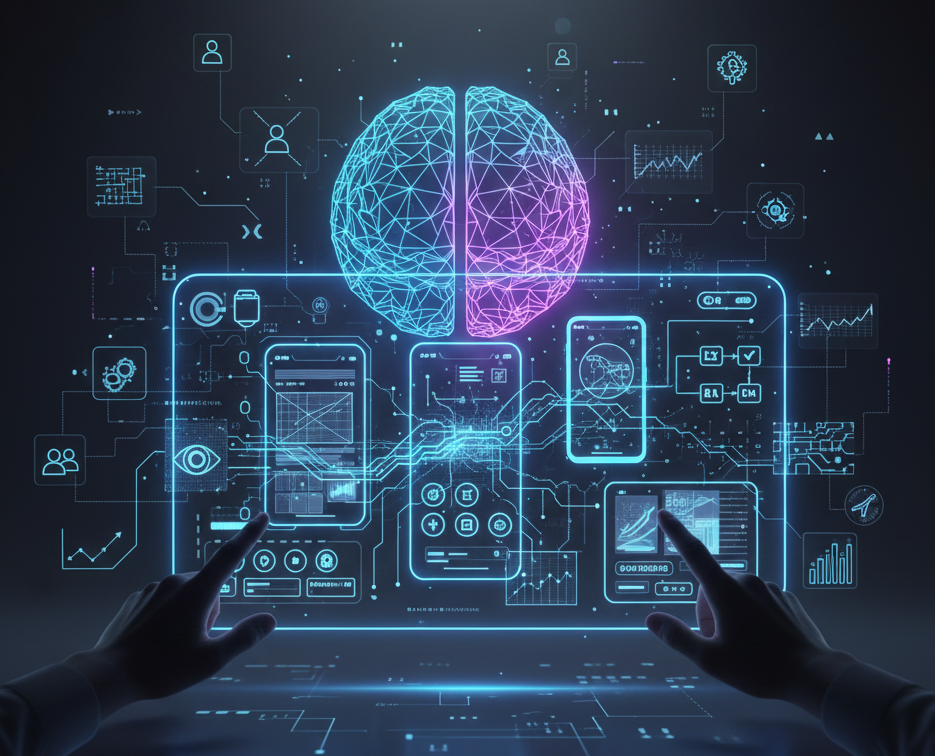
AI is not just back-end technology. It significantly changes how users interact with digital products. AI-driven product design focuses on intelligent interactions, personalization, and seamless experiences.
1) Personalized User Journeys: AI customizes content, suggestions, and interface elements based on user behavior.
2) Intelligent Interfaces: Conversational UI, voice assistants, and adaptive dashboards create more natural and engaging experiences.
3) Transparency and Trust
Users must understand:
- How AI makes decisions
- Why specific suggestions show up
- What data is used
Transparent design fosters user trust.
4) Ethical and Inclusive AI: UX designers should consider fairness, reducing bias, and accessibility to ensure AI products work for all users equally.
5) Predictive and Proactive Experiences: AI can predict user needs and act before they even ask for improving satisfaction and convenience.
AI-driven UX is key to turning AI capabilities into valuable, user-focused product experiences.
7. Integrating AI/ML into Existing Business Systems
Integrating AI into business systems can be more challenging than building the models themselves. Integration must be seamless, expandable, and secure.
1) API-Driven Integration
AI models can be included in:
- CRM systems
- ERP platforms
- Mobile apps
- Cloud services
APIs facilitate straightforward communication between systems.
2) Workflow Automation
AI improves workflows through:
- Predictive triggers
- Automated actions
- Smart approvals
- Dynamic routing
3) Data Integration: Data from legacy systems must sync with AI engines, which requires robust pipelines and compatibility layers.
4) Hybrid and On-Premises Deployment: Sectors like finance and healthcare may need on-premises or hybrid setups for compliance.
5) Organizational Change Management: Employees must receive training and support to adopt AI systems effectively.
Successful integration enables AI/ML to function smoothly within the company’s ecosystem, maximizing business value.
8. Real-World Applications Across Industries
AI/ML is transforming industries around the world. Here are key applications:
1) Healthcare
- Disease prediction
- Medical imaging analysis
- Patient risk scoring
- Personalized treatment plans
2) Finance
- Fraud detection
- Risk modeling
- Automated trading
- Personalized financial advice
3) Retail & eCommerce
- Recommendation systems
- Dynamic pricing
- Inventory optimization
- Customer behavior forecasting
4) Manufacturing
- Predictive maintenance
- Quality control
- Robotics automation
- Supply chain optimization
5) Transportation
- Autonomous vehicles
- Route optimization
- Real-time traffic analysis
6) Education
- Adaptive learning platforms
- Intelligent assessment systems
7) Real Estate
- Property valuation models
- Lead scoring
- Market forecasting
In every sector, AI/ML helps make quicker decisions, improve experiences, and create new business opportunities.
9. Challenges and Risks in AI/ML Product Development
Despite the potential, building AI products has its challenges.
1) Data Quality Issues: AI relies on the data it learns from, so quality matters.
2) Model Bias and Fairness: Bias in training data can lead to unfair results.
3) Scalability Problems: Models can struggle under real-world demand without suitable optimization.
4) Security and Privacy Risks: AI systems need to protect sensitive data and follow regulations.
5) Integration Complexity: Older systems might limit AI compatibility.
6) Talent and Skill Gaps: Finding skilled AI professionals is tough and costly.
7) High Development Costs: AI projects need considerable investment in infrastructure, research, and MLOps.
Addressing these challenges requires a solid strategy and experienced engineering teams.
10. Future Trends in AI/ML Engineering and Business Strategy
The future of AI/ML product engineering will be defined by several emerging trends.
1) Generative AI for Product Innovation: GenAI systems are changing content creation, coding, design, and prototyping.
2) AutoML and No-Code AI: These tools allow for quicker development with less hands-on work.
3) Edge AI: Running models on local devices boosts speed, privacy, and efficiency.
4) AI in Cybersecurity: AI is increasingly used to spot threats, prevent attacks, and secure data systems.
5) Autonomous Systems: Self-learning systems operate with minimal human assistance.
6) Human-AI Collaboration: Future workplaces will weave AI into daily processes, enhancing human productivity.
7) Explainable AI (XAI): Transparency and interpretability will be standard in AI models.
These trends will reshape how businesses create intelligent products and foster innovation.
11. Conclusion
AI/ML product engineering has become more than just a technical field. It is a strategic foundation for modern business growth. Companies that excel in AI-driven product development gain a critical advantage in innovation, efficiency, customer satisfaction, and competitive differentiation.
By establishing strong data foundations, creating scalable models, integrating AI into business systems, and focusing on user-friendly design, organizations can unlock the full potential of AI/ML. The future belongs to those that merge intelligent technology with forward-looking strategies.
As AI keeps evolving, its impact on products, industries, and customer experiences will become even more significant. Companies that invest today will lead tomorrow’s markets.