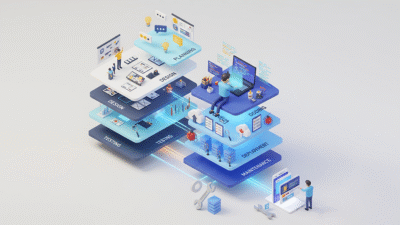
Software development is evolving faster than ever and staying ahead of emerging trends is essential for every developer in 2026. From AI-powered coding assistants and cloud-native development to low-code platforms, cybersecurity-first practices, edge computing, and modern DevOps workflows, the industry is embracing technologies that improve productivity, scalability, and innovation.
In this blog, we’ll explore the 10 most important software development trends that are transforming how applications are built, deployed, and maintained. Whether you’re a beginner, an experienced developer, or a technology leader, these insights will help you sharpen your skills, adopt the right technologies, and prepare for the future of software engineering in an increasingly AI-driven and connected digital landscape.
Table of Contents
- Introduction
- AI-Powered Software Development
- Cloud-Native Application Development
- Low-Code and No-Code Platforms
- Cybersecurity-First Development
- Edge Computing and IoT Integration
- Generative AI and Intelligent Automation
- Cross-Platform Development with Modern Frameworks
- Sustainable and Green Software Engineering
- Conclusion
1. Introduction
Software development has entered a new era where innovation happens faster than ever before. In 2026, developers are no longer expected to simply write clean code. They are expected to build secure, scalable, intelligent, and sustainable applications that meet rapidly evolving business demands. Emerging technologies such as Artificial Intelligence (AI), cloud computing, edge computing, and modern development frameworks are transforming how software is designed, developed, deployed, and maintained.
Organizations across industries are investing heavily in digital transformation to stay competitive. From startups to global enterprises, businesses are looking for software solutions that can adapt quickly to changing customer needs while maintaining high performance and security. As a result, developers who understand modern software development trends will have a significant advantage in their careers.
The rise of AI-powered coding assistants, cloud-native applications, intelligent automation, cybersecurity-first development, and sustainable engineering practices is redefining the future of software engineering. These technologies not only improve developer productivity but also enhance application reliability, scalability, and user experience.
Whether you are a beginner learning your first programming language or an experienced software engineer leading enterprise projects, staying updated with the latest development trends is essential.

2. AI-Powered Software Development
Artificial Intelligence has become one of the most influential technologies in software development. Instead of replacing developers, AI is acting as a powerful assistant that accelerates coding, debugging, testing, documentation, and project management.
Modern AI tools help developers write cleaner code, identify bugs before deployment, generate documentation automatically, and even suggest architectural improvements.
Why AI Matters
Software projects are becoming increasingly complex. Developers often spend countless hours on repetitive tasks such as:
- Writing boilerplate code
- Refactoring legacy applications
- Creating unit tests
- Reviewing pull requests
- Debugging errors
- Generating documentation
AI significantly reduces the time required for these activities, allowing developers to focus on solving business problems.
Key Applications of AI in Software Development
1) Intelligent Code Generation
AI coding assistants can generate code snippets based on natural language prompts, helping developers build applications much faster.
Benefits include:
- Faster development
- Fewer syntax mistakes
- Better productivity
- Reduced repetitive coding
2) Automated Testing
Testing consumes a significant portion of software development time.
AI helps by:
- Creating test cases automatically
- Detecting edge cases
- Predicting failure scenarios
- Improving software quality
3) Smarter Debugging
Instead of manually searching thousands of lines of code, AI tools analyze logs, identify root causes, and recommend fixes.
Developers can resolve issues in minutes rather than hours.
4) AI-Based Documentation
Maintaining documentation has traditionally been one of the least enjoyable parts of development.
AI can automatically generate:
- API documentation
- Function descriptions
- Code explanations
- Technical documents
This keeps documentation accurate and up to date.
Benefits of AI Development
- Increased productivity
- Faster project delivery
- Better code quality
- Reduced development costs
- Improved collaboration
- Higher software reliability
Challenges
Despite its advantages, AI also introduces challenges:
- Developers must verify generated code.
- AI may produce insecure or inefficient solutions.
- Human expertise remains essential for architecture and decision-making.
- Ethical use of AI-generated code is increasingly important.
The future belongs to developers who learn to collaborate with AI rather than compete against it.
3. Cloud-Native Application Development
Cloud-native development has become the standard approach for building modern applications. Instead of designing software for a single physical server, developers now create applications optimized for cloud environments using containers, microservices, orchestration platforms, and managed cloud services.
Cloud-native applications are more resilient, scalable, and easier to maintain than traditional monolithic systems.
What Is Cloud-Native Development?
Cloud-native applications are designed specifically to run efficiently in cloud platforms while taking advantage of services such as:
- Auto scaling
- Managed databases
- Serverless computing
- Distributed storage
- Global content delivery
- Automated deployments
Rather than deploying a single large application, developers split systems into smaller independent services.
Key Characteristics
1) Microservices Architecture
Applications are divided into smaller services that communicate using APIs.
Benefits include:
- Easier maintenance
- Independent deployment
- Better scalability
- Faster development cycles
2) Containerization
Containers package applications with all their dependencies, ensuring consistent behavior across development, testing, and production environments.
Advantages:
- Faster deployment
- Platform independence
- Simplified scaling
- Reduced compatibility issues
3) Kubernetes Orchestration
Managing hundreds of containers manually is nearly impossible.
Container orchestration platforms automate:
- Scaling
- Load balancing
- Service discovery
- Recovery from failures
- Resource allocation
This improves system reliability while reducing operational overhead.
4) Serverless Computing
Developers can now focus entirely on writing business logic without managing infrastructure.
Serverless platforms automatically:
- Allocate resources
- Scale applications
- Handle server maintenance
- Optimize costs
This approach is particularly useful for APIs, event-driven applications, and background processing.
Why Businesses Prefer Cloud-Native Applications
Organizations benefit from:
- Lower infrastructure costs
- Global availability
- Automatic scaling
- Improved disaster recovery
- Continuous delivery
- Faster innovation
Cloud-native architecture also enables companies to release new features quickly without disrupting existing services.
Skills Developers Should Learn
To stay competitive in 2026, developers should become familiar with:
- Cloud architecture
- Container technologies
- API development
- Infrastructure automation
- Monitoring and observability
- Distributed system design
Cloud-native development is no longer optional. It has become a fundamental skill for modern software engineers.
4. Low-Code and No-Code Platforms
The demand for software is growing faster than the availability of skilled developers. Businesses need applications built quickly to meet changing customer expectations, automate internal processes, and stay competitive. This demand has fueled the rapid growth of Low-Code and No-Code (LCNC) platforms, making them one of the most influential software development trends in 2026.
While these platforms do not replace professional developers, they empower businesses, startups, and non-technical users to build applications with minimal coding. At the same time, experienced developers can use them to accelerate development by reducing repetitive work and focusing on complex business logic.
What Are Low-Code and No-Code Platforms?
- Low-Code Platforms allow developers to build applications using drag-and-drop interfaces while still writing custom code when necessary.
- No-Code Platforms enable users with little or no programming experience to create applications entirely through visual tools and pre-built components.
These platforms simplify development without sacrificing functionality for many business use cases.
Why They Are Becoming Popular
Modern organizations require faster software delivery. Traditional development can take months, whereas low-code platforms can reduce development time significantly.
Major reasons behind their popularity include:
- Faster application development
- Reduced development costs
- Easier collaboration between technical and business teams
- Faster prototyping
- Increased business agility
- Reduced dependency on large development teams
Common Business Applications
Low-code platforms are widely used for:
- Internal business dashboards
- HR management systems
- CRM applications
- Customer portals
- Workflow automation
- Approval systems
- Inventory management
- Reporting tools
Developers can then extend these applications with APIs, integrations, and custom features.
Benefits for Professional Developers
Rather than viewing low-code as competition, developers can use it to improve productivity.
Advantages include:
1) Rapid Prototyping
Developers can quickly build proof-of-concept applications before investing time in full-scale development.
2) Faster Client Feedback
Visual applications allow stakeholders to review software earlier, reducing misunderstandings and costly revisions.
3) Integration with Existing Systems
Most modern low-code platforms support integrations with:
- REST APIs
- Databases
- Cloud services
- Enterprise applications
- Third-party SaaS platforms
This enables developers to connect business systems without writing everything from scratch.
Challenges
Despite their benefits, low-code platforms have limitations:
- Limited customization for complex applications
- Vendor lock-in risks
- Performance limitations
- Licensing costs
- Less control over application architecture
Large enterprise applications still require experienced software engineers to design scalable, secure, and maintainable systems.

5. Cybersecurity-First Development
Cybersecurity has evolved from being a final testing step to becoming a core part of the software development lifecycle. As cyberattacks become more sophisticated, organizations can no longer afford to treat security as an afterthought.
The growing adoption of cloud computing, AI, APIs, IoT devices, and remote work has expanded the attack surface for businesses. Developers now play a critical role in protecting sensitive data, applications, and users.
Why Security Comes First
Cyber threats continue to evolve rapidly, including:
- Ransomware attacks
- API vulnerabilities
- Data breaches
- Credential theft
- Supply chain attacks
- Cloud misconfigurations
- Zero-day exploits
The financial and reputational damage caused by security incidents can be devastating.
Secure Software Development Lifecycle (SSDLC)
Organizations are integrating security into every phase of development.
Instead of:
Design → Develop → Deploy → Secure
Modern teams follow:
Design → Secure → Develop → Test → Monitor → Improve
Security is embedded from the beginning.
Essential Security Practices
1) Secure Coding
Developers should:
- Validate all user input
- Prevent SQL injection
- Protect against Cross-Site Scripting (XSS)
- Use parameterized queries
- Follow secure coding standards
- Sanitize uploaded files
Writing secure code reduces vulnerabilities before software reaches production.
2) Identity and Access Management
Modern applications require strong authentication.
Developers should implement:
- Multi-Factor Authentication (MFA)
- Role-Based Access Control (RBAC)
- OAuth authentication
- Secure session management
- Password hashing
3) API Security
Since APIs power most modern applications, protecting them is essential.
Best practices include:
- API authentication
- Rate limiting
- Token validation
- Encryption
- Input validation
- API monitoring
4) DevSecOps
Security is now integrated directly into DevOps pipelines.
Automated security tools continuously perform:
- Vulnerability scanning
- Dependency analysis
- Secret detection
- Container scanning
- Infrastructure security checks
This helps identify risks before deployment.
Zero Trust Architecture
A growing trend in 2026 is the Zero Trust security model.
Instead of trusting users inside a network, Zero Trust continuously verifies:
- User identity
- Device security
- Application permissions
- Network access
- Behavioral patterns
Every request is authenticated before access is granted.
Benefits of Cybersecurity-First Development
Organizations experience:
- Lower security risks
- Reduced downtime
- Better compliance
- Increased customer trust
- Faster incident response
- Stronger application resilience
Developers who understand security principles will remain highly valuable as cybersecurity becomes a business priority.
6. Edge Computing and IoT Integration
The rapid growth of connected devices is transforming software development. Millions of smart sensors, wearable devices, autonomous vehicles, industrial machines, and smart home products now generate enormous amounts of data every second.
Sending all this data to centralized cloud servers creates delays, increases bandwidth costs, and limits real-time decision-making. Edge computing solves this challenge by processing data closer to where it is generated.
What Is Edge Computing?
Edge computing moves computation away from centralized data centers and places processing closer to users or connected devices.
Instead of:
Device → Cloud → Response
The model becomes:
Device → Edge → Response
This significantly reduces latency.
Why Edge Computing Matters
Many modern applications require instant responses.
Examples include:
- Self-driving vehicles
- Smart factories
- Medical monitoring
- Video surveillance
- Augmented Reality
- Smart cities
- Industrial automation
Milliseconds can make a significant difference.
Internet of Things (IoT)
IoT refers to networks of interconnected devices that collect and exchange data over the internet.
Examples include:
- Smart thermostats
- Wearable fitness trackers
- Connected healthcare devices
- Smart agriculture systems
- Logistics tracking sensors
- Manufacturing robots
- Energy management systems
These devices continuously generate valuable information.
Benefits of Edge Computing
1) Reduced Latency
Applications respond almost instantly because data is processed nearby.
2) Lower Bandwidth Usage
Only essential information is sent to cloud servers, reducing network traffic.
3) Improved Reliability
Even if cloud connectivity is interrupted, edge devices can continue operating.
4) Better Privacy
Sensitive data can be processed locally instead of being transmitted across the internet.
Developer Considerations
Building edge-enabled applications requires developers to understand:
- Distributed computing
- Device communication protocols
- Local data processing
- Synchronization with cloud services
- Resource optimization
- Security for connected devices
Applications must efficiently operate on devices with limited memory, storage, and processing power.
AI at the Edge
One of the fastest-growing trends in 2026 is Edge AI. Instead of sending data to cloud-based AI models, machine learning runs directly on devices.
Examples include:
- Facial recognition cameras
- Smart security systems
- Predictive maintenance
- Healthcare diagnostics
- Voice assistants
- Retail analytics
Edge AI provides faster responses while protecting sensitive user data.
Future Opportunities
Industries adopting edge computing include:
- Healthcare
- Manufacturing
- Automotive
- Retail
- Agriculture
- Logistics
- Telecommunications
- Smart cities
As 5G networks continue expanding, edge computing will become even more powerful, enabling developers to build highly responsive, intelligent, and connected applications for the next generation of digital experiences.

7. Generative AI and Intelligent Automation
Generative AI has evolved from a productivity tool into a core component of modern software development. In 2026, developers are leveraging AI not only to generate code but also to automate workflows, create documentation, analyze large datasets, and enhance user experiences. Businesses are integrating AI into applications to improve efficiency, reduce operational costs, and deliver personalized services at scale.
Unlike traditional automation, which follows predefined rules, Generative AI can understand context, generate new content, and assist in solving complex problems. This makes it an invaluable asset for developers across industries.
How Generative AI Is Transforming Software Development
1) AI-Assisted Coding
Modern AI coding assistants help developers:
- Generate code snippets
- Complete functions automatically
- Suggest bug fixes
- Refactor existing code
- Explain complex algorithms
- Improve code quality
This significantly reduces development time while improving consistency.
2) Intelligent Documentation
Documentation often becomes outdated during rapid development cycles. AI can automatically generate and update:
- API documentation
- Technical specifications
- Code comments
- User guides
- Release notes
This ensures documentation stays accurate throughout the project lifecycle.
3) Automated Testing
Generative AI enhances software testing by:
- Creating unit test cases
- Identifying edge cases
- Detecting regression issues
- Generating test data
- Improving code coverage
Developers can focus on feature development while AI handles repetitive testing tasks.
4) Smarter Customer Experiences
AI-powered applications now include:
- Intelligent chatbots
- Virtual assistants
- Personalized recommendations
- Voice recognition
- Content generation
- Natural language search
These capabilities improve user engagement and satisfaction.
Intelligent Business Automation
Organizations are using AI to automate repetitive processes such as:
- Invoice processing
- Email classification
- Customer support
- Document verification
- Data extraction
- Workflow approvals
- Predictive analytics
This allows employees to focus on strategic tasks rather than manual operations.
Challenges of Generative AI
Despite its advantages, developers must use AI responsibly.
Important considerations include:
- Verifying AI-generated code
- Protecting sensitive data
- Avoiding bias in AI models
- Ensuring regulatory compliance
- Maintaining human oversight
AI should be viewed as a collaborative tool rather than a replacement for software engineers.
8. Cross-Platform Development with Modern Frameworks
Users expect seamless experiences across smartphones, tablets, desktops, and web browsers. Developing separate applications for each platform increases costs and slows down product delivery. As a result, cross-platform development has become one of the most important software development trends in 2026.
Modern frameworks allow developers to write a single codebase and deploy it across multiple platforms while maintaining native-like performance and user experience.
Why Cross-Platform Development Matters
Businesses benefit from:
- Faster product launches
- Reduced development costs
- Easier maintenance
- Consistent user experience
- Simplified updates
- Larger market reach
Instead of maintaining multiple development teams, organizations can build applications more efficiently using shared codebases.
Popular Cross-Platform Frameworks
Several frameworks continue to dominate the development landscape:
- Flutter
- React Native
- .NET MAUI
- Kotlin Multiplatform
- Ionic
Each framework offers unique strengths depending on project requirements, performance goals, and target platforms.
Key Advantages
1) Faster Development
Shared code reduces duplicate work, enabling teams to deliver applications more quickly.
2) Cost Efficiency
Maintaining one codebase requires fewer resources than managing separate native applications.
3) Consistent User Experience
Cross-platform frameworks help maintain similar designs, features, and functionality across devices.
4) Easier Maintenance
Bug fixes and updates can often be applied once and deployed across multiple platforms.
Modern Development Practices
Cross-platform development is increasingly combined with:
- Cloud-native architecture
- Microservices
- CI/CD pipelines
- AI-powered testing
- Automated deployments
- API-first development
These practices improve scalability and reduce time-to-market.
Challenges
Developers may still encounter:
- Platform-specific customization
- Hardware integration limitations
- Performance optimization
- Native API compatibility
- Large application complexity
Choosing the right framework depends on business goals and technical requirements.

9. Sustainable and Green Software Engineering
Sustainability is no longer limited to manufacturing or energy industries—it has become an important consideration in software development as well. Data centers, cloud infrastructure, AI workloads, and digital services consume significant amounts of electricity, contributing to global carbon emissions.
Green Software Engineering focuses on designing applications that use computing resources more efficiently while minimizing environmental impact.
Why Sustainable Software Matters
Modern applications run continuously across millions of devices and cloud servers. Poorly optimized software increases:
- Energy consumption
- Infrastructure costs
- Hardware requirements
- Carbon emissions
Efficient software benefits both businesses and the environment.
Principles of Green Software Engineering
1) Efficient Code
Optimized algorithms reduce CPU usage, memory consumption, and processing time.
Developers should:
- Remove unnecessary computations
- Optimize database queries
- Reduce memory allocation
- Improve caching strategies
- Eliminate redundant processing
2) Resource Optimization
Applications should use only the resources they require.
Best practices include:
- Auto-scaling cloud resources
- Shutting down idle services
- Compressing assets
- Optimizing network requests
- Efficient storage management
3) Sustainable Cloud Infrastructure
Cloud providers increasingly offer energy-efficient infrastructure powered by renewable energy.
Developers can reduce environmental impact by:
- Choosing energy-efficient regions
- Using serverless architectures
- Monitoring cloud utilization
- Optimizing workloads
4) Efficient Frontend Development
Frontend optimization also contributes to sustainability.
Developers should:
- Minimize JavaScript bundles
- Optimize images
- Reduce HTTP requests
- Improve page loading speed
- Enable browser caching
These improvements enhance both performance and user experience.
Business Benefits
Green software engineering provides:
- Lower cloud costs
- Better application performance
- Improved scalability
- Reduced infrastructure expenses
- Stronger corporate sustainability initiatives
- Enhanced brand reputation
Sustainability has become a competitive advantage for organizations pursuing environmental responsibility.
10. Conclusion
Software development in 2026 is driven by innovation, intelligence, security, and sustainability. Developers who continuously learn and adapt to emerging technologies will be better positioned to build modern applications that meet evolving business and user expectations.
The trends discussed in this blog highlight how the industry is moving toward smarter, faster, and more resilient software development practices:
AI-Powered Software Development is improving productivity through intelligent coding, testing, and documentation.
Cloud-Native Application Development enables scalable, resilient, and highly available applications.
Low-Code and No-Code Platforms accelerate software delivery and empower broader collaboration.
Cybersecurity-First Development ensures applications remain secure from the earliest stages of development.
Edge Computing and IoT Integration support real-time processing for connected devices and intelligent systems.
Generative AI and Intelligent Automation streamline workflows and enhance user experiences through intelligent assistance.
Cross-Platform Development reduces costs while delivering consistent experiences across devices.
Sustainable and Green Software Engineering promotes energy-efficient applications that reduce operational costs and environmental impact.
Technology will continue to evolve rapidly, bringing new tools, frameworks, and methodologies. The most successful developers will be those who embrace lifelong learning, experiment with emerging technologies, and combine technical expertise with creativity and problem-solving skills.
By understanding and adopting these software development trends today, you’ll be well-prepared to build secure, scalable, intelligent, and future-ready applications in 2026 and beyond.