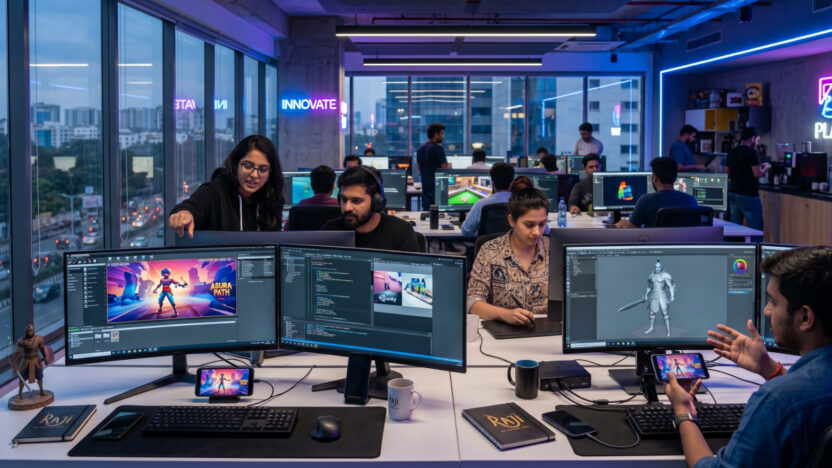
Generative AI is revolutionizing game development by enabling faster content creation, smarter gameplay experiences, and enhanced creativity. Game developers can use AI-powered tools to generate characters, environments, dialogues, storylines, animations, and procedural game assets with greater efficiency. This technology helps reduce development time and costs while allowing studios to focus more on innovation and player engagement. Generative AI also improves non-player character behavior, adaptive gameplay, and personalized gaming experiences based on player interactions. From indie developers to major gaming studios, AI-driven solutions are transforming how games are designed, tested, and optimized. As the gaming industry continues to evolve, generative AI is becoming a powerful force driving immersive experiences and the future of interactive entertainment.
Table of Contents:
- Introduction
- The Evolution of AI in Game Development
- Understanding How Generative AI Works
- AI-Powered Game Design and Concept Creation
- Generative AI in Storytelling and Dialogue
- Game Art, Assets, and Environment Creation
- Generative AI for Music and Sound Design
- Testing, Quality Assurance, and Balancing
- Challenges and Ethical Concerns
- Conclusion
1. Introduction
The gaming industry has always been driven by innovation. From pixelated arcade games to photorealistic open-world adventures, technological advancements have continuously redefined the gaming experience. Today, another revolutionary shift is taking place with the rise of generative AI. This technology is changing the way developers create games, offering faster production pipelines, smarter automation, and unprecedented creative possibilities.
Generative AI refers to artificial intelligence systems capable of generating new content such as images, text, audio, code, and 3D assets. Unlike traditional AI systems that focus primarily on analysis and prediction, generative AI creates original outputs based on patterns learned from massive datasets. In game development, this capability opens entirely new opportunities for studios, developers, artists, writers, and designers.
Modern games require enormous amounts of content, including characters, environments, sound effects, animations, narratives, and gameplay mechanics. Creating all these elements manually is expensive, time-consuming, and resource-intensive. Generative AI helps streamline these processes by automating repetitive tasks, accelerating asset creation, and assisting creative teams in generating ideas more efficiently.
In this blog, we will explore how generative AI is transforming game development, the technologies behind it, its practical applications across different stages of development, and the challenges developers must address to use it responsibly.
2. The Evolution of AI in Game Development
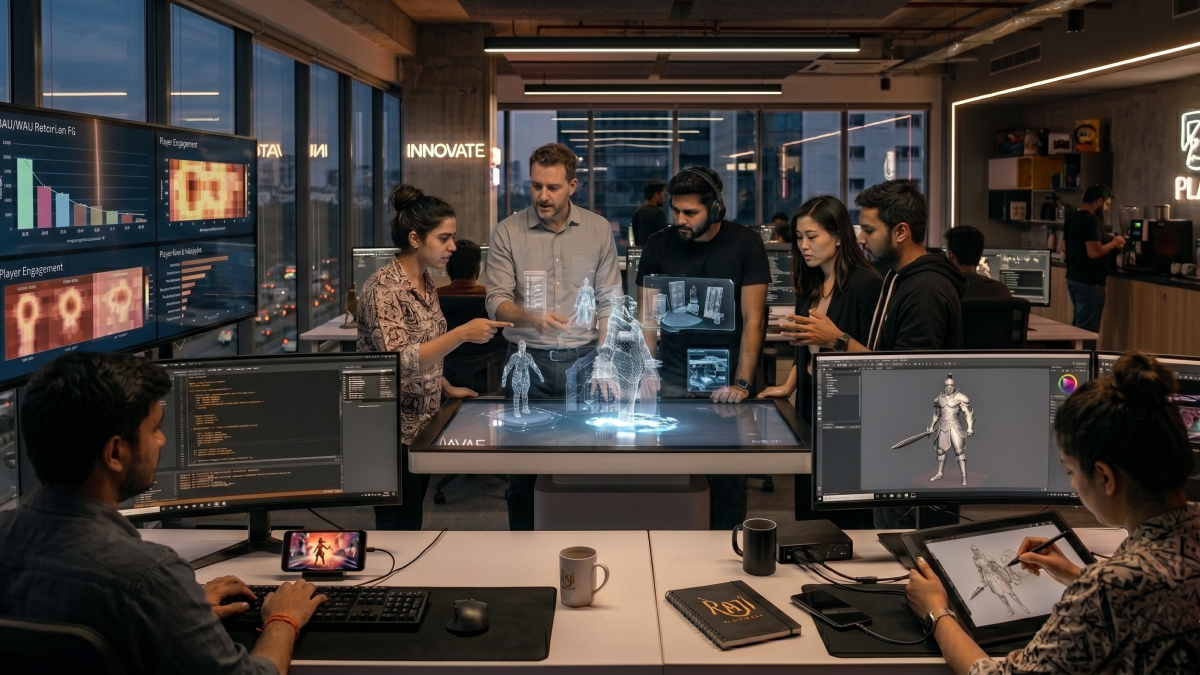
Artificial Intelligence has been part of video games for decades. Early games used basic AI systems to control enemy movements, automate repetitive gameplay behaviors, and create simple decision-making mechanics. Classic arcade games relied on scripted rules and predictable algorithms to simulate intelligent actions.
As technology evolved, AI systems became more advanced. Developers introduced pathfinding algorithms, adaptive enemy behaviors, procedural generation systems, and machine learning models to improve player experiences. Games such as strategy simulators and role-playing adventures began using AI to create more dynamic and responsive gameplay environments.
Traditional AI systems in games were rule-based. Developers programmed specific instructions that determined how characters and systems would behave. While effective, these systems had limitations because they lacked creativity and adaptability.
Generative AI represents the next stage of evolution. Instead of relying solely on predefined rules, generative models learn patterns from vast datasets and create entirely new outputs. These models can generate realistic textures, animations, dialogue, quests, music, and gameplay ideas.
Gaming companies increasingly integrate AI into development workflows because of several advantages:
- Faster production cycles
- Lower development costs
- Enhanced creativity
- Personalized gaming experiences
- Improved scalability
Major studios are investing heavily in AI-driven development tools. Smaller indie developers also benefit because generative AI lowers the barrier to entry, allowing smaller teams to create high-quality content that once required massive production budgets.
The future of AI in gaming is expected to become even more advanced with real-time content generation, adaptive narratives, emotionally intelligent NPCs, and fully dynamic game worlds.

3. Understanding How Generative AI Works
Generative AI relies on machine learning models trained on large datasets to create original content. These systems identify patterns, structures, and relationships within data and use that knowledge to generate new outputs.
Several technologies power generative AI systems in game development:
1) Machine Learning: Machine learning enables AI systems to learn from data without explicit programming. Models improve their outputs over time through continuous training and optimization.
2) Neural Networks: Neural networks mimic the structure of the human brain. They process information through interconnected layers, allowing AI systems to recognize complex patterns and relationships.
3) Deep Learning: Deep learning uses advanced neural networks with multiple layers to process highly complex data such as images, voice, and animations. It plays a crucial role in generating realistic game assets.
4) Natural Language Processing (NLP): NLP enables AI systems to understand and generate human language. In gaming, NLP powers dynamic dialogues, quest generation, NPC conversations, and storytelling systems.
5) Generative Adversarial Networks (GANs): GANs involve two AI models competing against each other. One model generates content while the other evaluates its quality. This process improves realism and accuracy.
6) Diffusion Models: Diffusion models generate highly detailed images and textures by gradually refining random noise into coherent visual outputs.
7) Transformer Models: Transformer architectures power modern AI text generation systems. They are widely used for dialogue systems, narrative generation, and code assistance.
Generative AI systems require extensive training data. For example:
- Art generation models train on millions of images
- Dialogue systems train on large text datasets
- Music generation tools analyze audio compositions
- Animation systems study motion patterns
Once trained, these models can generate new outputs based on prompts or instructions provided by developers.
For game studios, generative AI acts as a creative assistant rather than a complete replacement for human developers. Artists, writers, and designers still play a critical role in refining and directing AI-generated content.
4. AI-Powered Game Design and Concept Creation
Game design is one of the most creative and time-intensive stages of development. Developers must create gameplay systems, mechanics, character concepts, level layouts, and visual styles. Generative AI significantly accelerates this process.
1) Concept Art Generation
Artists can use AI tools to quickly generate:
- Character concepts
- Environment ideas
- Weapon designs
- Costume variations
- Creature models
Instead of starting from scratch, designers can generate multiple visual ideas within minutes and refine them further.
2) Rapid Prototyping: AI allows developers to create early gameplay prototypes faster. Teams can experiment with mechanics, environments, and game loops before committing large resources.
3) Level Design Assistance
Generative AI can create:
- Terrain layouts
- Dungeon structures
- City maps
- Puzzle arrangements
- Open-world landscapes
This reduces repetitive manual design work while improving replayability.
4) Procedural Content Generation
AI-powered procedural generation creates dynamic worlds that evolve differently for each player. This approach is common in:
- Roguelike games
- Survival games
- Sandbox worlds
- Exploration games
5) Personalized Experiences
Generative AI can adapt gameplay experiences based on player behavior. AI systems analyze how players interact with the game and dynamically adjust:
- Difficulty levels
- Enemy behaviors
- Mission structures
- Rewards systems
This creates more engaging and personalized gameplay experiences.
6) Creative Collaboration
Rather than replacing designers, AI serves as a collaborative tool. Developers can use AI-generated ideas as inspiration while maintaining artistic direction and creative control.
5. Generative AI in Storytelling and Dialogue
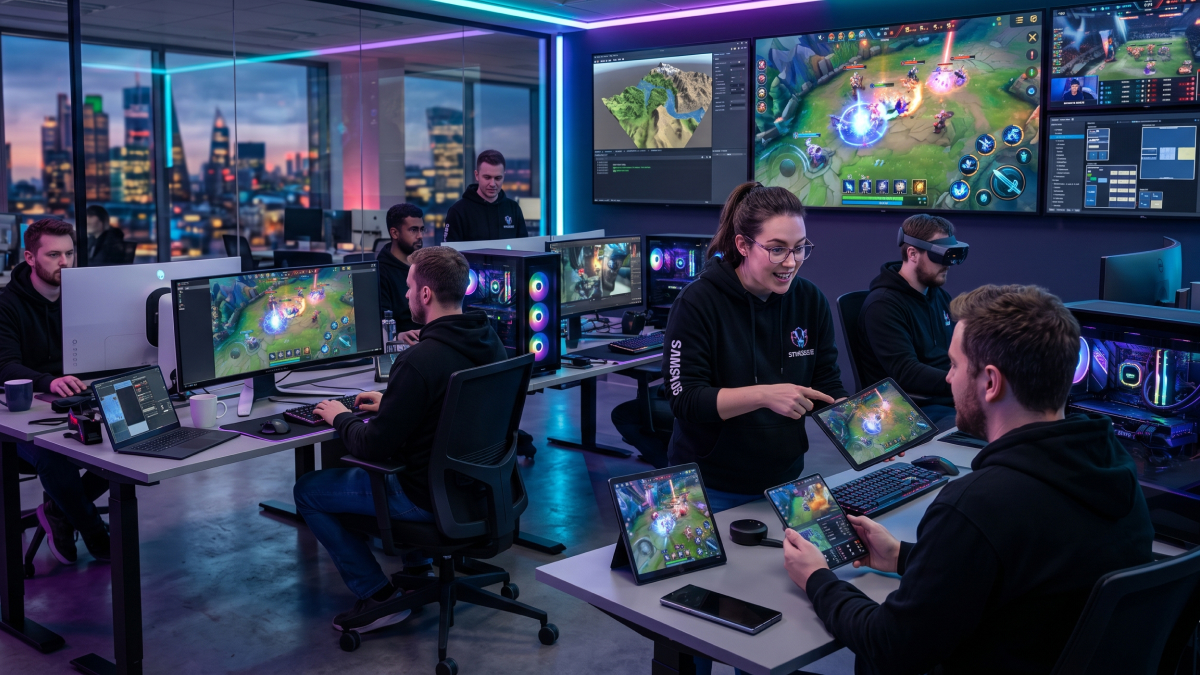
Storytelling is one of the most powerful aspects of modern gaming. Narrative-driven games rely on compelling characters, immersive worlds, and emotionally engaging dialogue. Generative AI is transforming how these stories are created.
1) Dynamic Dialogue Systems
Traditional game dialogues are manually scripted, limiting player interaction. AI-powered dialogue systems can generate:
- Real-time NPC conversations
- Adaptive responses
- Personalized interactions
- Context-aware dialogue
This creates more immersive and natural gameplay experiences.
2) Procedural Storytelling
Generative AI can create branching narratives that evolve based on player decisions. Instead of fixed storylines, players experience dynamic story arcs that adapt to their actions.
3) Quest Generation
AI systems can automatically generate:
- Side quests
- Objectives
- Rewards
- Character interactions
This expands game content while reducing development workload.
4) Character Personalities
AI-driven NPCs can develop unique personalities, emotional responses, and memory systems, making in-game interactions more realistic.
5) Localization and Translation
Generative AI also improves game localization by translating dialogue and adapting cultural references for global audiences.
6) Risks and Challenges
Despite these advancements, AI-generated storytelling still faces limitations:
- Repetitive dialogue
- Lack of emotional depth
- Inconsistent narratives
- Ethical concerns around originality
Human writers remain essential for maintaining emotional quality and narrative coherence.
6. Game Art, Assets, and Environment Creation
Creating visual assets is one of the most expensive parts of game development. Generative AI dramatically reduces production time by automating asset generation.
1) AI-Generated Textures
AI tools can create:
- Realistic textures
- Materials
- Surface details
- Environmental effects
2) Character Creation
Developers can generate:
- 3D character models
- Facial animations
- Clothing variations
- Creature designs
3) Environment Design
Generative AI assists in building:
- Forests
- Cities
- Landscapes
- Interior environments
- Weather systems
4) Animation Assistance
AI-powered animation tools simplify:
- Motion capture cleanup
- Facial expressions
- Character movement
- Lip-syncing
- Asset Upscaling
Older game assets can be enhanced using AI upscaling techniques, improving visual quality without recreating content manually.
7. Generative AI for Music and Sound Design
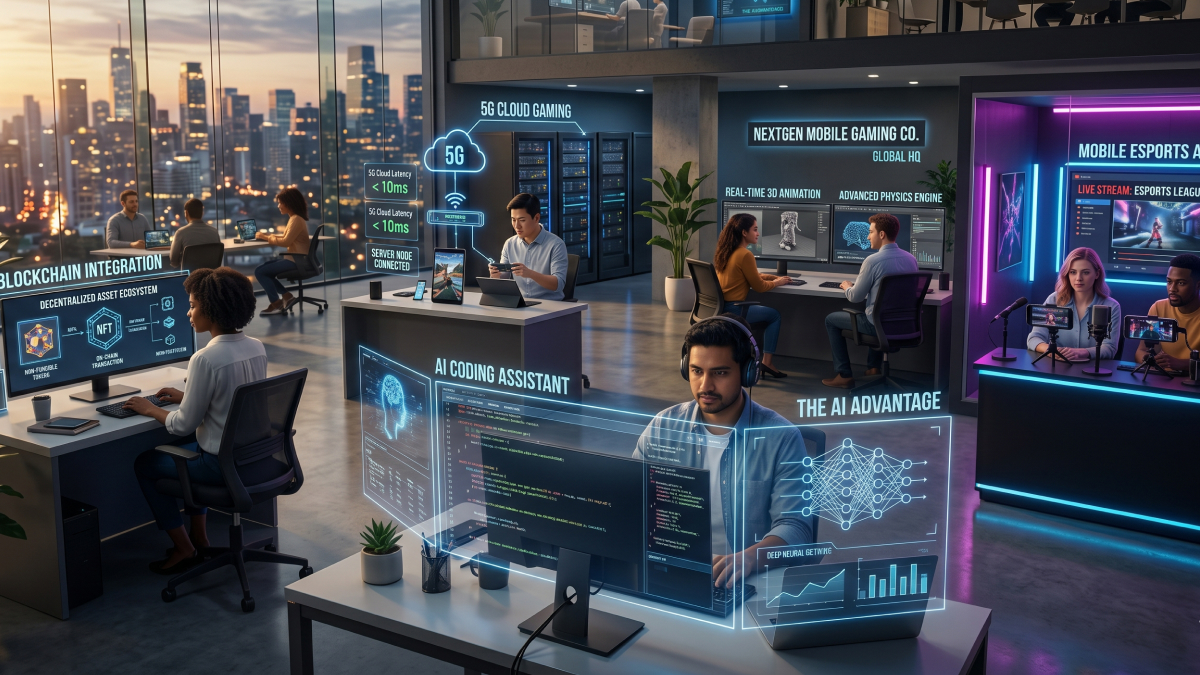
Audio plays a critical role in creating emotional and immersive gaming experiences. Generative AI is changing how music, sound effects, and voiceovers are produced.
1) AI-Generated Music
AI systems can compose:
- Background music
- Battle themes
- Ambient tracks
- Dynamic soundscapes
These compositions can be adapted in real time based on gameplay situations.
2) Adaptive Audio Systems
AI-powered music systems respond dynamically to player actions, creating more immersive experiences.
3) Sound Effect Generation
Generative AI can create:
- Environmental sounds
- Weapon effects
- Creature noises
- Atmospheric audio
4) Voice Synthesis
AI voice generation enables:
- NPC voiceovers
- Dynamic dialogue
- Real-time speech generation
- Cost Reduction
AI significantly lowers production costs by reducing dependency on large audio teams and recording sessions.
8. Testing, Quality Assurance, and Balancing
Testing is a crucial but time-consuming stage of game development. Generative AI helps improve efficiency and accuracy in quality assurance processes.
1) Automated Testing
AI systems can automatically test:
- Gameplay mechanics
- Collision systems
- Performance stability
- User interface functionality
- Bug Detection
Machine learning models identify patterns associated with software bugs and glitches.
2) Game Balancing
AI can analyze player data to optimize:
- Difficulty levels
- Character abilities
- Weapon balancing
- Economic systems
- Player Behavior Analysis
Developers use AI to study player behavior and improve engagement, retention, and monetization strategies.
3) Faster Iteration
AI-powered testing accelerates development cycles by identifying issues earlier in production.
9. Challenges and Ethical Concerns
While generative AI offers tremendous benefits, it also introduces significant ethical and technical concerns.
1) Copyright and Ownership: AI models often train on existing artwork, music, and writing, raising concerns about intellectual property rights.
2) Job Displacement: Automation may reduce demand for certain creative roles, leading to fears about job security within the gaming industry.
3) Bias in AI Systems: AI-generated content may reflect biases present in training data.
4) Lack of Originality: Overreliance on AI-generated assets may lead to repetitive or generic game experiences.
5) Data Privacy Concerns: AI systems collecting player data raise privacy and security issues.
6) Ethical Game Design: AI-driven monetization and behavioral analysis systems must be used responsibly to avoid manipulative design practices.
7) Balancing Human Creativity: The industry must ensure that AI enhances creativity rather than replacing human artistic expression.
10. Conclusion
Generative AI is reshaping the future of game development by transforming how games are designed, created, tested, and experienced. From procedural world generation and dynamic storytelling to AI-generated music and automated testing, this technology is unlocking unprecedented opportunities for innovation.
Game studios can now accelerate development timelines, reduce production costs, and create richer gaming experiences with the help of AI-powered tools. Indie developers gain access to capabilities that were once limited to large studios, enabling more creativity and experimentation across the industry.
The future of gaming will likely involve deeper collaboration between humans and AI. Rather than replacing developers, generative AI will serve as a powerful creative partner that enhances productivity, inspires innovation, and expands the possibilities of interactive entertainment.
As technology continues to evolve, generative AI is poised to become one of the most influential forces in the next generation of game development.