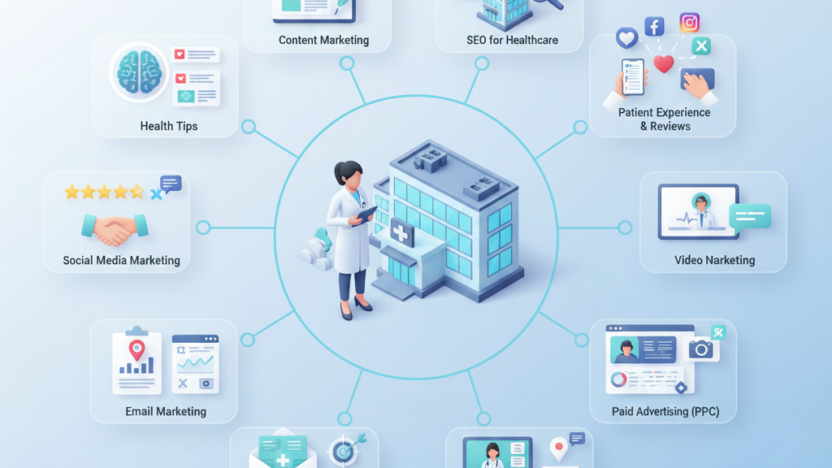
The ultimate guide to how health providers, clinics, hospitals, and wellness brands are using the latest marketing tools to establish the trust, enhance patient engagement, and expand their reach. From digital advertising and SEO to patient-centric content, the promotion of telehealth, and reputation management, this blog simplifies some of the best approaches for the competitive healthcare environment today.
Whether you aim to boost brand awareness, attract new patients, or nurture your relationships with patients, these strategies provide actionable insights to help your healthcare organization grow sustainably and stay ahead of industry trends.
Table of Contents
- Introduction
- Content Marketing for Patient Education
- Search Engine Optimization (SEO) in Healthcare
- Social Media Marketing for Healthcare Providers
- Telehealth Promotion and Digital Patient Journey
- Paid Advertising (PPC) for Healthcare
- Challenges and Compliance in Healthcare Marketing
- Conclusion
1. Introduction
The healthcare industry went through a major digital transformation in the recent years, driven largely by changing patient expectations, rapid technological advancement, and the increased importance of online presence in patient decision-making. Today’s patients are not just passive recipients of the medical care. If they are informed consumers who research their symptoms, compare providers, and evaluate reviews, and expect seamless digital experiences. For healthcare organizations, this shift created immense opportunities but also significant challenges. Effective marketing is no longer optional; it is essential.
Healthcare marketing in today’s time is all about building trust, improving patient engagement, educating the communities, and enabling them to make well-informed decisions regarding their health. It requires a unique blend of various digital marketing strategies, compliance-oriented communication, patient-centric content, and information driven by data. Traditional advertising no longer serves the purpose. This means that hospitals, clinics, specialists, telehealth providers, and medical practices must depend upon a well-rounded marketing strategy that seamlessly integrates education-based content, social media presence, search engine visibility, and reputation management.
2. Content Marketing for Patient Education
Content is one of the most powerful tools in healthcare marketing; it speaks to one of the major needs of today’s patients: credible, understandable, and available health information. Very often, patients research their health questions online before consulting doctors.
It is educational content that is offered by healthcare organizations to position them as thought leaders and trusted sources of information.
Why Content Marketing Matters in Healthcare
- Patients seek out credible information before selecting a provider.
- Quality content builds authority, trust, and brand recognition.
- Content helps in search engine ranking improvement.
Key Content Formats to Use
- Blog Articles: Cover topics such as symptoms, treatment options, prevention tips, patient stories, and healthcare news.
- Video Content: Explainer videos, doctor Q&A sessions, behind-the-scenes tours, and educational animations.
- Infographics: Visual summary of health conditions, preventive care tips, and statistics.
- E-books & Guides: In-depth resources for the chronic conditions, surgery preparation, or lifestyle changes.
- FAQ Pages: These provide answers to common questions patients have, or questions about insurance or procedure-related issues.
How to Develop Effective Healthcare Content
- Use simple, nontechnical language without a plethora of medical terms.
- Ensure accuracy of content through expert reviews from doctors/specialists.
- Focus on patient pain points what they want to know, fear or misunderstand.
- Include illustrations, case studies, and real examples where appropriate.
- Maintain a regular publishing schedule.
By educating patients and providing value, healthcare organizations can increase engagement, build stronger relationships, and drive more appointment bookings.
3. Search Engine Optimization (SEO) in Healthcare
It is a core marketing strategy for healthcare because most patients start their healthcare journey online by searching phrases like “best dentist near me,” “urgent care clinic,” or “what is causing chest pain.” If your healthcare practice isn’t appearing in search results, you’re losing potential patients.
Why SEO is important
- Improves visibility in Google and other search engines
- Builds long-term organic traffic without paid ads
- Helps patients locate providers near them
- This helps to clearly establish credibility and build trust
Key Healthcare SEO Components
1) Local SEO
Most patients search for providers in their area; hence, local SEO is important.
Focus on:
- Google Business Profile optimization
- Local keywords (for example, “pediatrician in Austin”)
- Patient reviews
- Local directories and citations
2) On-Page SEO
Optimization of website pages for:
- Relevant keywords.
- Quality content and meta descriptions
- Fast load time and mobile responsiveness
- Structured data markup (schema)
3) Technical SEO
Search engines favour secure and well-structured websites. The checklist includes:
- HTTPS security
- XML sitemaps
- Clean URLs
- Accessible design and ADA compliance
4) SEO of Content
Create optimised content to address patient questions, including:
- Symptoms and treatments
- “Near me” searches
- Medical procedures and insurance policies
SEO helps healthcare organizations appear in the right place at the right time. When patients are actively searching for solutions.
4. Social Media Marketing for Healthcare Providers
Social media has become an essential channel for healthcare organizations. It enables clinics and hospitals to connect with the community, give a human touch to their brand, share educational content, and build trust.
Benefits of Social Media in Healthcare
Improves patient involvement and knowledge.
- Provides a platform for doctor–patient communication (non-medical advice).
- This increases visibility, especially among younger audiences.
- Allows for sharing of real-time updates and healthcare tips.
- Creates opportunities for health campaigns and awareness drives.
Effective Platforms for the Healthcare Marketing
- Facebook: Ideal for updating the community for making announcements, and sharing patient stories
- Instagram: Great for visual content, behind-the-scenes shots, and reels
- LinkedIn: Best for the professional updates, partnerships, and organizational branding
- YouTube: Perfect for the educational videos, doctor interviews, and patient guides.
- TikTok: Good for bite-sized health tips, engaging younger demographics.
Healthcare Social Media Content Ideas
- Health awareness posts, such as Breast Cancer Awareness Month
- Physician spotlights and team introductions
- Preventive care tips and healthy lifestyle advice
- Patient success stories, but once consented
- Updates about clinics, events, and new equipment announcements
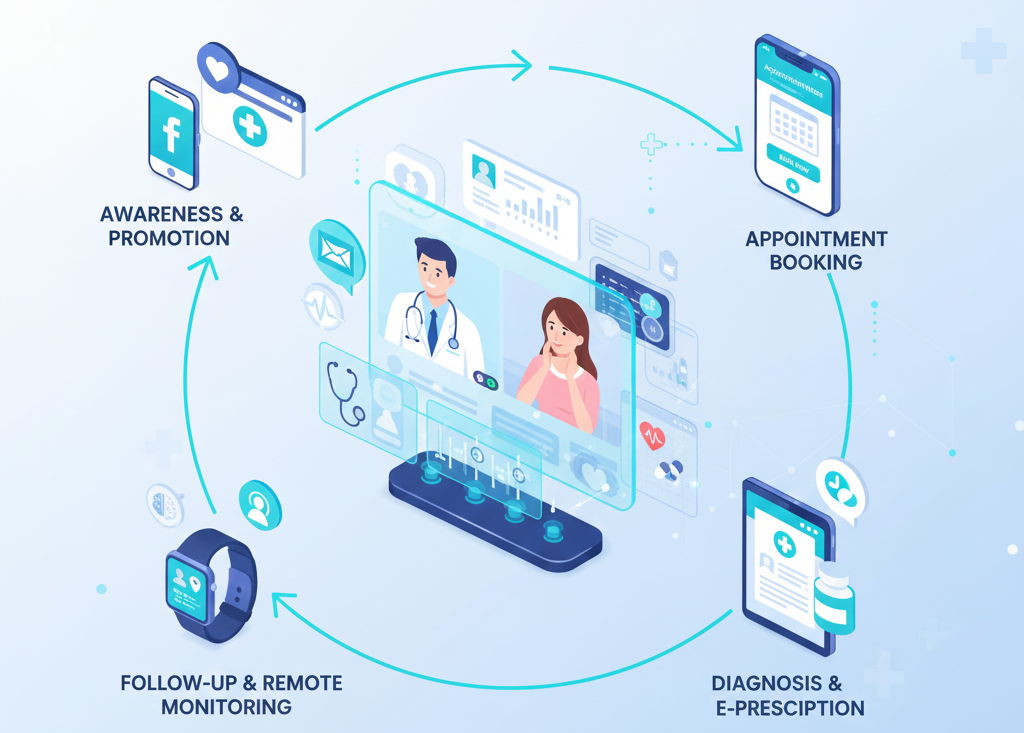
5. Telehealth Promotion and Digital Patient Journey
Telehealth has become key to contemporary the health care, offering convenience, accessibility, and continuity of care. Marketing telehealth services effectively will enable practices to reach more patients, including those who can live in rural or underserved areas.
Benefits of Promoting Telehealth Services
- Expands patient reach beyond geographic limitations
- Offers flexibility and convenience
- Supports chronic disease management
- Offers safe consultation options during outbreaks and emergencies
- Helps busy patients access care more easily
How to Market Telehealth Successfully
- Create dedicated telehealth landing pages
- Publish educational content regarding the benefits of telehealth
- Highlight telehealth features on social media and email campaigns
Offer introductory video sessions.
- Showcase patient testimonials highlighting convenience
- Digital Patient Journey Optimization
- Today’s patients interact via multiple touchpoints
Healthcare providers must ensure seamless experiences right from the first step:
- User-friendly websites
- Easy online appointment scheduling
- Automate the reminders and follow up
- Patient portals for the medical history and results.
- Mobile-friendly communication
A well-designed digital patient journey ensures convenience and satisfaction, thus cultivating stronger relationships.
6. Paid Advertising (PPC) for Healthcare
In the Paid advertising or PPC is an immediate way to attract the new patients. While SEO brings in long-term results, PPC delivers instant visibility for specific keywords, conditions, or services
Why PPC is important
- Generates quick leads
- Provides measurable performance data
- Complements organic SEO strategies
Top PPC Platforms for Healthcare
- Google Ads are best for search campaigns and local services.
- Facebook & Instagram Ads Ideal for awareness and targeted engagement.
- YouTube Ads: Perfect for educational video promotions.
- LinkedIn Ads: Best for B2B healthcare organizations.
Effective PPC Strategies
- Target location-based keywords (“urgent care near me”)
- Promote high-demand services: for example, dental implants, dermatology
7. Challenges and Compliance in Healthcare Marketing
Responsible handling of negative reviews:
- Adaptation to the rapidly changing digital trends
- Overcoming These Challenges
- Train staff regularly on HIPAA guidelines
- Work with legal and compliance teams
- Use secure communication platforms
- Thoroughly review marketing content
- Be transparent in all your communications
Of all things, healthcare marketing has to be about trust, safety, and accuracy.
8. Conclusion
The healthcare industry is rapidly changing and along with it, patients’ expectations. Patients today expect immediate access to information, smooth digital experiences, trusted providers, and personalized services. By adopting these Top 10 Marketing Strategies for the Healthcare Industry, healthcare providers can differentiate their services in a highly competitive marketplace, attract more patients, and provide quality care while remaining true to industry oversight and regulations.