
The startup landscape is evolving quickly as technology becomes the main driver of innovation, scalability, and market disruption. In the next five years, advancements in artificial intelligence, automation, blockchain, and digital infrastructure will change how startups operate, develop products, and compete.
These new technologies will allow for faster development cycles, better decision-making, and personalized customer experiences. Startups that adopt tech-driven strategies will gain a strong advantage, creating more efficient operations and groundbreaking solutions. As digital transformation speeds up worldwide, the ability to use new tools and innovate continuously will set apart the most successful startups of the future.
Table of Contents
- Introduction
- How Technology Is Reshaping the Startup Landscape
- AI and Machine Learning as Core Startup Drivers
- The Role of Cloud Computing and Scalable Infrastructure
- Data-Driven Decision-Making and Predictive Insights
- The Growing Impact of IoT and Connected Devices
- Remote Work, Digital Collaboration, and Global Teams
- Tech-Enabled Customer Experience and Personalization
- Sustainability Tech and Green Innovation Trends
- Investment Trends in Tech-First Startups
- Conclusion
1. Introduction
The startup landscape is entering a new era marked by significant technological advancements, changing market expectations, and shifting consumer behavior. Over the next five years, technology will not just support startups. It will serve as the foundation for their operations, innovation, and growth. Startups that embrace modern technologies like artificial intelligence, automation, cloud computing, and IoT will position themselves for quicker growth, improved resilience, and broader global reach.
Today’s digital-native consumers expect speed, personalization, and smooth digital experiences. Investors are focusing more on tech-first business models that show scalability, efficiency, and decision-making based on data. At the same time, challenges like sustainability, cybersecurity, and economic instability are driving startups to adopt technology that helps ensure long-term survival.
2. How Technology Is Reshaping the Startup Landscape
Technology has become the backbone of modern startups, allowing them to innovate faster, cut operational costs, and scale efficiently. Unlike traditional businesses that depend on outdated systems and manual processes, today’s startups use advanced tools that support experimentation, automation, and quick market validation.
One major change in the startup ecosystem is the widespread availability of technology. Cloud platforms, open-source tools, no-code builders, and affordable digital infrastructure enable even small teams to create powerful products. Entrepreneurs can launch MVPs within weeks, test ideas in real-time, and modify strategies based on actual user insights.
Moreover, technology has opened global markets. Digital marketing, online sales platforms, and remote collaboration tools help startups reach international audiences without needing physical offices in different countries. This breaks growth barriers and allows companies to expand beyond their geographic limits.
3. AI and Machine Learning as Core Startup Drivers
Artificial intelligence (AI) and machine learning (ML) are now essential parts of the modern startup toolkit. In the next five years, AI will influence how startups operate, innovate, and compete, no matter what their industry is.
1) AI-driven product innovation
Startups are using AI to create smart products that respond to user behavior. Features like personalized recommendations, smart automation, natural language processing, and advanced analytics are becoming standard in SaaS tools, mobile apps, and consumer platforms.
Examples include:
- AI-powered chatbots for instant customer support
- Personalized eCommerce suggestions
- Fraud detection systems
- Predictive maintenance tools in manufacturing
- Automated financial advisors in fintech
2) Operational efficiency with AI
Startups often run with lean teams, making AI crucial for managing repetitive tasks. AI automates:
- Customer service
- Email filtering
- Lead scoring
- Social media management
- Data categorization
This allows teams to concentrate on growth, strategy, and innovation rather than routine administrative tasks.
3) AI-powered decision making: With AI, startups can analyze large datasets to make informed decisions quickly. Machine learning models help forecast trends, spot opportunities, and minimize risks. This change makes startups more competitive and agile.
4) Automation and the Rise of Smart Operations: Automation changes how startups handle daily operations, scale teams, and deliver products. The next five years will see automation evolve from a convenience to a competitive must-have.
5) Process Automation: By incorporating automated workflows into marketing, finance, HR, and customer service, startups can significantly reduce human error and boost productivity. Automated processes like onboarding, lead nurturing, invoice management, and email workflows save valuable time and lower operational costs.
6) Robotic Process Automation (RPA): RPA is becoming more accessible, allowing even small startups to automate rule-based tasks usually done by employees. This covers data entry, compliance reporting, and repetitive data processing.
7) Smart Operations: Combining automation with AI creates smart operations, where processes operate automatically and adapt and optimize based on real-time data. This is particularly beneficial in logistics, eCommerce, and SaaS businesses, where speed and accuracy are crucial.
Automation enables startups to grow without drastically increasing their workforce, allowing small teams to achieve more with fewer resources.
4. The Role of Cloud Computing and Scalable Infrastructure
Cloud computing has transformed the startup landscape by offering scalable, secure, and cost-effective infrastructure. In the next five years, cloud systems will continue to support startup growth by allowing agility and rapid development.
1) Cost-effective scalability: Cloud platforms such as AWS, Google Cloud, and Azure let startups increase computing power, storage, and applications as required, without having to invest in physical servers. This flexibility supports sudden traffic spikes, especially during product launches or marketing campaigns.
2) Faster development and deployment: Startups can quickly build, test, and deploy applications in cloud-based environments. Tools like containerization (Docker) and microservices architecture further streamline development and improve product performance.
3) Reliable remote collaboration: Cloud collaboration tools facilitate teamwork among distributed teams, allowing smooth communication, file sharing, and project management. As remote work becomes standard, cloud infrastructure will be essential for maintaining productivity and efficiency.
4) Enhanced security: Cloud providers invest heavily in cybersecurity, offering startups of enterprise-grade protection that would otherwise be too expensive. In the next five years, cloud security will be vital for protecting data, preventing breaches, and ensuring compliance.
5. Data-Driven Decision-Making and Predictive Insights
Data is the new currency in the startup world. Companies that can capture, analyze, and effectively use data will hold a significant competitive edge.
The rise of data-driven cultures
Modern startups prioritize data at every stage of product development, marketing, customer segmentation, and financial planning. Decisions are now based on actionable insights generated from real-time analytics, rather than intuition.
Predictive analytics
By using machine learning, startups can predict:
- Market trends
- Customer behavior
- Inventory needs
- Churn risk
- Revenue growth
This level of forecasting enhances strategic planning and decreases business risk.
Personalization at scale
Data allows startups to customize content, products, and customer experiences to individual preferences. Personalized marketing boosts engagement, satisfaction, and retention, all critical for startup success.
In the next five years, data will become even more important as AI tools help startups generate deeper insights more quickly and accurately.
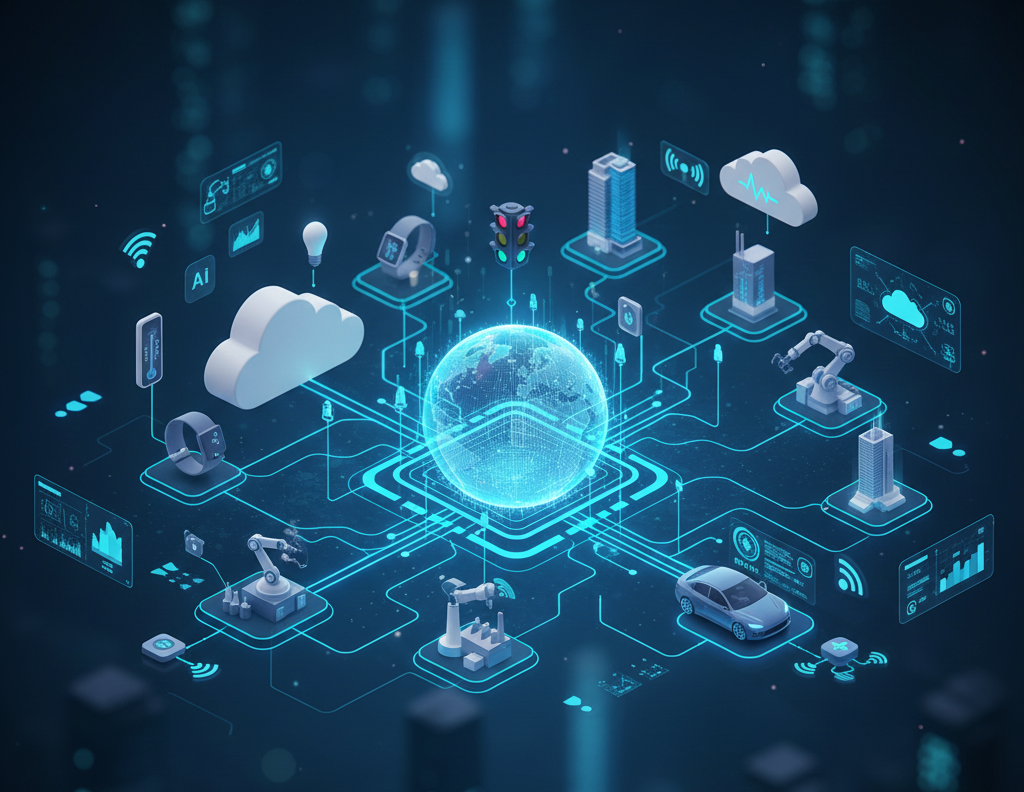
6. The Growing Impact of IoT and Connected Devices
The Internet of Things (IoT) is rapidly growing, creating opportunities for startups to develop smarter products and services. From smart homes to industrial automation, IoT will significantly shape the future.
IoT for consumer innovation
Startups can create smart devices that connect and communicate easily, offering convenience, personalization, and better functionality. Examples include fitness wearables, home automation tools, and smart appliances.
Industrial IoT (IIoT)
In manufacturing and logistics, IoT enables:
Real-time equipment tracking
- Predictive maintenance
- Optimized supply chain operations
- Automation of manual tasks
- Healthcare IoT
Startups in healthtech can use connected devices for remote monitoring, telemedicine, and personalized health insights.
In the next five years, IoT will continue to connect the physical and digital worlds, opening new markets and innovations for startups.
7. Remote Work, Digital Collaboration, and Global Teams
The rise of remote work has transformed the startup workforce. Over the next five years, distributed teams will become the norm.
1) Hiring global talent: Startups can now recruit the best talent from anywhere in the world, expanding their capabilities and lowering hiring costs.
2) Digital collaboration tools: Platforms like Slack, Zoom, Notion, Trello, and GitHub support smooth teamwork, no matter where team members are located. These tools boost communication, project management, and productivity.
3) Cost savings and flexibility: Remote work lowers overhead costs, allowing startups to invest more in growth, product development, and marketing.
4) Better work-life balance: Flexible work arrangements appeal to skilled professionals who seek independence and a modern workplace culture.
Technology will continue to shape the future of remote-first startups, making global teams more efficient and connected.
8. Tech-Enabled Customer Experience and Personalization
Customer expectations have changed dramatically. Today’s consumers demand fast, personalized, and seamless interactions across all digital channels.
1) Personalized user journeys: AI-driven recommendation engines, dynamic content, and behavioral data help startups customize the customer experience at every stage.
2) Omnichannel experiences
Startups are integrating:
- Mobile apps
- Websites
- Chatbots
- Social media
- In-store digital tools
This integration delivers a consistent and engaging experience across platforms.
3) Customer service automation: Chatbots and AI support systems offer instant assistance, lower support costs, and enhance customer satisfaction.
4) Voice and gesture-based interactions: The next generation of startups will include advanced interfaces, such as voice assistants and AR/VR experiences, to create richer customer interactions.
Technology-driven CX will be a major competitive differentiator for startups in the coming years.
9. Sustainability Tech and Green Innovation Trends
Sustainability is now essential. It’s becoming a requirement for modern startups. Tech-driven sustainability solutions provide ways to lower environmental impact while meeting demand for eco-friendly products.
1) Green tech innovations
Startups are creating solutions around:
- Renewable energy
- Carbon capture
- Sustainable farming
- Waste reduction
- Electric mobility
- Eco-friendly product design
Technology is facilitating the development of biodegradable materials, smart packaging, and energy-efficient products.
2) Data for environmental insights: IoT and data analytics enable monitoring of energy use, optimization of supply chains, and waste reduction.
3) Investor interest in green startups: Eco-focused startups are attracting significant investment as sustainability becomes a global priority.
In the next five years, green innovation will influence new business models and drive a wave of environmentally responsible entrepreneurship.
9. Investment Trends in Tech-First Startups
Investor behavior is changing quickly, with a strong focus on tech-first startups that showcase scalability and long-term potential.
1) Preference for AI and automation startups: VCs and angel investors are significantly funding companies that utilize artificial intelligence, automation, and machine learning.
2) Software and SaaS dominance: Subscription-based models provide predictable revenue streams, making SaaS startups very appealing.
3) Deep tech and frontier tech
Investors are interested in:
- Robotics
- Quantum computing
- BioTech
- Fintech innovation
- AR/VR
- Sustainable and ESG-focused startups
Environmental, social, and governance (ESG) criteria are becoming central to funding decisions.
4) Global investor accessibility: Crowdfunding platforms, online pitch events, and remote investment networks are making it easier for startups worldwide to secure funding.
These trends will continue to shape the financial landscape for the next generation of startups.
11. Conclusion
The next five years will mark a new era for startups, one driven by cutting-edge technology, global connectivity, and data-driven innovation. Startups that adopt AI, automation, cloud computing, IoT, and sustainability solutions will lead the market, while those that resist change will struggle to survive in a competitive environment.
Technology is not only improving how startups operate; it is also redefining how they innovate, grow, and create value. With global teams, personalized customer experiences, and tech-first business models becoming the norm, the future will favor startups that are flexible, forward-thinking, and focused on digital transformation.