Startup funding in 2025 is more competitive and fuller of opportunities than ever. Investors are looking for innovative ideas supported by solid business models. Founders need to understand that investors focus on scalability, market fit, sustainable revenue, and clear execution plans. This understanding can greatly improve a startup’s chances of securing capital.
Founders should use modern funding channels like angel networks, venture capital, crowdfunding, and strategic partnerships. Building strong relationships with investors, providing clear financial projections, and sharing long-term vision are essential. As market trends and economic shifts change, mastering effective funding strategies is crucial for gaining investor confidence and driving a startup toward sustainable growth in 2025.
Table of Contents
- Introduction
- Understanding the Modern Investor Mindset
- Key Funding Trends Shaping Startups in 2025
- Types of Investors and Funding Options
- What Investors Look for in Startups
- Building a Strong Business Model and Value Proposition
- Financial Planning and Projections for Funding Success
- Leveraging Technology and AI in Fundraising
- How to Build Long-Term Investor Relationships
- Common Mistakes Startups Make When Seeking Funding
- Conclusion
1. Introduction
The startup landscape of 2025 is fast-paced, data-driven, and more competitive than ever. Entrepreneurs in various fields, from fintech and AI to health tech, sustainability, and eCommerce, are looking for funds to turn their ideas into profitable businesses. At the same time, investors are now more selective, strategic, and focused on metrics when deciding where to invest. Today’s founders must understand what investors expect, market trends, and funding opportunities if they want to secure the right support for growth.
This blog serves as a guide to understanding investor strategies and mastering the fundraising process in 2025. As the economy changes, investment patterns are shifting; AI-driven due diligence, performance-based funding models, sustainability-focused portfolios, and global competition among investors are changing how startups attract capital. Whether you are an early-stage founder or running a growing startup, building a solid foundation and aligning with investor expectations is crucial for long-term success.
2. Understanding the Modern Investor Mindset
Investors in 2025 differ significantly from those a decade ago. In the past, capital was more accessible, valuations were higher, and founders often secured funding with little traction. Now, the global market has grown. Investors have become more cautious, data-focused, and results-driven. Their mindset focuses on minimizing risk while maximizing long-term returns.
1) Risk Reduction Over Aggressive Growth: Investors favor businesses that show stability, predictable growth, and a clear path to profitability. They want validated ideas backed by market research, customer demand, and traction metrics, rather than just innovative concepts.
2) Data-Driven Evaluation: The days of pitches based solely on passion and potential are gone. Investors now depend on real-time analytics, AI tools, and predictive insights to evaluate a startup’s chances of success. They examine user behavior, spending patterns, acquisition costs, and retention rates before making funding decisions.
3) Interest in Sustainable and Ethical Startups: Environmental, social, and governance (ESG) principles have become essential. Investors look for startups that prioritize ethical practices, environmental responsibility, and long-term societal impact. Startups aligned with sustainability goals typically receive priority funding.
4) Preference for Scalable Business Models: Scalability is a crucial factor. Investors want business models that can grow efficiently without significantly raising operational costs. The focus is on strong unit economics, automation capabilities, and technology-driven infrastructure.
Understanding this investor mindset helps founders tailor their pitches, refine business models, and present data that aligns with what today’s investors value.
3. Key Funding Trends Shaping Startups in 2025
Funding trends have changed significantly in recent years. Founders must be aware of these trends to take advantage of modern opportunities.
1) AI-Driven Funding Platforms: AI-powered platforms now match startups with investors based on business type, traction, funding needs, and industry performance. These tools speed up fundraising, improve alignment between investors and founders, and reduce traditional barriers to funding.
2) Micro-Funding and Revenue-Based Models: Revenue-based financing (RBF), micro investments, and milestone-based release of funds have grown popular as founders seek flexible alternatives to traditional venture capital. These models let startups access capital without giving away large equity shares early on.
3) Rise of Corporate Venture Capital (CVC): Large companies actively invest in startups that complement their products or technologies. CVCs provide not just funding but also industry expertise, distribution support, and brand credibility.
4) Increased Globalization in Startup Funding: Access to international investors has widened significantly. Startups can raise capital from markets in the Middle East, Southeast Asia, and Europe, where investment interest is quickly growing. The global investor pool gives founders more options and stronger negotiating power.
4. Focus on Climate Tech, AI, Health Tech, and Fintech
Investors are heavily funding industries with long-term growth potential. Startups in these areas enjoy higher valuations, rapid adoption, and government incentives, making them attractive investment options in 2025.
These trends show how technology, innovation, and market changes are reshaping the investor landscape.
Types of Investors and Funding Options
Understanding investor types helps startups figure out where to focus based on industry, stage, and funding needs.
1) Angel Investors: These high-net-worth individuals invest early in promising startups. Benefits include mentorship, flexible terms, and industry expertise. Angel investors play a vital role in the early stages of startup development.
2) Venture Capitalists (VCs): VC firms invest larger amounts in startups with high growth potential. They typically seek equity and some involvement in company decisions. Early-stage and late-stage VC firms provide funds based on traction, performance, and market opportunities.
3) Corporate Venture Capital: Corporations invest in startups that fit their strategic goals. These investors offer more than funding; they provide technology support, access to markets, and business partnerships.
4) Private Equity Firms: PE firms usually invest in more mature startups or scale-ups. They focus on improving financial performance, restructuring operations, and preparing businesses for acquisition or IPO.
5) Government Grants and Incentives: Many governments offer grants for startups in fields like innovation, clean energy, research, and education. These funds require no repayment or equity, making them highly beneficial for qualifying startups.
6) Crowdfunding and Community-Based Funding: Platforms like Kickstarter, Indiegogo, and equity crowdfunding portals let startups raise capital from the public. This is ideal for consumer-focused products and gauging market interest.
7) Revenue-Based Financing: RBF allows startups to repay investors with a share of their future revenue until a fixed amount is paid back. This model prevents equity dilution and is popular among SaaS and subscription businesses.
The variety of investor options allows founders to choose funding sources that fit their goals and growth strategies.
5. What Investors Look for in Startups
To secure capital in 2025, founders must know what investors analyze during due diligence.
1) Strong Founding Team: Investors value the leadership team, their background, skills, and ability to execute. A strong team often outweighs even a flawed business model.
2) Clear Problem and Large Market Opportunity: Investors need proof that your startup addresses a real problem in a large and growing market.
3) Traction and Market Validation: Metrics such as user growth, revenue, retention, and engagement help investors predict long-term success. Early traction shows demand and reduces investor risk.
4) Scalable Product and Business Model: Investors want assurance that the product can scale efficiently through automation, monetization strategies, and technology-driven processes.
5) Competitive Advantage: Your startup must have unique selling points of intellectual property, technology, partnerships, or branding that sets it apart from competitors.
6) Strong Financial Projections: Accurate estimates of revenue, expenses, and profitability help investors understand your long-term viability.
Startups that clearly demonstrate these factors are more likely to attract investor interest.
6. Building a Strong Business Model and Value Proposition
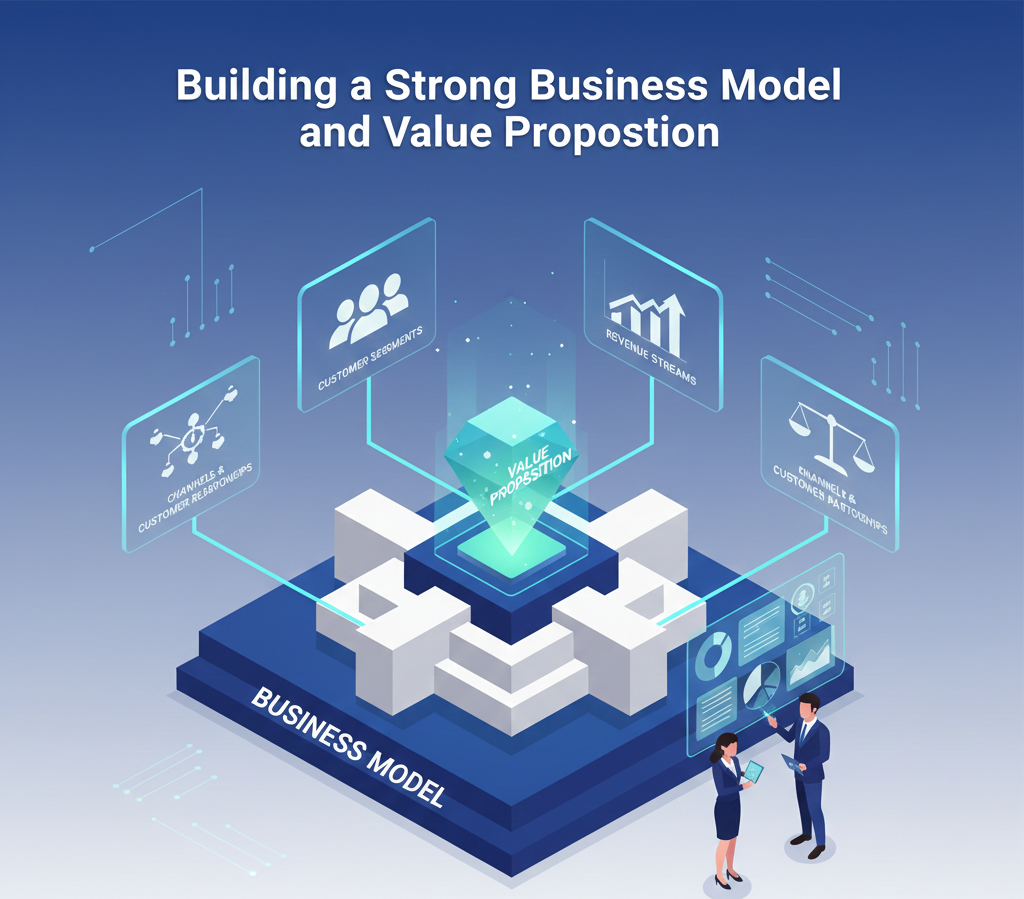
A compelling business model and value proposition form the foundation of any successful startup seeking funding.
1) Identify the Core Problem: Start by defining the issue your product addresses. The more clearly this problem is defined, the stronger your value proposition becomes.
2) Define Your Target Audience: Understanding your ideal customer profile helps you refine your offering and marketing strategies.
3) Develop a Sustainable Revenue Model: Clearly define your revenue streams: subscriptions, advertisements, commissions, licensing, or transaction fees. Investors tend to prefer recurring revenue models for their predictability.
4) Prioritize Customer Experience: A great product experience boosts retention, lifetime value, and user advocacy, which can be important metrics for investors.
5) Focus on Scalability: Create a business model that grows without greatly increasing costs. Investors prefer startups that effectively use automation, cloud computing, and AI to scale.
Strong business models reassure investors that your startup can achieve profitability and long-term success.
7. Financial Planning and Projections for Funding Success
Financial planning is key to showing investors that your business can grow responsibly and sustainably.
1) Detailed Revenue Forecasts: Show investors how you plan to generate income over the next 3 to 5 years.
2) Expense Planning: Outline costs such as salaries, marketing, development, operations, and scaling.
3) Break-Even Analysis: Investors need to know when your business will turn profitable.
4) Cash Flow Projections: Healthy cash flow ensures stability during growth and expansion phases.
5) Funding Requirements: Clearly describe how much capital you need and how you will use it, whether for development, marketing, expansion, or infrastructure.
Accurate projections help build investor trust and demonstrate strong business sense.
8. Leveraging Technology and AI in Fundraising
Technology plays a growing role in the fundraising process.
1) AI-Powered Pitch Deck Tools: AI tools help refine pitch decks, improve storytelling, and analyze investor preferences.
2) Automated Due Diligence: Investors use AI to review financial data, market trends, and competitive analysis, making the funding process quicker and more accurate.
3) Digital Deal Rooms: Virtual deal rooms let startups securely share documents, track investor engagement, and streamline negotiations.
4) AI-Based Market Forecasting: Founders can use AI to estimate market growth, competition, and customer behavior, which helps strengthen their investment pitch.
Using technology gives startups a competitive edge and speeds up the funding process.
9. How to Build Long-Term Investor Relationships
Funding is not just a transaction; it marks the start of a long-term partnership.
1) Maintain Transparency: Investors appreciate honesty about challenges, setbacks, and financial updates.
2) Communicate Regularly: Quarterly reports, performance metrics, and product updates keep investors engaged and confident.
3) Involve Investors Strategically: Seek advice, industry connections, and mentorship. Investors value founders who respect their expertise.
4) Deliver on Commitments: Meeting deadlines and milestones shows your reliability and builds trust.
5) Share Wins and Learnings: Celebrate achievements and communication lessons learned to deepen the relationship.
Strong relationships can lead to future investments, partnerships, and business opportunities.
10. Common Mistakes Startups Make When Seeking Funding
Steering clear of common mistakes can greatly improve your fundraising success.
1) Lack of Preparation: Many founders pitch without solid financials, market research, or a clear business model.
2) Overvaluing the Startup: Unrealistic valuations drive away experienced investors.
3) Weak Pitch Deck: An unclear or unfocused pitch deck lowers your chances of grabbing investor attention.
4) Not Knowing the Competition: Investors expect founders to have a deep understanding of the competitive landscape.
5) Poor Communication Skills: Founders who cannot clearly articulate their vision often fail to persuade investors.
Avoiding these mistakes boosts your credibility and enhances your chances of success.
11. Conclusion
Startup funding in 2025 is influenced by innovation, data-driven strategies, and changing investor expectations. To succeed, founders must understand the modern investor mindset, build strong business models, leverage technology, and present a compelling vision backed by real traction and strategic planning. Investors today seek startups with sustainable growth potential, strong financial projections, and ethical practices aligned with global trends.
By effectively communicating value, navigating fundraising platforms, and building long-term investor relationships, startups can position themselves for success. With the right preparation and strategic approach, securing funding in 2025 is not just possible; it is achievable. For founders willing to adapt and evolve, the opportunities are limitless.