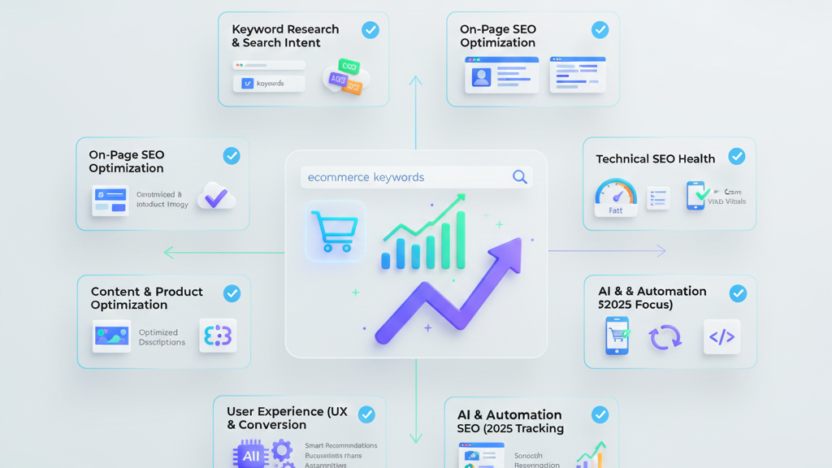
In 2025, eCommerce SEO is crucial for driving traffic, improving visibility, and increasing sales. A strategic SEO checklist helps online store owners concentrate on important areas like on-page optimization, keyword research, site structure, mobile performance, page speed, and user experience. Adding content marketing, link-building strategies, and AI-driven analytics keeps your store competitive in search rankings.
By using a structured checklist, businesses can identify weaknesses, apply best practices, and monitor results. This method not only improves search engine performance but also creates a smooth shopping experience that turns visitors into loyal customers.
Table of Contents
- Introduction
- Understanding the eCommerce SEO Landscape
- Keyword Research Strategies for Online Stores
- On-Page SEO Optimization: Titles, Meta, and Content
- Technical SEO for eCommerce Websites
- Site Structure and Navigation Best Practices
- Mobile Optimization and Page Speed Enhancements
- Content Marketing Strategies to Boost SEO
- Link Building and Off-Page SEO Tactics
- Tracking, Auditing, and Continuous Improvement
- Conclusion
1. Introduction
In 2025, the digital commerce landscape is more competitive than ever. eCommerce websites are growing across various industries, and consumers are becoming smarter in how they shop online. With Google and other search engines constantly updating their algorithms, getting on the first page isn’t just about keyword stuffing or backlinks. It requires a complete approach that includes technical SEO, user experience, content strategy, and data-driven decisions.
A strategic eCommerce SEO checklist for 2025 acts as a guide for online retailers looking to grow sustainably. It helps businesses systematically tackle all areas of search engine optimization, from basic technical elements to marketing strategies. Following this checklist enables businesses to increase visibility, attract serious traffic, and convert visitors into loyal customers while generating measurable returns.
2. Understanding the eCommerce SEO Landscape
The eCommerce SEO landscape in 2025 is influenced by several major trends:
1) AI-Powered Search Algorithms: Search engines are increasingly using artificial intelligence and machine learning to understand user intent, context, and content quality. Algorithms like Google’s MUM (Multitask Unified Model) can analyze images, video, text, and other signals to deliver accurate search results. This change makes it essential for eCommerce websites to focus on providing valuable content and smooth experiences that meet user expectations.
2) Voice and Conversational Search: Voice-enabled devices are still shaping search behavior. Consumers often use conversational queries like “best sustainable running shoes near me” instead of typing basic keywords. Therefore, optimizing long-tail, question-based search queries is more important than ever.
3) Mobile-First Indexing: Mobile-first indexing has been a priority for Google for several years, and it still matters for rankings. Websites must ensure they are mobile-responsive, have fast loading times, and offer easy navigation.
4) User Experience as a Ranking Factor: Search engines now consider user experience signals like dwell time, click-through rate (CTR), page speed, and content accessibility. A smooth and enjoyable browsing experience directly affects SEO rankings.
5) Evolving Link Building Practices: While traditional link-building remains important, relevance and quality are more crucial than quantity. Earning backlinks through partnerships, influencer collaborations, and high-quality resources helps build domain authority in 2025.
6) Structured Data and Rich Snippets: Structured data assists search engines in better understanding website content and can enhance search listings with rich snippets, which improves CTR. E-commerce sites can use schema markup for products, reviews, pricing, availability, and FAQs.
Recognizing these trends helps eCommerce businesses align their SEO strategies with changing search engine priorities and consumer behavior.
3. Keyword Research Strategies for Online Stores
Keyword research is the foundation of eCommerce SEO. It identifies the search queries your target audience uses and guides your content, product descriptions, and meta data.
1) Identify Buyer Intent
Keywords should reflect where users are in their buying journey:
- Informational Keywords: Users seeking knowledge, e.g., “how to choose a laptop for gaming.”
- Navigational Keywords: Users searching for a specific brand or store, e.g., “Nike Air Max official site.”
- Transactional Keywords: Users ready to buy, e.g., “buy gaming laptop under $1000.”
Focusing on transactional and long-tail keywords often leads to higher conversion rates.
2) Competitor Analysis: Examine top competitors in your niche with tools like SEMrush, Ahrefs, or Moz. Identify their high-ranking keywords, backlink profiles, and content gaps.
3) Keyword Tools and Techniques
Use keyword research tools to find search volume, difficulty, and trends:
- Google Keyword Planner
- Ubersuggest
- Ahrefs Keywords Explorer
- SEMrush
Group keywords by intent, category, and priority to organize your site effectively.
4) Seasonal and Trend-Based Keywords: eCommerce businesses gain from focusing on seasonal trends or emerging topics, such as “best winter coats 2025” or “eco-friendly gifts.”
5) Local SEO Keywords: For eCommerce stores with physical locations or local delivery, add geo-targeted keywords like “organic skincare store New York” to attract local traffic.
6) Optimize Product and Category Pages
Naturally incorporate keywords into:
- Product titles
- Descriptions
- Meta titles and meta descriptions
- Image alt text
This helps search engines understand and index their offerings effectively.
4. On-Page SEO Optimization: Titles, Meta, and Content
On-page SEO focuses on optimizing individual pages to boost rankings and relevance.
1) Meta Titles and Descriptions
- Keep titles under 60 characters and include primary keywords.
- Use meta descriptions of 150–160 characters that summarize the product or page purpose while encouraging clicks.
2) Header Tags (H1, H2, H3)
- Use H1 for page titles and H2/H3 for sections and subsections.
- Include relevant keywords in headers to improve semantic relevance.
3) Product Descriptions
- Avoid using the same content as manufacturers.
- Provide unique content that highlights features, benefits, and use cases.
- Incorporate keywords in a natural way without overstuffing.
4) Image Optimization
- Use high-quality images with descriptive filenames.
- Add alt text with keywords to enhance accessibility and SEO.
- Compress images to reduce page loading times.
5) Internal Linking
Link related product pages, categories, and blog content to improve navigation and distribute link equity.
6) User-Generated Content
- Encourage reviews, ratings, and Q&A sections.
- Reviews add unique content and build trust with potential buyers.
- Effective on-page SEO keeps each page optimized for both search engines and user experience.
5. Technical SEO for eCommerce Websites
Technical SEO is key for making sure your site is crawlable, indexable, and fast.
1) Site Speed
- Pages that load quickly enhance user experience and rankings.
- Use caching, CDN, image optimization, and minified code.
2) Mobile Responsiveness
- Make sure layouts adapt to various screen sizes.
- Test usability on multiple devices to ensure easy navigation.
3) SSL and Security
HTTPS is essential for secure transactions and fosters customer trust.
4) XML Sitemap and Robots.txt
- Submit sitemaps to search engines to boost crawl efficiency.
- Set up robots.txt to block duplicate or irrelevant pages.
5) Duplicate Content
- Avoid duplicate content across product versions.
- Use canonical tags as needed.
6) Structured Data
- Use schema markup for products, reviews, pricing, and availability.
- Structured data improves SERP visibility and CTR.
7) Crawl Errors and Broken Links
- Regularly check Google Search Console for crawl errors.
- Fix broken links, 404 errors, and redirect chains.
8) Pagination and Faceted Navigation
- Use SEO-friendly methods for category pages with filters.
- Prevent duplicate content from impacting rankings.
- Technical SEO makes sure search engines can understand, index, and rank your site effectively.
- Create high-quality content across all digital channels.
6. Site Structure and Navigation Best Practices
A clear, logical site structure enhances usability and SEO.
1) Hierarchical Structure
Organize categories and subcategories in a logical way.
Example: Home → Electronics → Laptops → Gaming Laptops
2) URL Structure
- Use short, descriptive, and keyword-rich URLs.
- Avoid unnecessary parameters or numbers.
3) Breadcrumb Navigation
Breadcrumbs improve user navigation and offer internal links for SEO.
4) Internal Linking
- Link products to relevant categories and related items.
- This improves link equity distribution and user engagement.
5) Search Functionality
Offer a robust on-site search for easier product discovery.
A well-organized site structure ensures that both search engines and users can navigate your eCommerce store seamlessly.
7. Mobile Optimization and Page Speed Enhancements
Mobile performance and page speed are vital ranking factors.
1) Responsive Design: Ensure your website adjusts to all devices and screen sizes.
2) Mobile-Friendly UX: Optimize touch interactions, button sizes, and navigation menus.
3) Page Speed Optimization
- Compress images, use lazy loading, and enable browser caching.
- Minimize JavaScript and CSS to enhance load times.
4) AMP for Product Pages: Accelerated Mobile Pages (AMP) can boost mobile load speed and SERP visibility.
5) Mobile Testing Tools
- Google PageSpeed Insights
- Lighthouse
- GTmetrix
Fast, responsive websites keep users engaged and improve search engine rankings.
8. Content Marketing Strategies to Boost SEO
Content marketing drives traffic, builds authority, and supports SEO.
1) Blog Content
- Create informative articles related to your products and industry.
- Target long-tail and informational keywords.
2) Product Guides: “How-to” guides, tutorials, and best practices foster engagement.
3) Video Content: Product demos, unboxing, tutorials, and customer testimonials.
4) Infographics: Visual content boosts shareability and backlinks.
5) User-Generated Content: Encourage reviews, testimonials, and community contributions.
6) Content Calendar: Stick to a consistent publishing schedule to keep your site fresh.
Content marketing positions your store as a trusted resource while improving organic visibility.
9. Link Building and Off-Page SEO Tactics
High-quality backlinks are a vital part of eCommerce SEO.
1) Outreach and Partnerships: Work with bloggers, influencers, and industry websites.
2) Guest Posting: Write articles for reputable websites to earn backlinks.
3) Resource Pages: Get listed in directories, roundups, and educational resources.
4) Social Media Sharing: Share content on social platforms to generate links naturally.
5) Influencer Collaborations: Partner with influencers to review products and link back to your store.
Off-page SEO enhances domain authority, which directly affects search engine rankings.
10. Tracking, Auditing, and Continuous Improvement
SEO is an ongoing process that needs monitoring and refinement.
1) Analytics Tools
- Google Analytics
- Google Search Console
- Ahrefs / SEMrush
2) Key Metrics
- Organic traffic
- Bounce rate
- Conversion rate
- Page speed
- Keyword rankings
3) Regular Site Audits
- Identify broken links, duplicate content, and performance issues.
- Evaluate meta tags, header usage, and schema implementation.
4) Continuous Optimization
- Update product descriptions, refresh content, and optimize images.
- Track trends and adjust SEO strategies as algorithms change.
- Regular monitoring helps your eCommerce store remain competitive and adapt to search engine updates.
11. Conclusion
A strategic eCommerce SEO checklist for 2025 ensures that online stores are optimized for visibility, usability, and conversions. By covering every aspect from keyword research and on-page SEO to technical performance, mobile optimization, content marketing, and link building businesses can achieve higher rankings, attract qualified traffic, and increase sales.
SEO isn’t a one-time job but an ongoing process that evolves with algorithms, user behavior, and technology trends. Implementing this thorough checklist prepares your eCommerce store for long-term growth, competitiveness, and sustained success in 2025 and beyond.