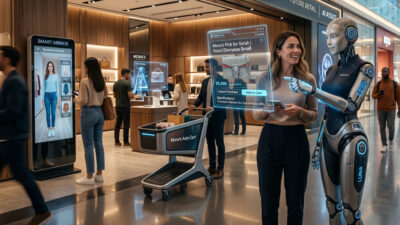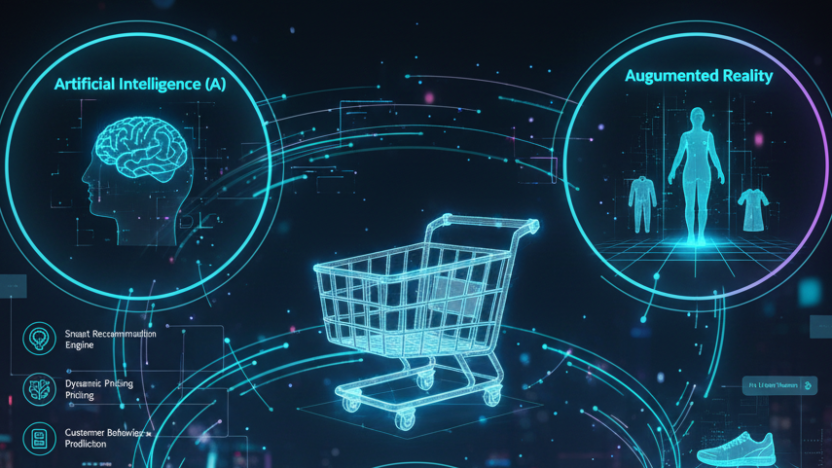
AI, AR, and personalized approaches are reshaping e-commerce by creating smarter, more immersive, and customized shopping experiences. Artificial intelligence provides accurate product recommendations, predicts shopping behaviors, and offers automated customer support. Augmented reality helps shoppers see products in real settings, which increases confidence and lowers returns.
Personalization technologies customize every interaction from product displays to pricing based on what each customer prefers. Together, these innovations improve user engagement, make decision-making easier, and increase conversion rates. As retailers embrace these new tools, e-commerce becomes a more intuitive, interactive, and customer-focused system that changes how people shop online.
Table of Contents
- Introduction
- How AI Is Revolutionizing Online Shopping
- The Role of AR in Enhancing Product Visualization
- AI-Driven Recommendation Systems
- AR Try-On and Product Preview Technologies
- Hyper-Personalized Marketing Campaigns
- The Impact of Data and Consumer Insights
- Enhancing Customer Trust with AI and AR
- Challenges in Adopting AI, AR, and Personalization
- Strategies for Retailers to Prepare for the Future
- Conclusion
1. Introduction
The world of e-commerce has changed a lot over the past decade, but today’s shifts are more disruptive and technologically sophisticated. As online shopping grows more competitive and consumers’ expectations rise, retailers are looking for new ways to provide smooth, engaging, and personalized experiences. Three key technologies are driving this change: Artificial Intelligence (AI), Augmented Reality (AR), and personalized algorithms.
These innovations are reshaping online retail, making shopping more intuitive, interactive, and customized. Consumers no longer want to browse static product pages and compare items manually. They expect brands to understand their needs, provide real-time assistance, and show products that match their preferences with little effort.
AI, AR, and personalization are allowing retailers to create the kind of shopping experiences that feel both modern and focused on human behavior. From AI chatbots helping with purchases to AR tools that let customers visualize products in their spaces, and recommendation engines suggest items based on browsing habits for these technologies have become vital in today’s e-commerce.
2. How AI Is Revolutionizing Online Shopping
Artificial Intelligence is at the core of modern e-commerce strategies, affecting everything from product discovery and customer interactions to pricing and logistics. AI analyzes large sets of data to predict user preferences, automate tasks, and provide insights that would be hard to obtain manually.
1) Improving Product Search: AI search algorithms help customers find what they need quickly and accurately. Natural Language Processing (NLP) understands human queries, even complex ones, and returns relevant results. Visual search enhances this, letting shoppers upload photos to find similar products in an instant.
2) Personalized Product Discovery: AI examines browsing history, past purchases, behavior patterns, and user demographics to recommend products that fit each shopper’s preferences. This makes the shopping journey more enjoyable and relevant, boosting conversion rates and customer satisfaction.
3) Dynamic Pricing and Automated Inventory: AI can change prices in real-time based on demand, supply, competitor pricing, and consumer behavior. It also manages inventory by predicting fast-selling items and spotting products at risk of running out, helping retailers meet market demands.
4) Better Customer Support: AI chatbots and virtual assistants provide immediate support, answer questions, help with checkout, and guide users through the shopping journey. These systems enhance response times, lower costs, and improve user engagement.
5) Fraud Detection and Security: AI strengthens payment security by spotting suspicious patterns and preventing fraud before it impacts customers or businesses.
AI’s capacity to automate, analyze, and improve nearly every part of the shopping experience makes it a major force in online retail today.
3. The Role of AR in Enhancing Product Visualization
While AI boosts intelligence, AR enhances the shopping experience. Augmented Reality helps customers visualize products in real-world settings using their smartphones or AR-enabled devices, creating an immersive layer in the buying process.
1) Reducing Uncertainty in Online Shopping
One of the biggest drawbacks of online retail is that customers cannot touch or examine products. AR addresses this by providing realistic 3D views of items that users can see in their homes. For example:
- A sofa can be projected into the living room.
- A wall color can be visualized on an actual wall.
- A decor item can be tested in various locations before purchasing.
This reduces uncertainty and boosts purchase confidence.
2) Improving Customer Engagement: AR makes shopping interactive. Customers spend more time exploring products, experimenting with variations, and envisioning possibilities. This deeper engagement leads to higher conversion rates.
3) Bringing In-Store Experiences Online: With virtual showrooms, AR allows retailers to create immersive environments where customers can browse items as they would in a physical store, all from home.
4) Decreasing Return Rates: Returns are a significant issue in e-commerce, often due to unmet expectations. AR helps shoppers confirm fit, size, and placement before buying.
As AR tools become more user-friendly and mobile-compatible, they will further enhance the online shopping experience.
4. AI-Driven Recommendation Systems
At the core of e-commerce personalization are AI-driven recommendation engines. These systems analyze vast datasets to predict what each customer is likely to buy, making product discovery smooth and enjoyable.
1) Behavior-Based Recommendations: These systems use browsing patterns, clicks, time spent on pages, and purchase history to suggest relevant products.
2) Collaborative Filtering: This method finds similarities between users and recommends items based on what similar shoppers bought or viewed.
3) Contextual and Real-Time Recommendations: AI adjusts suggestions based on weather, location, season, and real-time user behavior for instance, suggesting umbrellas on rainy days or holiday items during festive times.
4) Personalized Homepages: When users return to a website, AI creates a homepage filled with products suited to their preferences, making each visit unique.
These systems greatly enhance product visibility, improve conversion rates, and boost overall user satisfaction.
5. AR Try-On and Product Preview Technologies
AR try-on technology has become very popular, especially in beauty, fashion, and accessories. It lets customers virtually test products before purchasing, mimicking the experience of trying items in a physical store.
1) Virtual Try-On for Fashion
Customers can try on:
- Clothing
- Shoes
- Eyewear
- Accessories
- using their device’s camera
This helps them see the fit, style, and look of the item.
2) Beauty and Cosmetics Try-On
Makeup brands offer AR tools that let customers test:
- Lip colors
- Foundations
- Eyeliners
- Eyeshadows
In real-time on their own faces.
3) Furniture and Home Décor Visualization: Customers can place virtual furniture in their space to check size and style compatibility.
4) Automotive and Electronic Previews: AR allows users to explore product features, rotate 3D models, and view details, helping them make more informed choices.
AR try-on solutions not only enhance the shopping experience but also build trust and reduce product returns.

6. Hyper-Personalized Marketing Campaigns
Personalization is now essential for modern e-commerce. Hyper-personalization goes beyond simple product suggestions by using AI, data analysis, and behavior insights to tailor every interaction.
1) Customized Emails and Notifications
AI creates personalized emails based on:
- User behavior
- Interests
- Abandoned carts
- Wish lists
These emails feel relevant, leading to higher open and click rates.
2) Tailored Discounts and Incentives: Retailers can offer special deals that fit individual buying patterns, like discounts on regularly purchased items.
3) Personalized Web Experiences: Dynamic content changes in real-time based on the shopper’s profile, location, and browsing behavior.
4) Predictive Personalization: AI forecasts what customers may want before they start searching, leading to proactive and enjoyable shopping experiences.
Hyper-personalized campaigns strengthen customer connections and significantly enhance brand loyalty.
7. The Impact of Data and Consumer Insights
Data is a crucial asset in digital commerce. AI and analytics turn raw data into meaningful insights that drive strategic decisions.
1) Understanding Consumer Behavior
Data shows:
- What customers want
- When they shop
- How they navigate
- Which products perform best
This information helps retailers optimize product placement, improve user experience, and refine marketing strategies.
2) Improving Demand Forecasting: Using data analysis, retailers can predict sales trends, seasonal demand, and inventory needs, reducing stock issues.
3) Enhancing Product Development: Customer feedback and behavior insights guide future product designs and enhancements.
4) Segmentation and Targeting: Data helps segment audiences by demographics, behavior, and preferences, allowing for targeted campaigns that yield higher returns.
Businesses that effectively leverage data will lead in innovation, customer satisfaction, and sustainable growth.
8. Enhancing Customer Trust with AI and AR
Trust is key to successful e-commerce. AI and AR greatly contribute to building transparency, reliability, and confidence in online shopping.
1) Accurate Product Representation: AR decreases doubt by showing exactly how a product will look or fit in real life.
2) Transparent Personalization: AI delivers tailored experiences without invading privacy, making customers feel understood and valued.
3) Secure Transactions: AI spots fraud and ensures safe payments, which builds consumer trust.
4) Improved Communication: AI chatbots offer reliable support at all times, reducing frustration and improving satisfaction.
When customers feel secure and confident, they are more likely to return and recommend the brand.
9. Challenges in Adopting AI, AR, and Personalization
Despite their advantages, implementing AI, AR, and personalization presents challenges for retailers.
1) High Initial Investment: Advanced technologies often require significant financial resources.
2) Technical Expertise: Businesses need skilled teams to manage AI models, AR development, and data analysis.
3) Data Privacy Concerns: Customers are increasingly wary about how their data is collected and used.
4) Integration Complexity: Merging new technologies with old systems can be tricky.
5) User Adoption: Not every customer may feel comfortable using AR or engaging with AI tools right away.
To tackle these challenges, retailers must invest in proper training, choose scalable tools, and uphold transparent data practices.
10. Strategies for Retailers to Prepare for the Future
To maximize the benefits of AI, AR, and personalization, retailers should take a forward-looking approach.
1) Start with Scalable Technologies: Begin implementing AI-driven search, recommendations, and chatbots before progressing to more advanced solutions.
2) Focus on Data Quality: Accurate data leads to better personalization and enhanced AI performance.
3) Invest in AR Solutions: Start with product previews and gradually branch out into virtual showrooms.
4) Provide a Seamless Omnichannel Experience: Integrate online and offline data for consistent personalization across all platforms.
5) Build Transparent Policies: Clear communication about data use fosters customer trust.
6) Continuously Optimize: Regular testing, feedback collection, and innovation ensure long-term success.
By adopting these strategies, retailers can stay competitive in a rapidly changing digital environment.
11. Conclusion
The future of e-commerce is clearly driven by AI, AR, and personalization. These technologies are changing how customers discover, evaluate, and buy products online. AI brings intelligence for AR, adds immersion and provides personalization relevance together. They create a powerful combination that enhances the entire shopping experience.
Retailers that invest in these innovations can offer unique, memorable, and efficient experiences that cultivate loyalty and support growth. As consumer expectations rise, embracing AI, AR, and personalization is no longer just an option. It’s essential for succeeding in the next era of digital commerce.