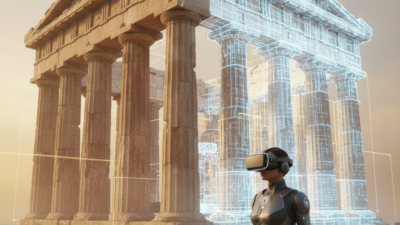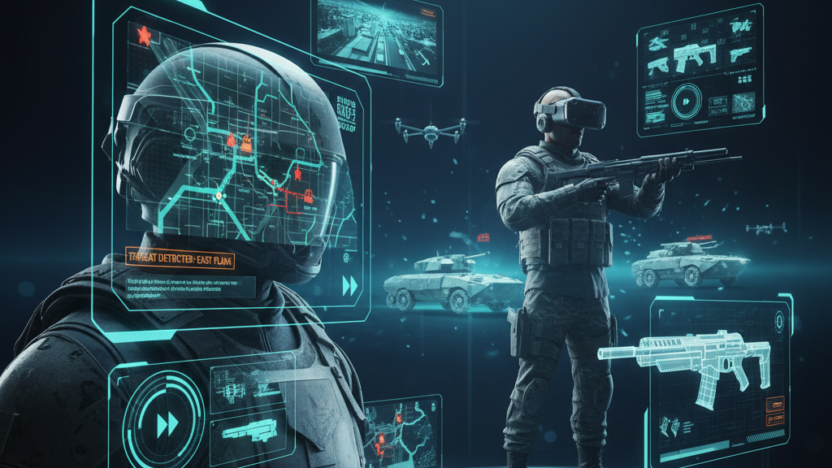
AR and VR are changing the defense industry by providing immersive, cost-effective, and highly realistic environments for training. The soldiers are allowed to rehearse mission scenarios, enhance their decision-making skills, and work in a team without any physical risks. AR enhances battlefield awareness by overlaying real-time data, maps, and alerts directly into a soldier’s view, while VR provides fully simulated environments for combat training, equipment handling, and emergency response exercises.
Overall, AR and VR support mission planning, reduce the costs for training, and increase preparedness; hence, they become crucial tools that modern military operations and future defense strategies rely on.
Table of Contents
- Introduction
- Understanding AR and VR Technologies
- Why AR/VR Matters in Modern Military Operations
- Training and Simulation for Soldiers
- Mission Planning and Tactical Preparation
- VR for Equipment Handling and Maintenance Training
- Remote Operations and Drone Control Using AR/VR
- Medical Training and Battlefield Healthcare Applications
- AR/VR in Defense Manufacturing and Prototyping
- Future Trends and Innovations in Military AR/VR
- Conclusion
1. Introduction
Innovation is rooted in the genesis of the defense industry. From ancient strategic tools to modern automated systems, every technological leap has reshaped how militaries prepare, operate, and protect. Among the most transformative technologies coming up today are augmented reality and virtual reality. Each has rapidly evolved over the past decade from its core use in gaming and entertainment to mission-critical defense applications that dramatically enhance training, decision-making, and battlefield awareness.
AR and VR now sit at the center of modern defense strategies, enabling soldiers to train in immersive environments, simulate real-world combat scenarios, analyze missions with exceptional detail, and access real-time data through advanced displays. What really makes these AR/VR technologies so powerful is their ability to reduce operational risks, lower costs, and greatly enhance readiness without actually exposing personnel to real dangers in the world.
The rapid adoption of AR/VR in the defense sector is restructuring everything from the preparation of soldiers and equipment maintenance to remote operations, including battlefield healthcare. As global threats become ever more complex, these immersive technologies have an invaluable edge. This blog explores how AR and VR enhance the capability for defense, their real-world military applications, and future innovations to further elevate defense operations around the world.
2. Understanding AR and VR Technologies
AR and VR are related but distinct concepts, and understanding their strategic importance requires highlighting each separately and how it fits into defense operations:
Augmented Reality (AR)
AR overlays digital information onto the real world. It enhances a soldier’s environment rather than replacing it. Examples include:
- Smart helmets that show real-time data
- Tactical overlays showing enemy positions
- Maintenance instructions projected onto machinery
- Navigation arrows guiding soldiers on terrain
The strength of AR lies in real-time operational support, enabling faster and more accurate decisions.
Virtual Reality (VR)
VR technology immerses users in a fully simulated environment. In defense, VR enables:
- Simulated combat training
- Virtual mission rehearsals
- Safe weapons training
- Operation of virtual equipment
VR provides 360-degree immersion in simulations, making these very realistic and adaptable to train personnel in environments that otherwise would be expensive or dangerous.
3. Why AR/VR Matters in Modern Military Operations
Today’s battlefield is very different from what it was decades ago. Today’s missions involve:
- Faster decision-making
- Complex situational awareness
- Multidomain coordination
- Precision operations
- Technological adaptability
AR and VR satisfy these needs with enhanced simulation, real-time information delivery, and immersive rehearsal capabilities that meet contemporary warfare demands.
Key reasons why AR/VR are crucial in today’s defense operations include:
1) Cost Efficiency
Live training is expensive. Simulated environments drastically reduce training costs for:
- Ammunition
- Fuel
- Wear and tear on equipment
- Deployment logistics
2) Safety: Training soldiers for high-risk operations in a safe, controlled VR environment reduces injuries and psychological stress.
3) Increased Realism
Simulation technology provides realistic scenarios, including:
- Urban warfare
- Desert or jungle environments
- Hostile weather
VR replicas of actual war zones
4) Tactical Superiority
AR helps provide real-time battlefield intelligence, thus giving soldiers enhanced:
- Navigation
- Target identification
- Communication
- Situational awareness
5) Faster Learning: Immersive learning increases retention and understanding of complex operations.
The combined effect of AR and VR strengthens the defense ecosystem in making armies swift, nimble, and more capable of responding to emerging global challenges.
4. Training and Simulation of Soldiers
The largest use case for VR in the defense industry is training. With highly realistic scenarios, VR enables soldiers to train for dozens of situations without setting foot on a battlefield.
Types of VR Training Simulations
- Combat Situations: Urban warfare, ambush scenarios, and hostage rescue.
- Shooting training: Safe live-fire simulations for effectiveness and stress response.
- Operating a vehicle: Tank, submarine, fighter jet, or drone simulation.
- Environmental training: Jungle, arctic, desert, and urban landscapes.
- Team coordination: Multi-soldier simulations for group strategies.
Benefits toward Soldier Readiness
- Safe training for dangerous missions
- Customizable scenarios based on mission objectives
- Ability to repeat sessions for mastery
- Live feedback and performance metrics
VR removes the constraints of traditional drills and exposes soldiers to an almost limitless number of mission scenarios, greatly improving readiness.
5. Mission Planning and Tactical Preparation
Beyond training, AR/VR revolutionizes defense strategy and mission planning. Commanders can simulate whole missions, predict outcomes, and prepare teams with unprecedented precision.
How AR/VR Supports Tactical Operations
- 3D battlefield mapping: View terrains and structures in high detail.
- Virtual rehearsals: Teams can walk through missions virtually.
- Risk analysis: Predict potential obstacles or threats.
- Real-time updates: AR can display live intelligence feeds.
Simulating Real Environments
Using satellite data and reconnaissance, VR can model:
- Buildings
- Streets
- Geography
- Enemy positions
This allows soldiers to plan in environments that are the same as real operational zones, making missions more predictable and increasing chances of success.
6. VR for Equipment Handling and Maintenance Training
Defense equipment, ranging from aircraft to armored vehicles, is complex to operate and maintain. VR offers a safe and inexpensive way to train technical skills.
Equipment Training Applications
- Aircraft cockpit familiarization
- Tank operation training
- Submarine control simulations
- Arms assembly and dismantling
- Operation of radar and communications systems
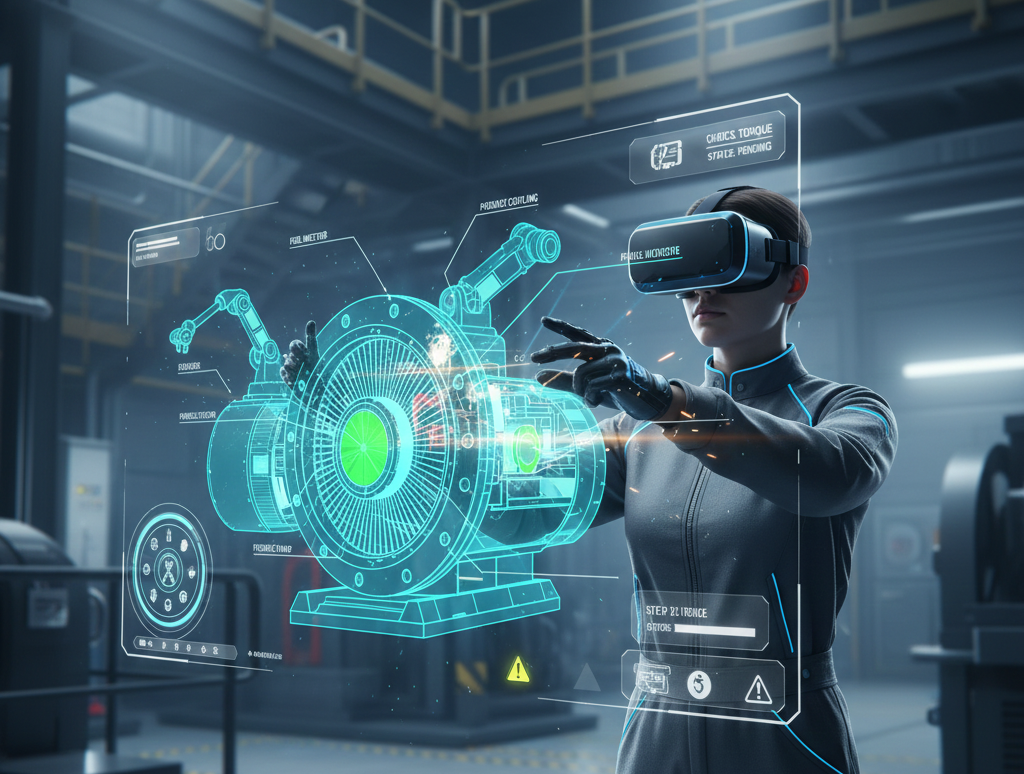
- Maintenance Training with AR
AR overlays allow technicians to:
- View step-by-step repair instructions
- Identify parts instantly
- Scan for errors or malfunctions
- Improve accuracy and reduce repair time.
The system minimizes errors, prolongs equipment life, and maintains the readiness of maintenance crews at all times.
7. Remote Operations and Drone Control Using AR/VR
Modern warfare depends highly on unmanned systems, which include:
- Drones that are used for surveillance
- Unmanned ground vehicles
- Autonomous submarines
AR/VR is significantly enhancing remote operations by offering:
- 3D visualization of drone feeds
- Immersive drone piloting control
- Improved targeting and tracking
- Real-time environmental overlays
- Improved Control and Precision
VR technology makes drone operators feel like they are inside the drone, improving:
- Navigation
- Target accuracy
- Threat identification
AR provides heads-up displays for:
- Flight paths
- Obstacles
- Mission objectives
Together, these elements make remote warfare more effective, precise, and agile.
8. Medical Training and Battlefield Healthcare Applications
Military medics work amidst high-pressure environments where each second counts.
AR/VR enhances medical readiness in multiple ways:
- VR for Combat Medical Training
- Simulated battlefield injuries
- Emergency response drills
- Trauma management
- Blood loss control
- Evacuation procedures
VR prepares medics for real-world conditions without risk to human patients.
AR for Real-Time Medical Support
AR headsets can guide medics with:
- Visual instructions
- Vital signs monitoring
- Wound analysis
- Procedure assistance
For instance, AR can indicate exactly where the right insertion point should be for injections or project holographic images inside of the body. This leads to a greater level of accuracy and less chance of mistakes in very chaotic battlefield environments.
9. AR/VR in Defense Manufacturing and Prototyping
The manufacturing of defense items involves designing highly complex weapons, vehicles, and equipment. AR/VR accelerates this process greatly.
- Applications in Manufacturing
- 3D model visualization
- Virtual prototyping
- Real-time design changes
- Testing vehicle ergonomics
- Simulated stress-testing before physical builds
Advantages
- Faster development cycles
- Reduced prototype costs
- Improved design accuracy
- Improved communication among engineering teams
AR/VR ensures that designs are optimized before they reach manufacturing, reducing errors and improving product performance.
10. Future Trends and Innovations in Military AR/VR
The future of AR/VR in the defense is packed with pathbreaking innovations that will shape the course of military operations across the world.
1) Combat Helmets with Mixed Reality
Advanced helmets will offer:
- Integrated HUDs
- Night vision overlays
- Environmental scanning
- Biometric monitoring
2) AR Systems with Integrated Artificial Intelligence
AI will help soldiers by:
- Predicting enemy movement
- Terrain risk analysis
- Providing tactical recommendations
3) Full-Body Immersive Training Suits
Haptic suits will simulate:
- Recoil
- Impact
- Terrain texture
- Increasing realism in training.
4) AR-Guided Autonomous Systems
AR could be the main interface for:
- Swarm drone control
- Robotic reconnaissance units
- Remote weapon systems
5) Virtual Military Bases Resembling Metaverses
Entire bases can migrate to virtual environments for:
- Training
- Briefing
- Collaboration
These innovations will continue to push the boundaries of military capability and redefine how soldiers train and operate.
11. Conclusion
Virtual and augmented reality technologies are no longer a nice-to-have but an integral part of a modern defense strategy that ensures enhanced training, advanced mission planning, and supported medical teams and enables remote operations, considerably raising the bar for military performance and readiness. From hyper-realistic simulations to battlefield AR displays, the applications are broad and continue to expand.
The increasingly complex nature of global threats means that AR/VR offers a critical advantage by providing deeper insight, safer preparation, and more precise execution of missions. The usage of AR and VR in the defense industry brings into view an era where strategy and technology merge seamlessly to form more capable, informed, and prepared military forces. The future of defense is not just physical but immersive, digital, and powered by AR/VR innovation.